Picture this: It’s the height of summer, the sun is a malevolent orange orb in the sky, and you’ve just stepped into your car. The interior feels less like a vehicle and more like a preheated oven set to “crispy driver.” You instinctively hit the AC button, hoping for that glorious arctic blast, but instead, you get... a lukewarm sigh. A pathetic puff of air that smells vaguely of despair and old gym socks. Sound familiar?
You’re not alone. We’ve all been there, sweating in places we didn't even know *could* sweat, contemplating whether rolling down the windows and embracing the wind tunnel effect is truly better than slowly marinating in our own juices. But what if I told you there’s a secret? A DIY power move that could transform your personal sauna back into a frosty oasis, all without mortgaging your house to a mechanic?
Yep, we're talking about recharging your car's AC. And no, you don't need a degree in automotive engineering or a garage full of specialized tools. You just need a few basic supplies, a dash of courage, and a willingness to get a little bit... mechanical. Think of yourself as a rogue air conditioning scientist, bringing comfort back to the masses (i.e., yourself).
The "Magic Potion" and Your Secret Weapon
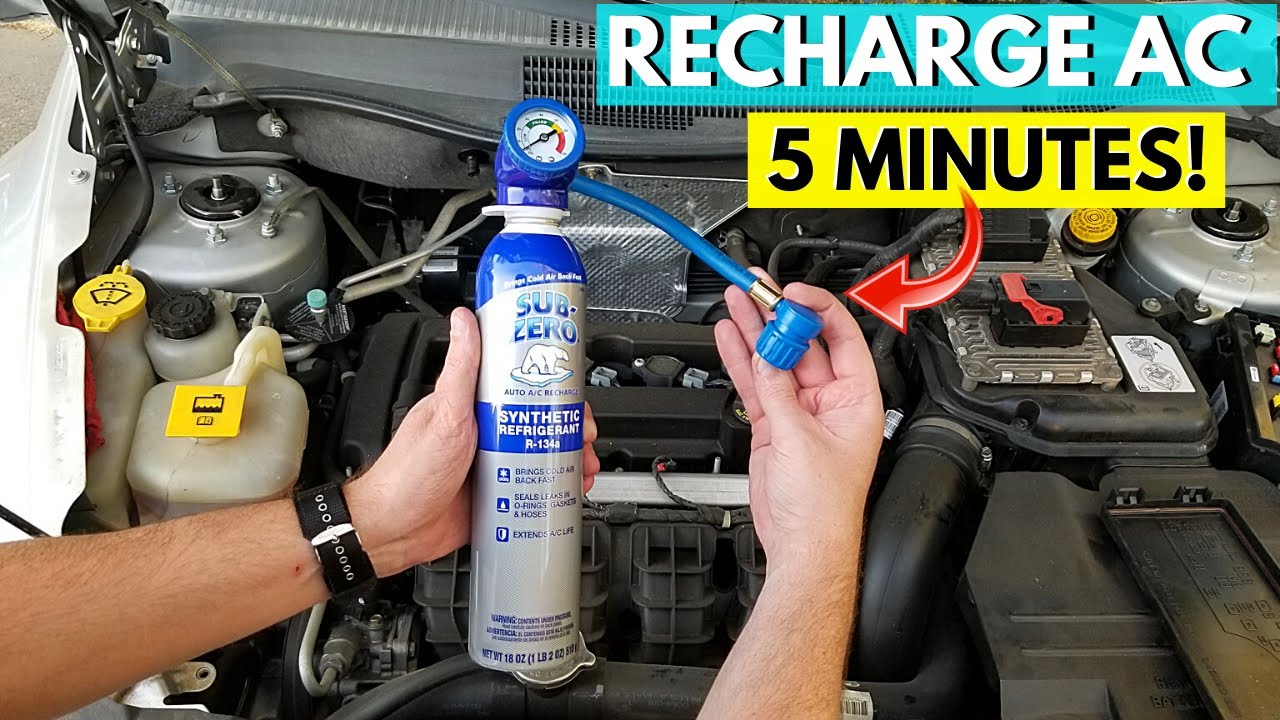
First things first, you'll need a can of R-134a refrigerant. This isn't just any old spray can; it's the elixir of chill. Most kits come with a handy hose and a pressure gauge already attached. It’s like a DIY cold delivery system, all in one neat package. You can grab these at any auto parts store, usually for less than the cost of a decent pizza.
Before you start, a quick word from your friendly neighborhood safety enthusiast: put on some safety glasses and gloves. This stuff is under pressure, and while it's not going to explode like a blockbuster movie, getting it in your eyes or on your skin is definitely not a good time. Think of it as your superhero costume; it protects you from the villains of chemical splashes.
Finding Your Car's "Chill Port"
Okay, now for the fun part: locating your car’s AC low-pressure service port. Don’t panic! It sounds way more complicated than it is. Pop your hood – you're about to become intimately familiar with your car's guts, but in a totally non-creepy way.
You're looking for two ports, usually capped, on your AC lines. One will be larger (the low-pressure side), and one smaller (the high-pressure side). You want the larger one, marked with an "L." It often has a black or blue cap. This is where the magic happens. Think of it as your car's belly button for refrigerant. If you're unsure, check your car's manual or do a quick online search for "AC low-pressure port [your car make and model]."
Pro tip: The low-pressure line is usually the fatter one, and it's generally on the passenger side of the engine bay. The high-pressure side? That's the one you don't touch. Messing with that can be dangerous because of the high pressure involved. We're aiming for a refreshing breeze, not a trip to the ER!
The Recharge Ritual: A Dance of Wires and Chill
With your safety gear on and the low-pressure port identified, it’s time to connect the hose. Make sure your car is running and the AC is set to MAX cold and MAX fan speed. You want the system to be working hard, basically begging for more refrigerant. It's like tempting a thirsty person with a glass of ice water.
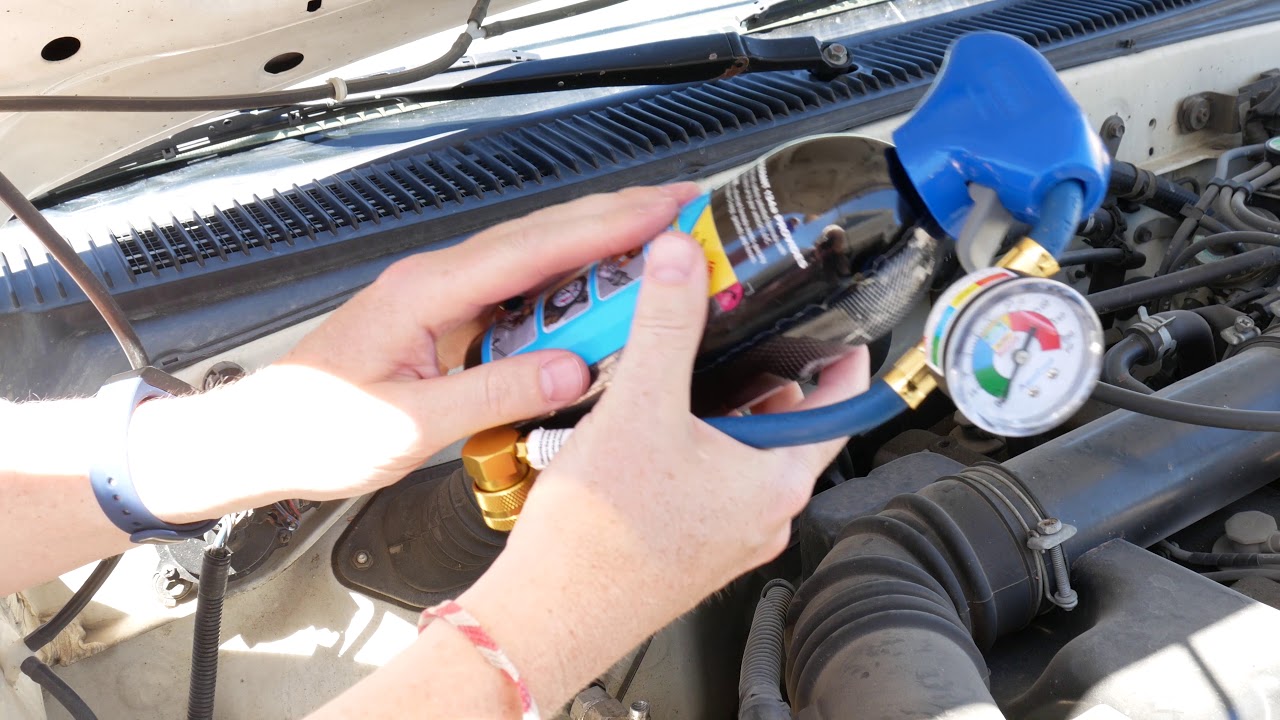
Attach the quick-connect fitting on the refrigerant hose to the low-pressure port. You'll hear a little click, and it should be snug. If it doesn't click, you might be on the wrong port, or you might need to give it a little jiggle. Just don't force it like you're trying to open a pickle jar.
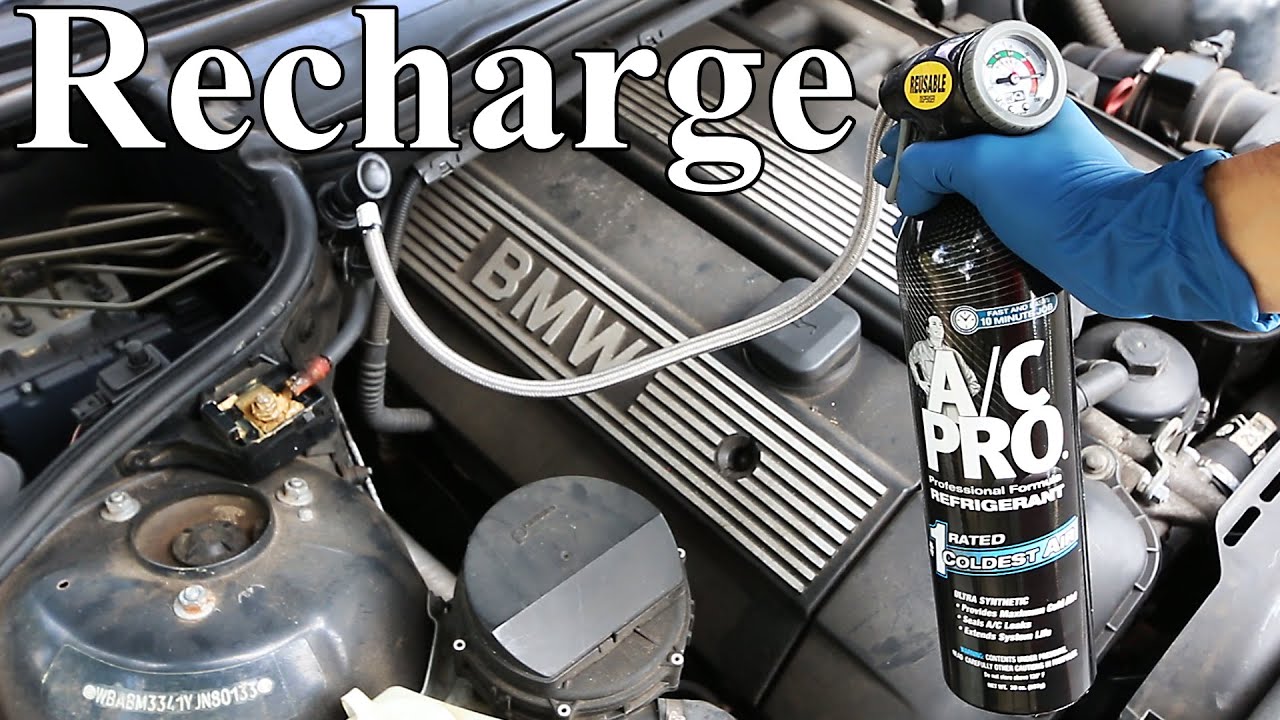
Now, hold the can upright and squeeze the trigger. You'll hear a glorious hiss. That's the sound of fresh, chilly goodness entering your AC system! Think of it as your car taking a long, satisfying sip of a frosty beverage.
Gauge Gazing and the Art of Not Overdoing It
As you're adding refrigerant, keep a close eye on the pressure gauge. Most kits have a color-coded gauge: green for good, yellow for needs attention, and red for "oh dear, you've gone too far." You want to get the needle into the green zone. It's not an exact science, but aim for the middle of that sweet green spot.
Don't just dump the whole can in at once! Squeeze the trigger for 5-10 seconds, then release for a few seconds. Gently rock the can back and forth to help the refrigerant flow. This stop-and-go method allows the system to equalize and gives you a more accurate reading on the gauge. It’s like gently watering a plant; you don’t just flood it.
Every minute or so, check the air coming out of your vents. Is it getting colder? Is it starting to feel like a polar bear's breath? If so, you're on the right track! Patience is key here. Overfilling can actually damage your AC system, turning your quest for coolness into a costly mistake. You don't want to turn your car into a giant, exploding soda can, after all.
The Moment of Truth
Once the gauge is in the green, and your vents are blasting air cold enough to give a penguin frostbite, you're done! Disconnect the hose from the low-pressure port, replace the cap, and bask in your newfound coolness. You've done it! You've wrestled with automotive mechanics and emerged victorious, smelling faintly of refrigerant and pure triumph.
Now, while recharging your AC can bring glorious relief, it's worth noting that if your AC loses its cool again quickly, you might have a leak in the system. That's a job for a professional, who can find and fix the leak before refilling the refrigerant. But for a simple case of "AC just isn't as cold as it used to be," this DIY hack is an absolute lifesaver.
So, next time your car tries to turn you into a human fondue, remember this article. You now possess the knowledge, the power, and the sheer audacity to take on your car's AC. Go forth, brave adventurer, and reclaim your chill!