Ever gazed at your power bill and felt like you were deciphering an ancient scroll? You’re not alone. For many of us, that monthly statement from the energy company feels less like a utility bill and more like a pop quiz in advanced astrophysics. But what if we told you it doesn't have to be a mystery? What if understanding it could actually be a little… empowering?
Think of your power bill as a fitness tracker for your home’s energy use. Once you know what’s what, you can make smarter choices, save some cash, and maybe even shrink your carbon footprint. Ready to turn confusion into clarity? Let’s decode this bad boy, easy-peasy.
The Basics: Your Account Snapshot
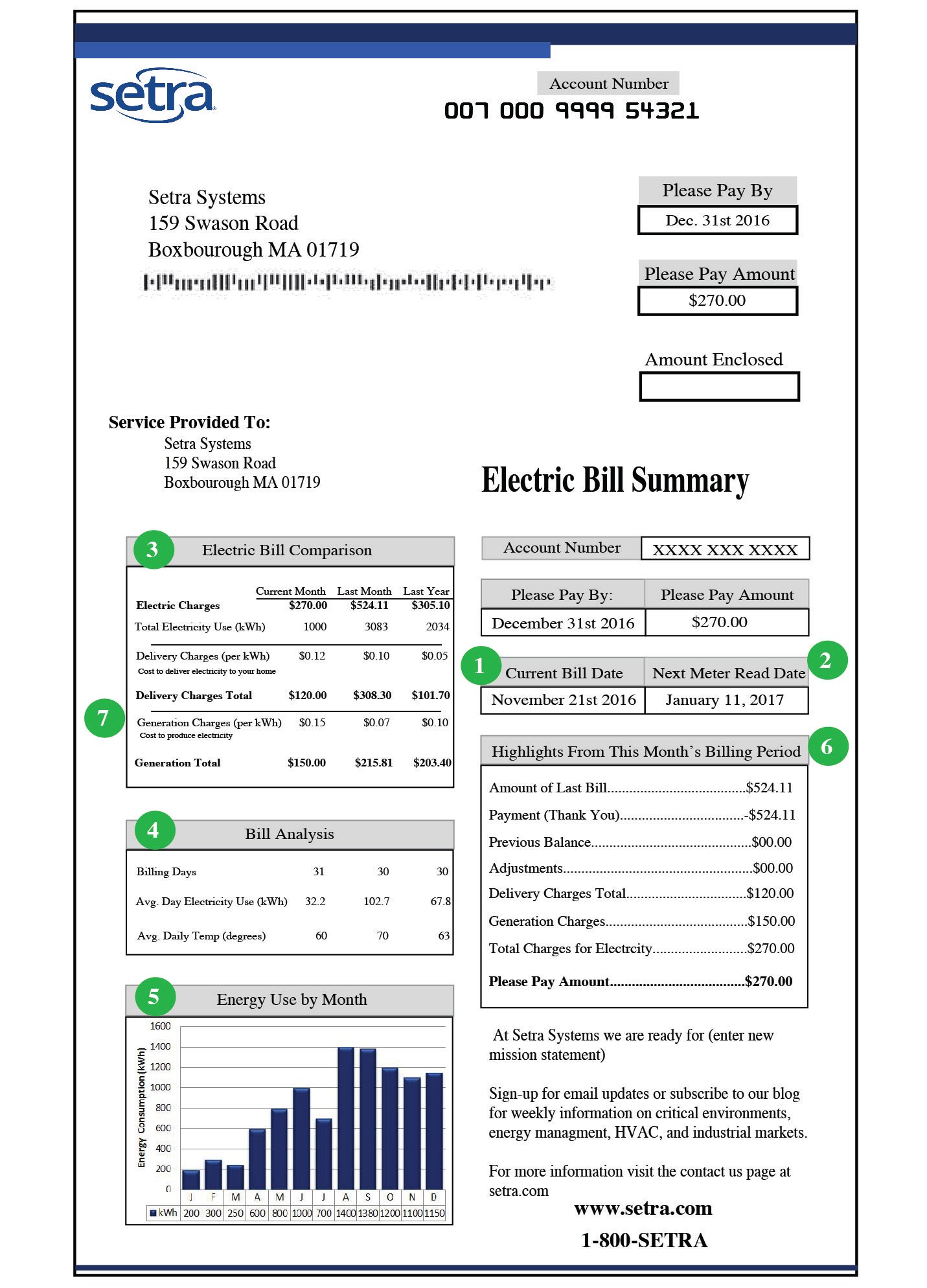
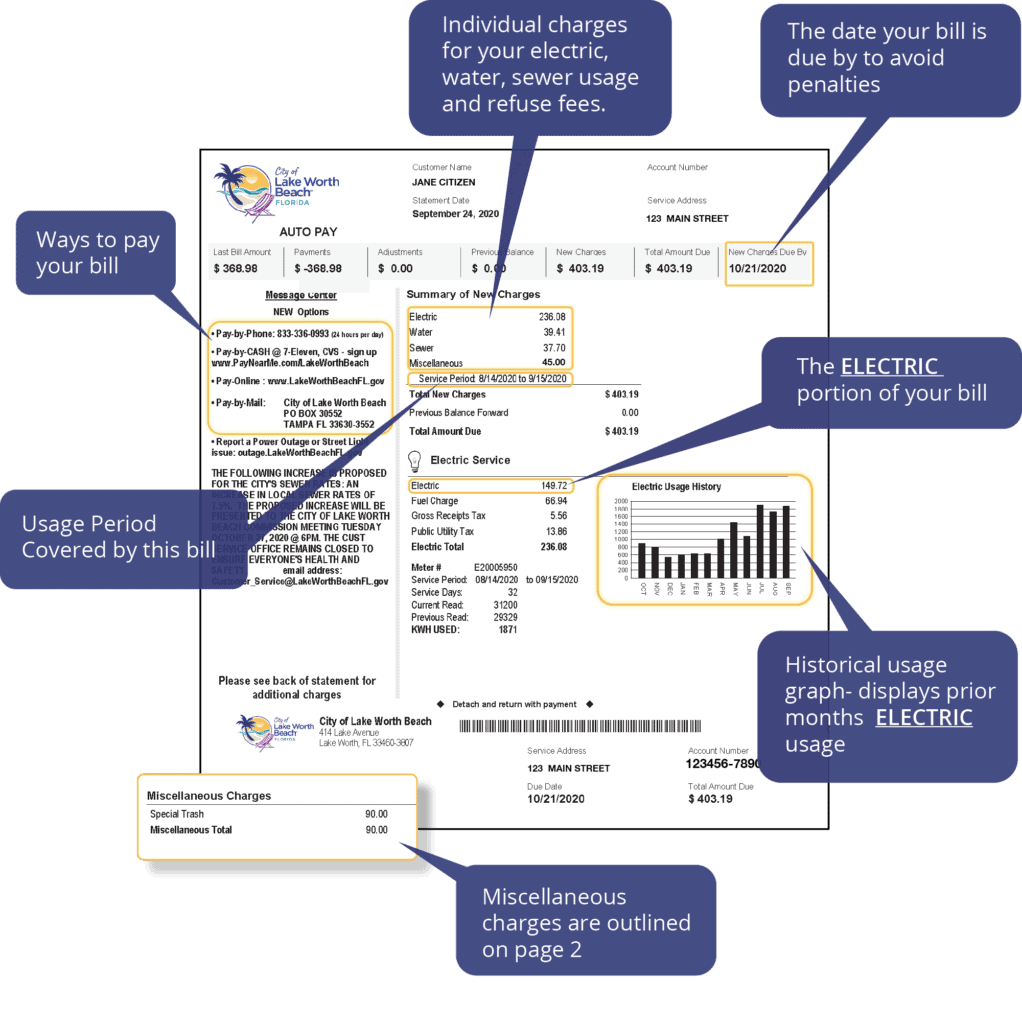
First up, locate the essentials. This is usually at the very top. You'll find your account number (keep this handy!), the service address, and often your customer name. It’s like the ID card for your energy usage. Most people skip past this once they know it, but it’s crucial for any customer service queries. Think of it as your secret handshake with the power company.
The Clock’s Ticking: Billing Period & Due Date
Two critical pieces of info here: the billing period and the due date. The billing period tells you exactly which days your energy usage covers – typically a 30-day cycle. The due date, well, that’s when they’d like your money! Mark it on your calendar, set a reminder, or better yet, set up automatic payments. It’s a small step that brings big peace of mind, saving you from late fees and the dreaded "oops, I forgot" moment.
The Heartbeat of Your Home: Meter Readings
This section is where the magic (or math, rather) happens. You’ll usually see a previous meter reading and a current meter reading. The difference between these two numbers is your actual energy consumption for the billing period. If you have an older analog meter, someone might physically read it. But with the rise of smart meters, these readings are often transmitted automatically, giving you more accurate and timely data. It’s like your house is whispering its energy secrets directly to the utility company!
The Big Number: Your Energy Usage (kWh)
This is arguably the most important number: your kilowatt-hour (kWh) usage. A kilowatt-hour might sound intimidating, but it’s simply the standard unit for measuring electricity consumption. Think of it this way: if you run a 1,000-watt appliance (like a microwave or a powerful hairdryer) for one hour, you’ve used 1 kWh of electricity. Your bill shows the total kWh your home consumed during the billing cycle. The more kWh, the more you’re likely paying. It’s the MPG for your home!
Fun fact: The average US household uses around 886 kWh per month. How do you stack up?
Breaking It Down: The Charges Breakdown
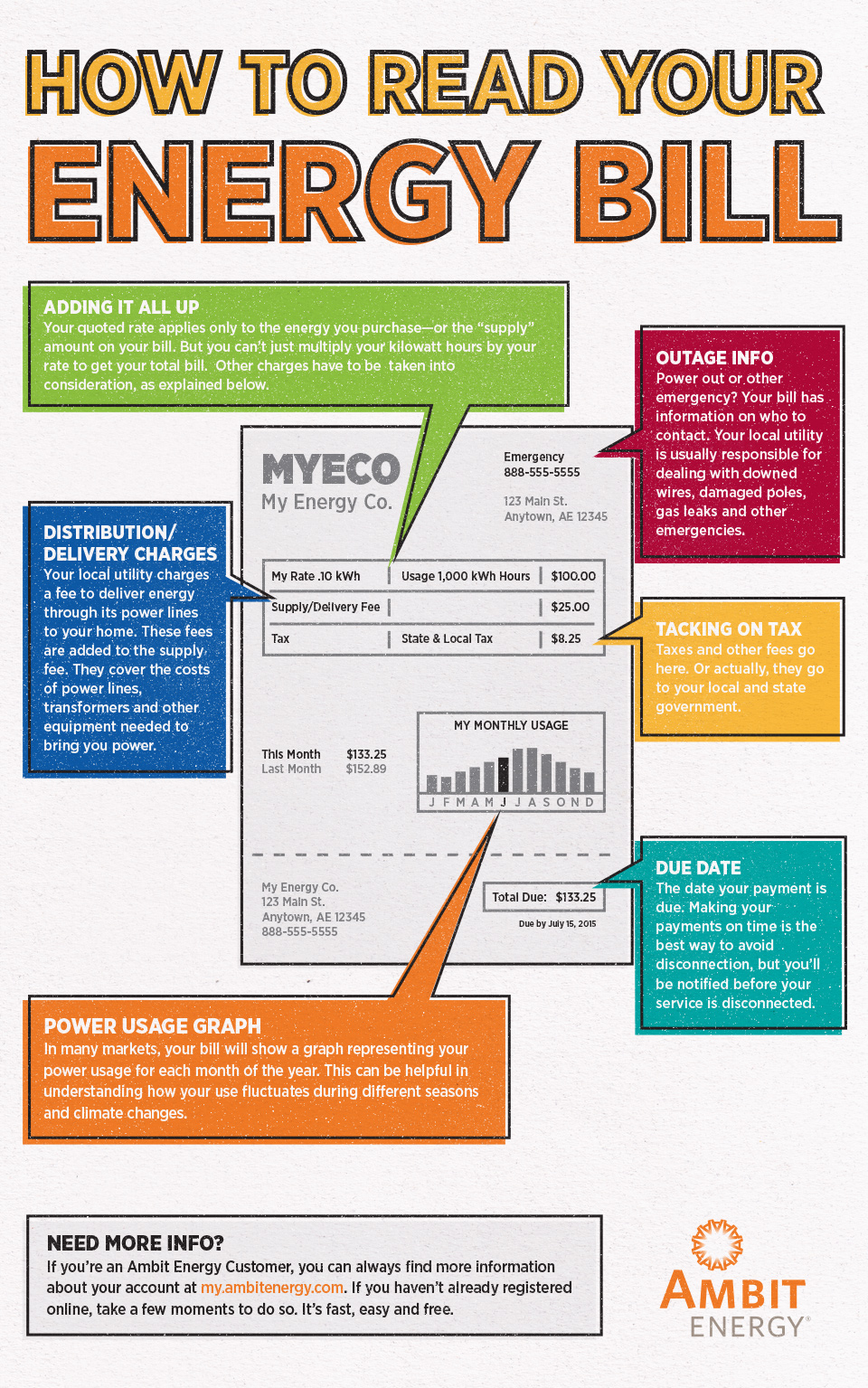
This is where things can look a bit like a supermarket receipt with too many line items, but each one has a purpose:
- Fixed Charges (or Service Charge/Customer Charge): This is like a basic subscription fee. It’s a flat rate you pay just for being connected to the grid, regardless of how much electricity you use.
- Variable Charges (or Energy Charge): This is the big one tied directly to your kWh usage. It’s the cost per kWh, multiplied by your total kWh consumed. This is where being energy-conscious makes the biggest impact!
- Tiers or Blocks: Some utilities use a tiered system, meaning you pay one rate for the first block of kWh (say, the first 300 kWh) and a higher rate for subsequent blocks. Understanding this can help you strategize your heaviest energy use.
- Taxes and Levies: Just like anything else, your electricity comes with a dose of local, state, or federal taxes. These are unavoidable but good to be aware of.
- Environmental/Renewable Energy Surcharges: You might see small charges that contribute to renewable energy initiatives or environmental programs. It's a small way your bill supports a greener future.
The Visual Storyteller: Usage History & Graphs
Many modern bills include a handy graph showing your usage over the past 12 months. This is incredibly helpful for spotting trends. Did your bill spike last summer? Perhaps that AC was working overtime! Did it drop in spring? Maybe you opened windows more often. These visuals are like a mini-documentary of your home’s energy habits, perfect for identifying patterns and making adjustments.
Practical Takeaways & Smart Moves
Now that you’re a power bill pro, here are some actionable tips:
- Compare Month-to-Month: Keep old bills or check your online portal. Comparing usage helps you identify unusual spikes.
- Understand Peak vs. Off-Peak: Some plans charge different rates depending on the time of day. Running your dishwasher or doing laundry in off-peak hours can save you a bundle.
- Hunt for Energy Vampires: Devices plugged in, even when off, can still draw power. Unplug chargers, gaming consoles, and TVs when not in use. It's a small drain, but it adds up!
- Do a DIY Energy Audit: Check for drafty windows, old appliances, or inefficient lighting. Small changes like switching to LED bulbs can make a surprising difference.
So, next time that envelope arrives, or the email pings, don't just glance at the total. Take a moment. Understand what you’re looking at. Because knowing isn't just power; it’s the power to make smarter choices for your wallet, your home, and our planet. Go forth and conquer your power bill!