Ever looked up at a roof bristling with those sleek, dark panels and thought, "Huh, wonder how those things actually work?" You're not alone! For most of us, solar panels feel a bit like magic, or maybe a fancy science experiment confined to a lab. But honestly, it’s less about wizardry and more about a clever dance between sunlight and tiny, energetic particles. Think of it less as rocket science and more like a high-tech game of catch.
So, let's pull back the curtain on this sunshine-powered show, shall we? You might just find yourself smiling at how wonderfully simple (in concept, anyway) it all is.
The Sun: Our Ultimate Energy Giver
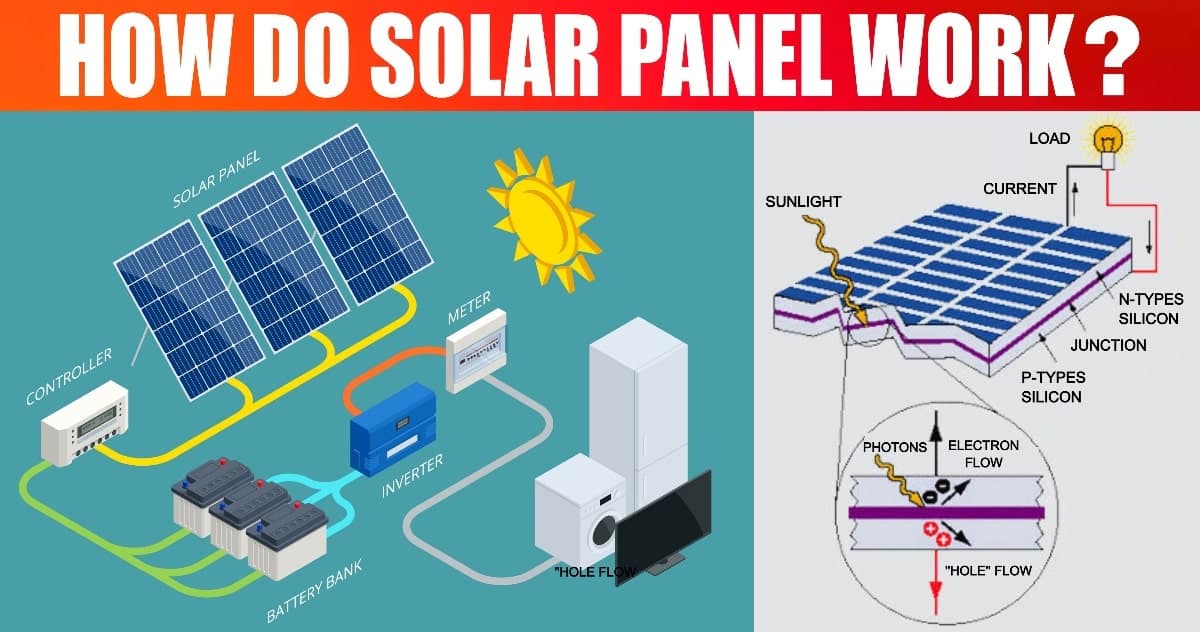
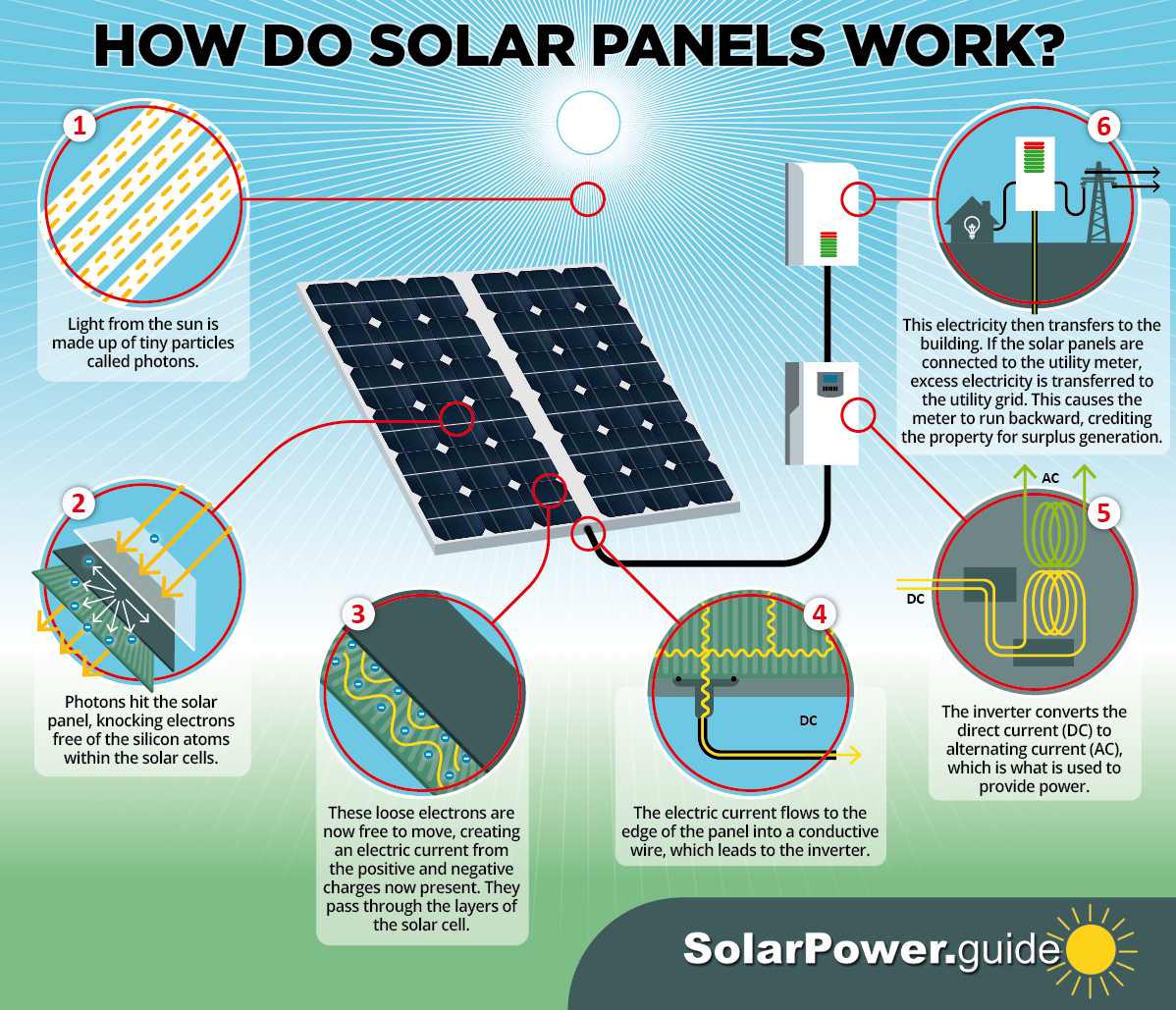
First off, the star of our show is, of course, the sun. That big, fiery ball in the sky? It’s constantly blasting out tiny packets of energy called photons. Imagine them like microscopic, super-speedy golf balls, but instead of making a divot, they carry a little burst of pure energy. And your solar panels? They're basically fancy, super-efficient catchers' mitts, designed specifically to snag these photons.
The Panel's Secret Ingredient: Silicon!
Now, what makes a solar panel so good at catching photons? It's all thanks to a material called silicon. You know, the stuff that makes up computer chips and, believe it or not, a whole lot of sand! Solar panels are made of many individual cells, and each cell is typically made from two layers of silicon, treated ever-so-slightly differently.
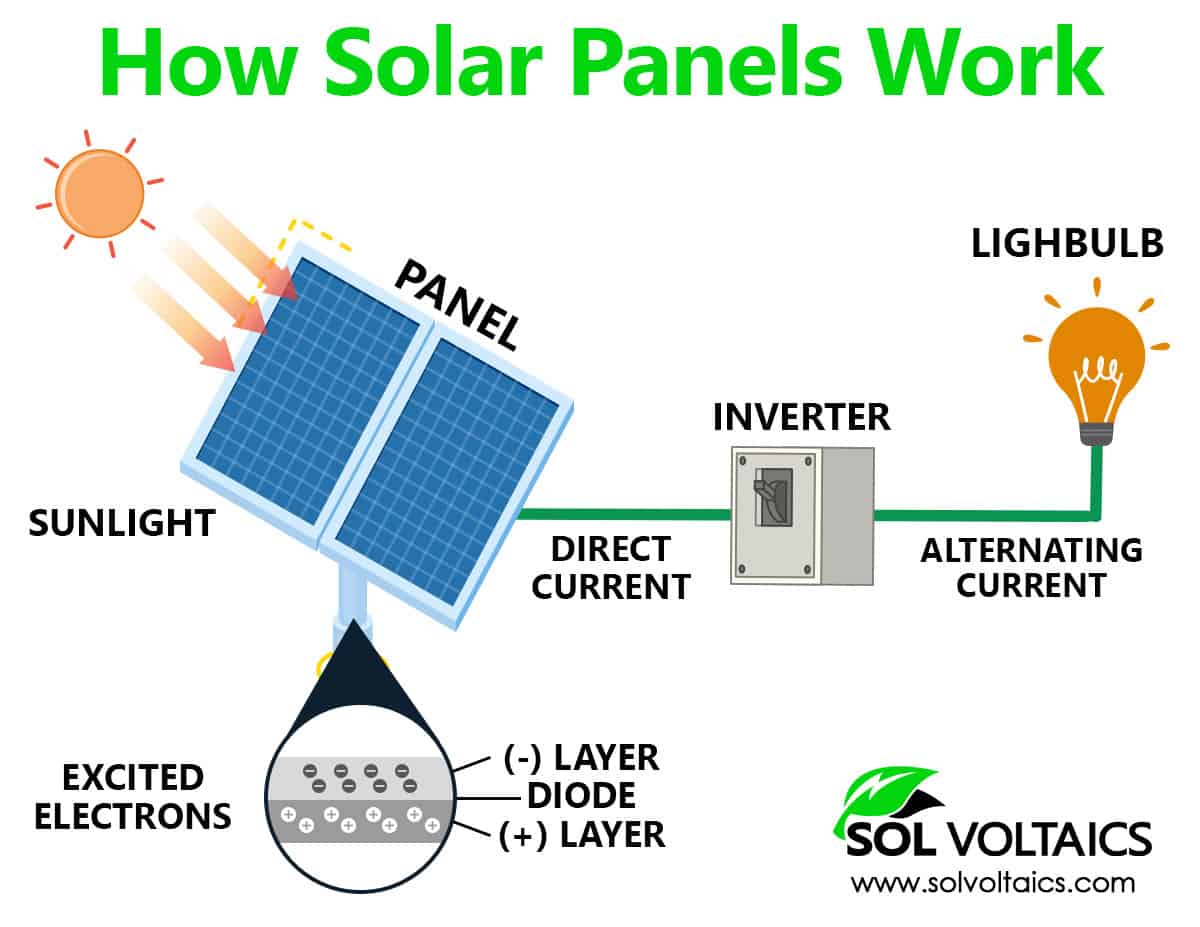
Think of these silicon layers like a microscopic bouncer at a very exclusive club. One layer has a few extra electrons (the tiny, negatively charged particles that make up electricity), making it slightly "negative." The other layer has a few missing electrons, leaving "holes" that are slightly "positive."
The Big "Aha!" Moment: When Light Hits Silicon
Here’s where the magic really happens. When a photon (remember our speedy golf ball of energy?) hits the silicon cell, it gives a little energetic nudge to one of those extra electrons. This electron, now super excited, says "Whee!" and jumps from its comfy spot. Because of the way the two silicon layers are set up (one positive, one negative), it naturally wants to move towards the positive side.
It’s like ringing a doorbell, and suddenly, a whole bunch of tiny, energetic toddlers (our electrons!) burst out of the house. They don't just wander aimlessly; they want to go to the playground (the positive layer). But wait, there's a fence! To get there, they have to take a detour, a specific path. That path is what we call an electrical circuit.
From DC to AC: The Inverter, Your Power Translator
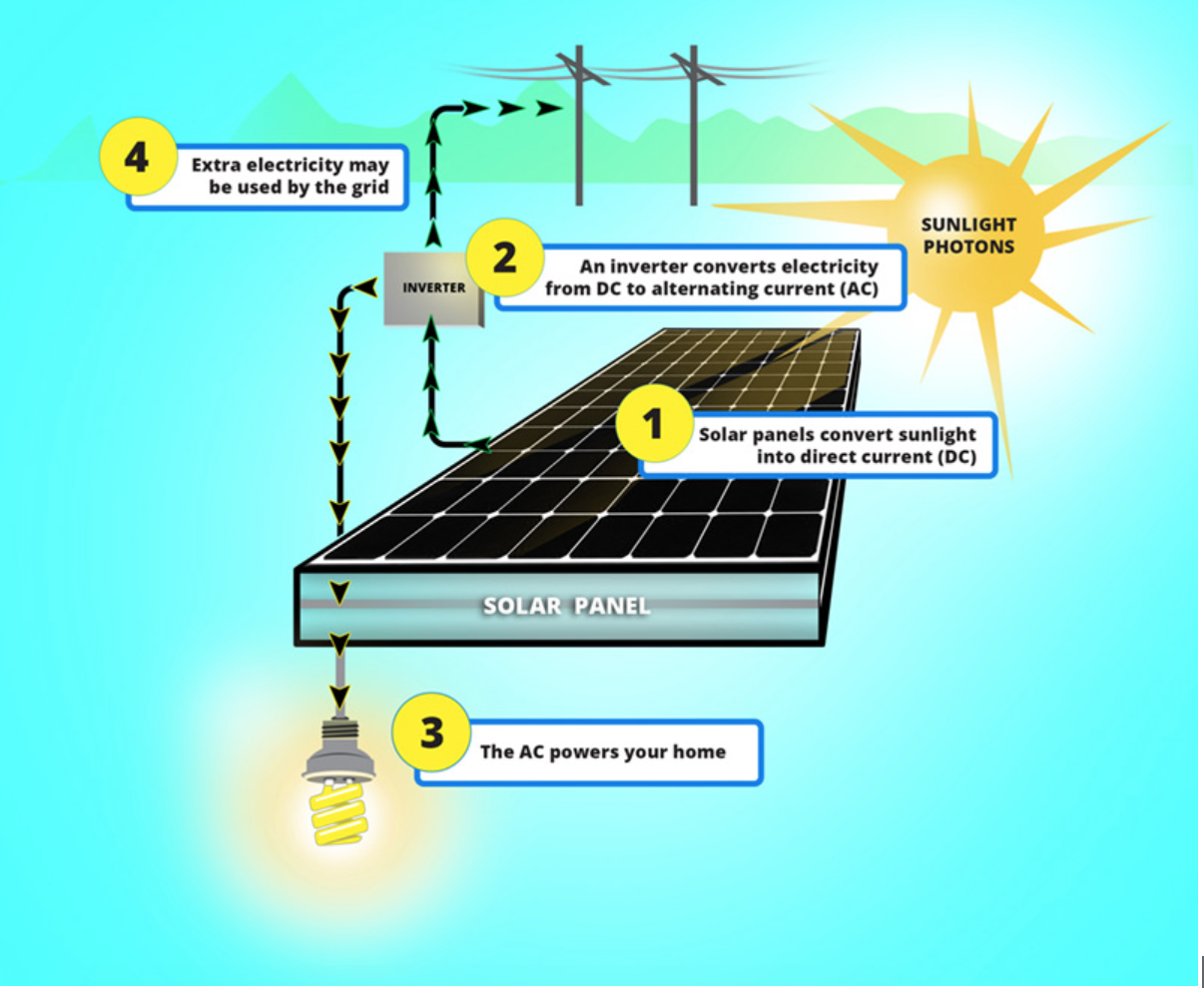
When these electrons travel in one direction, like a train on a single track, it’s called Direct Current (DC). This is what your solar panels produce directly. But here's the kicker: your toaster, your TV, your lights – pretty much everything in your house – runs on Alternating Current (AC). AC is like electrons doing a wild zigzag dance, constantly changing direction. They're the party animals of the electrical world!
So, we need a translator. Enter the inverter! This clever gadget is usually a box mounted near your electrical panel or integrated into the solar panels themselves (microinverters). It takes that orderly, one-way DC electricity from your panels and turns it into the zig-zagging AC electricity your home understands. Think of it as the ultimate DJ, converting the panels' smooth jazz into the rock 'n' roll your house needs to get down.
Where Does the Power Go? Your Home & The Grid
Once the inverter has done its job, that AC electricity flows straight into your home's electrical panel. If you're using more power than your panels are generating at that moment (say, it’s night, or you’re running the AC, oven, and washing machine all at once), your house will simply pull the extra power it needs from the traditional electricity grid.
But here's the really neat part: if your panels are producing more electricity than your house is using (hello, sunny afternoon!), that extra power doesn’t just disappear. It flows back out into the main electrical grid, effectively "selling" your excess electricity to the utility company. This is called net metering, and it’s like having a bank account for your electricity. You get credits for what you send out, which reduces your next electricity bill. It’s pretty brilliant!
And That's Pretty Much It!
So there you have it! From tiny photons hitting silicon, nudging electrons onto a one-way street, getting a party-hardy AC makeover from an inverter, and then powering your home or even helping out your neighbors. It’s not magic; it’s just incredibly smart engineering harnessing the most abundant energy source we have. Next time you see those panels, you can give a knowing nod. You're practically an expert now! It's all about catching sunshine and making it do some useful chores around the house.