Ever stare at an appliance label or an electricity bill and feel a tiny shiver? All those numbers, all those letters! It’s like they’re speaking a secret language, just for the chosen few. Well, I’m here to tell you a little secret of my own.
It’s not nearly as complicated as they make it sound. In fact, I have a truly unpopular opinion about these things. We, the people, have been seriously overthinking it.
The Energetic Little Guys: Watts
Let’s talk about watts first. Imagine a watt as a tiny, enthusiastic burst of energy. Like a single clap.
A light bulb doesn't just sit there doing nothing. It’s constantly, excitedly, using up these little claps of energy. The more powerful the appliance, the more claps it’s making per second!
"Seriously, watts are just the smallest, zippiest members of the energy family. They’re the sprinters."
They're like those super-active toddlers who never, ever stop. You look at them and think, "Wow, that's a lot of tiny energy!" And you'd be right.
But here's the thing: those little claps add up. And they add up fast, especially when you have a whole house full of them, all clapping away.
When Watts Get Together: The Kilo Party
Now, imagine a thousand of those tiny claps happening all at once. That's a lot of noise! That's what we call a kilowatt.
The word "kilo" just means a thousand of something. Like a kilogram is a thousand grams, or a kilometer is a thousand meters. It’s not fancy math, it’s just grouping things.
"A kilowatt is just a massive dance party for one thousand watts."
So, if your hairdryer is 1500 watts, it's actually 1.5 kilowatts. We just prefer to use "kilo" because it sounds less like a chaotic kindergarten classroom and more like something grown-ups understand.
It’s like saying you have a "ton of chores" instead of "two thousand pounds of chores." Same idea, just easier to say. Your appliances are just doing their best, whether they’re making single claps or a whole symphony.
The Passage of Time: Hours Join the Fun
Here’s where things get really interesting. Those tiny claps, or even the big kilo-parties, only matter for your electricity bill if they actually *happen* for a while. It’s not just about how much energy something *can* use.
It’s about how much energy it does use over a period of time. And what's a simple, everyday unit of time we all know? That's right, the good old hour.
"Think of the hour as the bouncer at the energy party, keeping track of how long everyone stays."
A high-wattage appliance used for just a few minutes might use less energy overall than a low-wattage one left on all day. Time is the key ingredient, the secret sauce in this energy recipe.
Your fridge, for instance, has a relatively low wattage compared to a toaster. But because your fridge runs all the time, twenty-four hours a day, seven days a week, its overall energy consumption really adds up.
The Grand Reveal: Enter the kWh!
So, we have our noisy little watts. We group them into bigger, more manageable kilowatts. And then we care about how long they’re actively buzzing around, which is measured in hours.
Put them all together, and what do you get? Ta-da! The magnificent, the glorious, the often-misunderstood kilowatt-hour, or kWh for short.
"A kWh is simply a measure of how many kilowatts are used in one hour. It's really that straightforward."
It’s not a rate of power, like watts are. It’s a total amount of energy consumed. Think of watts as your car's speed (how fast it *can* go), and kWh as the total distance you've travelled (how far you *have* gone).
You wouldn't ask how many miles per hour your car has traveled in total, right? You'd ask how many miles. Same difference with watts and kWh.
The Unpopular Conversion Secret: It's Just Division and Multiplication!
Now for my truly unpopular opinion: converting watts to kWh is often presented like a mystical ritual. People scratch their heads, they furrow their brows, they google frantically.
But guess what? The "conversion" is just two simple steps. It's so ridiculously straightforward, you almost want to laugh.
"My unpopular opinion? The 'mystery' of watts to kWh is a complete charade. It’s delightfully basic math!"
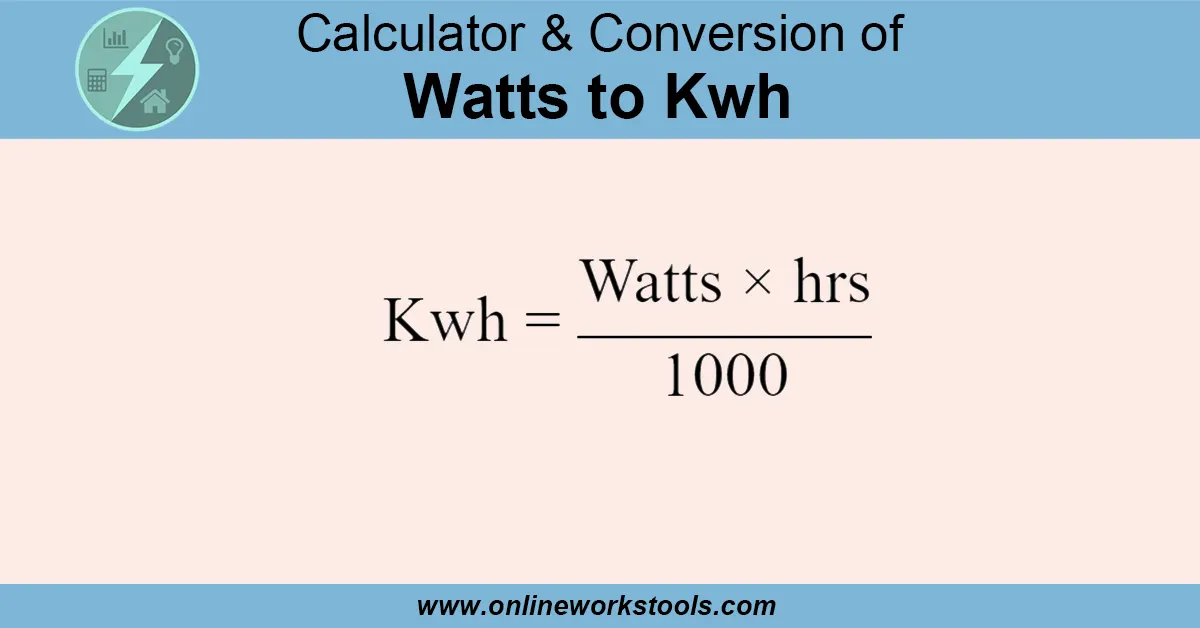
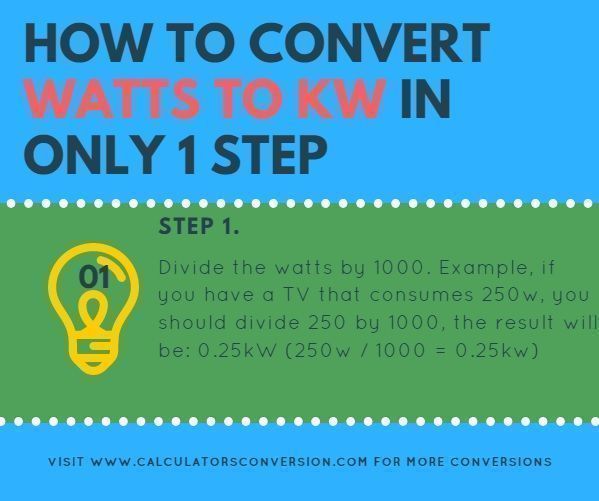
First, you take those energetic little watts and you tame them. You divide their number by 1000 to get them into sensible kilowatts. Because, remember, kilo means a thousand.
If your appliance is 500 watts, that's 0.5 kilowatts. If it's 2000 watts, that's 2 kilowatts. It's just moving the decimal point three places to the left, like a little dance move.
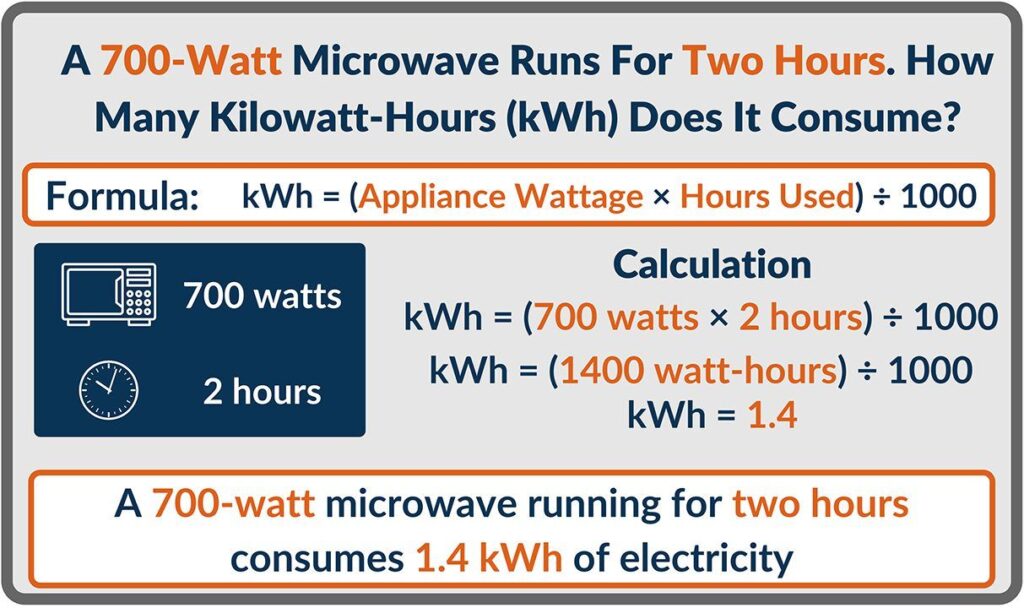
Then, once you have your kilowatts, you simply multiply that number by how many hours the appliance is actually running. That’s it. That’s the big secret.
If your 0.5 kilowatt appliance runs for 2 hours, it uses 1 kWh. If your 2 kilowatt appliance runs for 3 hours, it uses 6 kWh. It’s like counting apples and then counting how many baskets you filled.
No magic spells, no complex algorithms, no advanced degrees required. Just plain old division and then plain old multiplication.
Why the Fuss? The Power of Intimidation!
So, if it’s so easy, why does it feel like a daunting task? Why do people gasp when you mention converting watts to kWh? I blame the big, intimidating words.
"Kilowatt-hour" sounds like something from a science fiction movie, right? It sounds official, important, and therefore, surely difficult. We're conditioned to believe that anything with a hyphen and a Greek prefix must be brain-bending.
"We let the big words scare us into thinking the concept is bigger than it truly is. It's the ultimate linguistic trick!"
It’s the same reason why a "supercalifragilisticexpialidocious" sounds complex, even though it just means 'extraordinarily good'. The words are doing all the heavy lifting of making it seem difficult.
But underneath all that linguistic razzle-dazzle, it's just about understanding that energy comes in little bursts, that we group those bursts into thousands, and then we measure how long those thousands are active.
Embrace Your Inner Energy Guru!
So, the next time you see "watts" or "kWh" on a label, don't let them intimidate you. Give them a friendly wink. You're now in on the secret.
You know that watts are just tiny units of power, kilowatts are bundles of 1000 watts, and kWh tells you how much of those bundles were used over an hour. It's like deciphering a secret code.
"Go forth and convert with confidence! The power, quite literally, is in your hands now."
Your unpopular opinion can now be that everyone else is making a mountain out of a molehill. You’ve seen behind the curtain, and it’s just a friendly wizard pulling very simple levers.
So, next time someone asks you about converting watts to kWh, just smile. Tell them it's nothing more than a playful little arithmetic game. And then perhaps, very gently, share your unpopular opinion. They might just agree!
Understanding your energy usage is a fantastic step towards being a more mindful consumer. And knowing this simple conversion lets you truly see how much energy your appliances are munching through.
It truly is simpler than most people make it out to be. It's not rocket science, it's just counting. Happy converting, fellow energy whisperer!