Ever gazed at your electricity bill, seen those mysterious "kWh" numbers, and just nodded sagely while secretly thinking, "What on earth does that even mean?" Or perhaps you've looked at a gadget, seen "Watts," and wondered how it relates to the energy guzzler on your bill?
You're not alone! These terms might sound like something out of a science fiction movie, but understanding them is actually super cool and surprisingly simple. It’s like peeking behind the curtain of your home's energy life. Today, we're going to unravel the little mystery of how to convert kWh to Watts, making you an instant home energy guru!
What's the Big Deal with Watts and kWh?
Think of it like this:
- Watts (W) are all about power. They tell you how fast an appliance uses electricity at any given moment. Imagine it like the speedometer in your car. A 100-Watt light bulb is using electricity at a certain speed, a powerful microwave might zoom along at 1000 Watts. It's an instant snapshot of energy consumption.
- Kilowatt-hours (kWh) are about energy. They tell you how much total electricity an appliance has used over a period of time. This is what your electricity meter measures and what you get billed for! Sticking with the car analogy, kWh is like the odometer reading of a specific trip – the total miles driven. If you drive at 60 mph (Watts) for 2 hours, you've covered 120 miles (kWh, kinda!).
See the difference? Power (Watts) is instant, like a sprint. Energy (kWh) is cumulative, like a marathon. Your electricity bill cares about the marathon!
Why Is This Even Interesting?
Okay, so why should you care about converting between these two? Well, it’s not just for science nerds! Understanding this little conversion empowers you to:
1. Become a Home Energy Detective: Ever wonder if your old fridge is secretly a power monster? Or if your gaming PC is costing you a small fortune? By understanding this, you can look at your bill's kWh usage for a month and then, if you know how long certain things run, you can start to estimate their average Wattage. It's like having X-ray vision for your appliances!
2. Demystify Your Electricity Bill: Those kWh numbers won't look so intimidating anymore. You'll start to recognize patterns and maybe even find ways to save a few bucks. It's like finally understanding the secret code of your utility company.
3. Plan Smarter for Off-Grid Adventures: Thinking about a portable generator for camping or a power bank for your devices? Knowing how many Watts your gadgets draw and how much total energy (kWh) they'll need for a certain duration helps you pick the right equipment. You don't want to bring a scooter to a race that needs a sports car, right?
4. Satisfy Your Inner Curiosity: Let's be honest, there's something inherently satisfying about understanding how things work. It's like learning the secret ingredient in your favorite dish!
Alright, Let's Do the Conversion: kWh to Watts!
So, you've got a kWh number, perhaps from your bill or from a smart plug that tracked usage over time, and you want to know the average power in Watts during that period. How do you do it?
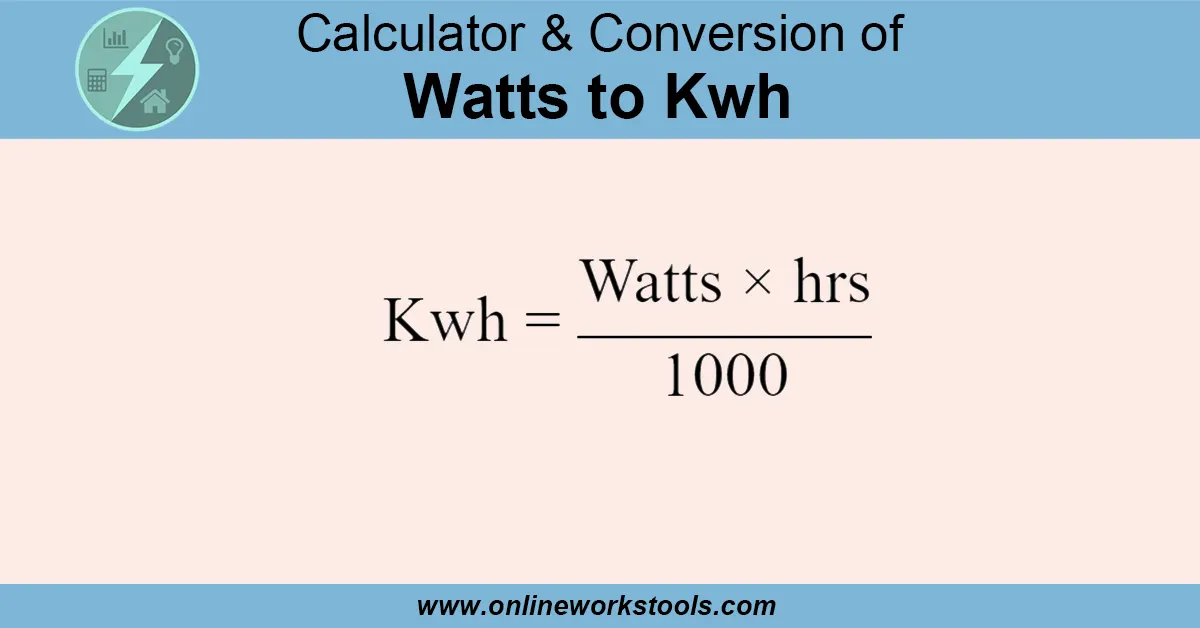
The key thing to remember is that the "h" in kWh stands for hours. It's energy used *over time*.
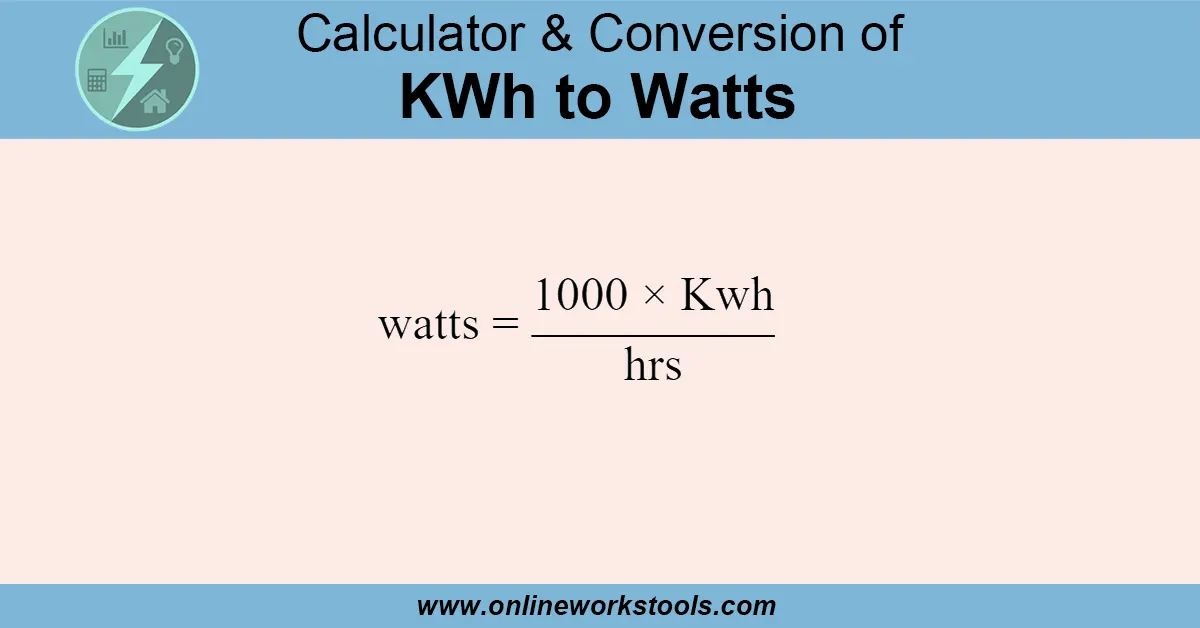
Here’s the super simple formula to find the average Watts used:
Watts = (Total kWh Used / Total Hours of Usage) * 1000
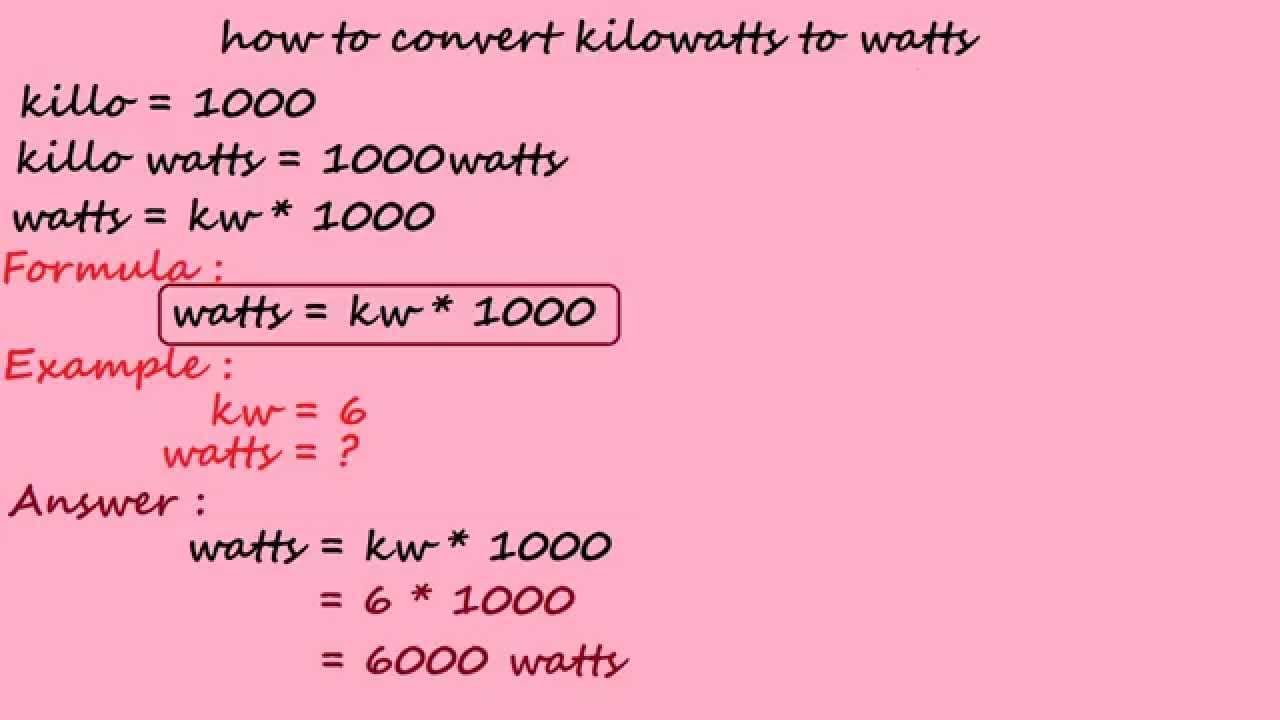
Why multiply by 1000 at the end? Because 1 kilowatt (kW) is 1000 Watts. So, converting from kilowatts (which you get from `kWh / hours`) to plain old Watts requires that multiplication.
Let's try a fun example:
Imagine your super cool new smart plug tells you your mini-fridge used 3 kWh over an entire 24-hour day. You're curious: what was its average power consumption in Watts during that time?
1. Plug in your numbers:
`Watts = (3 kWh / 24 hours) * 1000`
2. Do the division first:
`3 / 24 = 0.125` (This is kilowatts, or kW)
3. Now, multiply by 1000 to get Watts:
`0.125 * 1000 = 125 Watts`
So, your mini-fridge was, on average, drawing about 125 Watts over that 24-hour period. Pretty neat, right? Now you have a better idea of its "speed" of energy use!
More Fun Comparisons to Seal the Deal
Think of electricity like water flowing through a pipe:
- The Watts are like the rate of water flow right now – how many gallons per minute are rushing out?
- The kWh are like the total amount of water collected in a bucket over a certain time – how many total gallons did you fill?
If you collected 3 gallons of water (kWh) over 24 minutes (hours), you could easily figure out the average flow rate (Watts) per minute!
Or another one: You're running a marathon. Your speed at any given moment is like the Watts. The total distance you've covered by the end is like the kWh. If you know you covered 26.2 miles (kWh) in 4 hours (hours), you can calculate your average speed (Watts equivalent) during the race!
You're an Energy Wizard Now!
See? It's not rocket science. Converting kWh to Watts (or at least understanding the relationship) simply means you're figuring out the average power draw of something over a specific time, given its total energy consumption. It's a fantastic way to become more informed about your energy usage, make smarter choices, and maybe even impress your friends at your next gathering.
So next time you see "kWh" on a bill or "Watts" on a gadget, you won't just stare blankly. You'll give a knowing nod, perhaps even a tiny, proud smile. You've unlocked a little piece of the energy puzzle!