
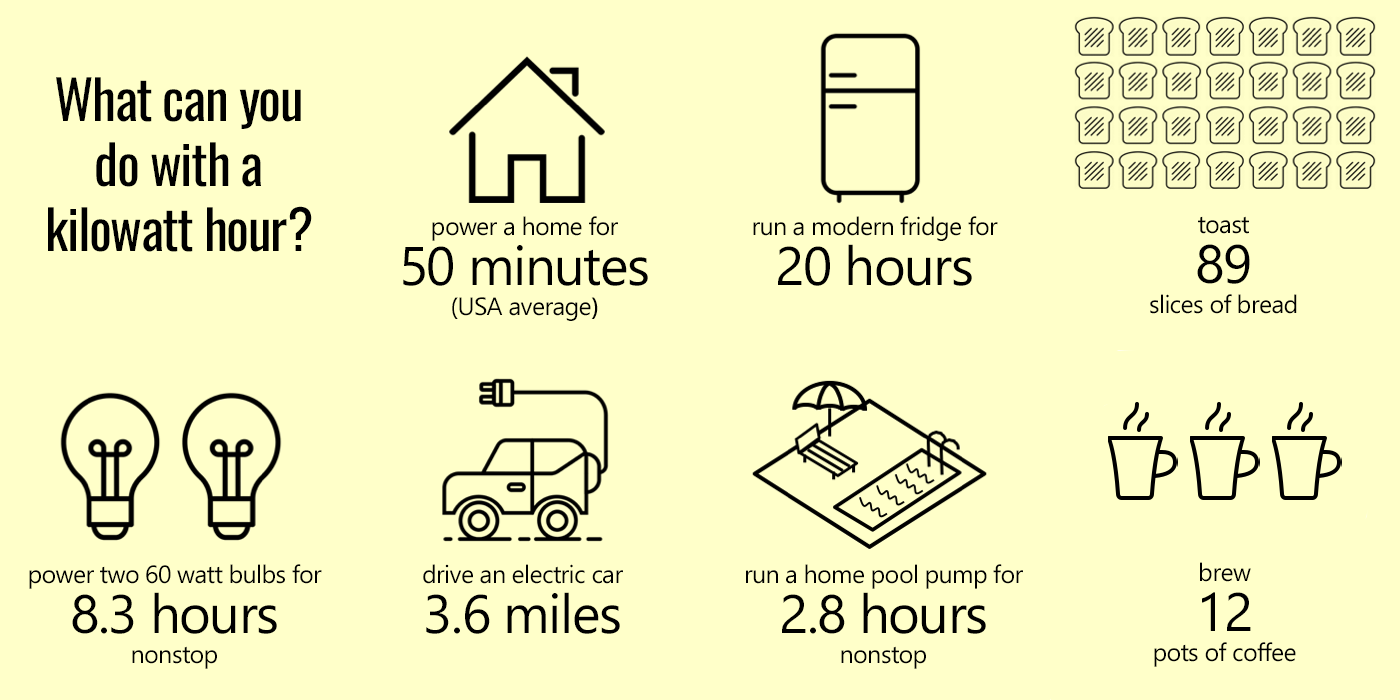
Ever found yourself staring at your electricity bill, a faint furrow appearing between your brows? Or perhaps you've heard someone casually mention "kilowatt-hour" and wondered, "What even is that, and why should I care?"
Well, grab a sustainable-sourced coffee, because we're about to demystify the humble kilowatt-hour (kWh). It’s not just a technical term; it’s the universal currency of electricity, the measuring tape for all the electron-fueled magic in your life, and understanding it is the first step to becoming a true energy guru.
So, What Exactly Is a Kilowatt-Hour?
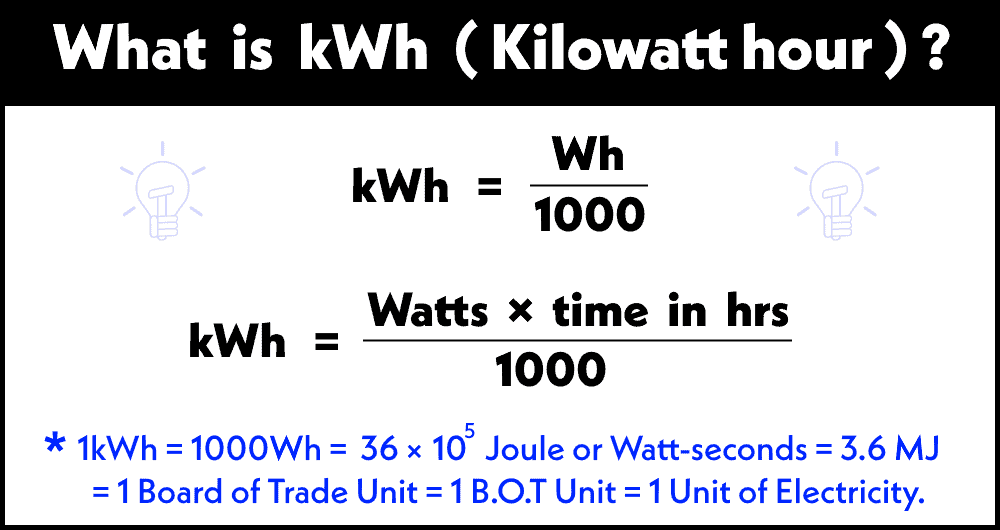
Let's break it down without resorting to confusing physics jargon. Think of it simply: a kilowatt-hour (kWh) is a unit of energy. It’s how your electricity company measures how much electricity you’ve used.
You know how miles measure distance, and litres measure liquid? kWh measures electricity consumption over time. Specifically:
- A kilowatt (kW) is a measure of power – how much electricity a device needs to run at any given moment. (1 kilowatt = 1,000 watts).
- An hour (h) is, well, an hour of time.
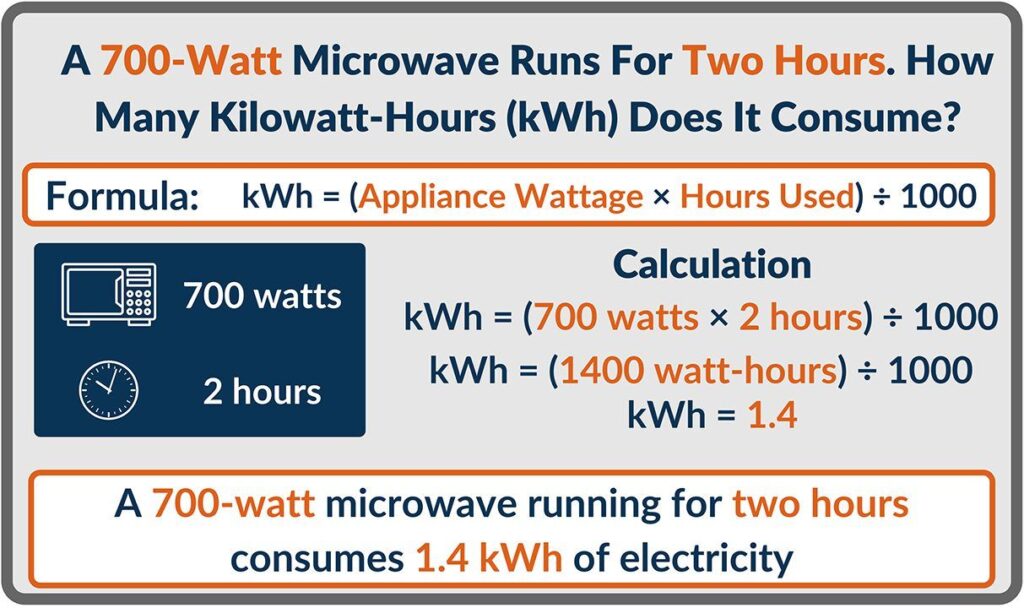
So, a kilowatt-hour is simply one kilowatt of power used for one hour. Easy, right?
Fun Fact: To put it into perspective, a typical 100-watt incandescent light bulb (remember those?) burning brightly for ten whole hours would consume exactly 1 kWh. If it were a modern, energy-efficient LED bulb, it would take a *lot* longer to hit that mark!
How Much Does a Kilowatt-Hour Actually Cost?
Here’s where it gets interesting, because there’s no single, universal answer. The cost of a kWh is a bit like the price of a gallon of gas or a pint of milk – it varies!
Across the US, for instance, you might see anything from a breezy 10 cents per kWh in some states to a more robust 25 cents or even higher in others. This fluctuation depends on several factors:
- Your Location: Different utility companies, cities, and states have different energy generation costs, infrastructure, and regulations.
- Time of Day/Year: Many areas use "time-of-use" pricing. Electricity is often cheaper during off-peak hours (like late at night or early morning) when demand is low, and more expensive during peak times (think dinnertime when everyone’s cooking and charging).
- Energy Source: Regions relying heavily on fossil fuels might have different pricing structures compared to those blessed with abundant renewable sources like hydropower or solar.
- Tiered Pricing: Some utility companies charge less for the first block of kWh you use and then more for subsequent blocks – a bit like a bulk discount, but in reverse!
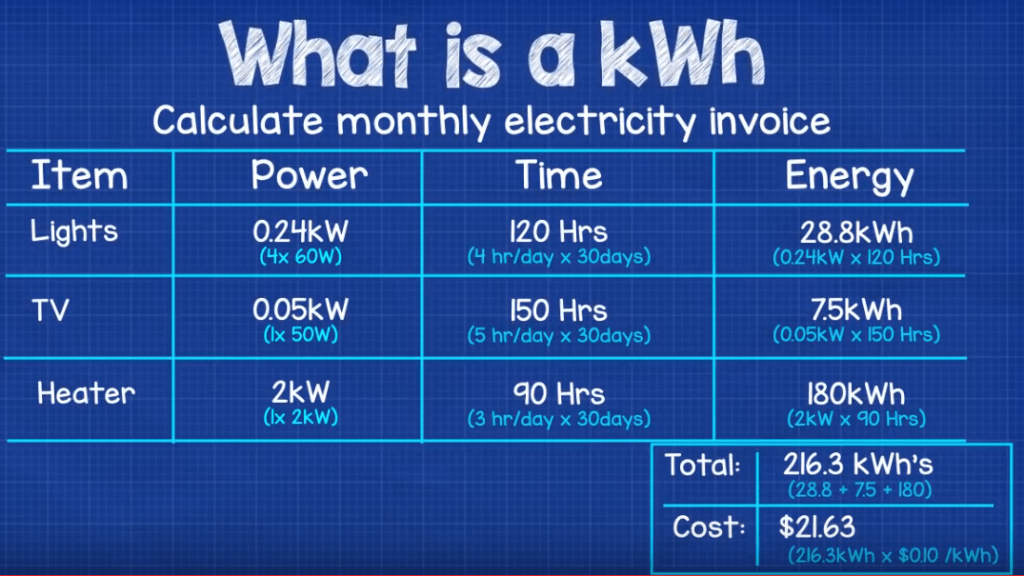
The average American home sips around 893 kWh a month. Imagine that! At, say, 15 cents per kWh, that's roughly $134 just for the energy itself, before taxes and other fees.
Why Should You Care About Your Kilowatt-Hours?
Beyond satisfying your inner data enthusiast, understanding kWh empowers you in several practical ways:
1. Decode Your Energy Bill: No more guessing! Your bill will make sense when you see that you’re paying for the quantity of electricity you consumed, measured in kWh.
2. Save Money (and the Planet!): When you know how much a kWh costs, you can make informed decisions. Is that old, humming fridge really worth its constant kWh drain? Perhaps investing in an energy-star certified appliance or switching to LED lighting makes more sense when you calculate the long-term savings.
3. Identify Energy Hogs: Ever wondered why your bill spikes some months? Understanding kWh helps you pinpoint the culprits. High-wattage devices like hair dryers, electric heaters, or even that always-on gaming rig, if used for extended periods, can quickly rack up the kWh.
Practical Tips to Be a kWh Pro:
- Check Your Bill Regularly: See how your kWh usage changes from month to month.
- Unplug "Vampire" Devices: Those phantom loads – devices that draw power even when 'off' or in standby – are like tiny energy vampires. Chargers, TVs, and computers all sip power when not actively in use.
- Embrace Smart Tech: Smart thermostats (like Nest or Ecobee) and smart plugs can help you monitor and control usage, ensuring you're only using energy when you truly need it.
- Go LED: If you haven't already, switching to LED bulbs is one of the quickest and most impactful ways to reduce your lighting kWh.
The Daily Ripple Effect
From the moment your alarm clock buzzes (powered by a few tiny electrons) to your evening binge-watch, every single action in our modern lives consumes electricity. And every bit of that electricity is measured in kWh.
So, the next time you flick a switch, charge your phone, or brew a pot of coffee, take a moment to appreciate the humble kilowatt-hour. It’s not just a number on a bill; it’s a tangible unit connecting you to your energy consumption, your wallet, and even the planet. Understanding it means you’re not just a consumer; you’re an informed, empowered, and perhaps even a little bit greener, energy user. And that, my friend, is pretty cool.
.png)