Alright, settle in, grab your imaginary latte, because we need to talk about something that probably keeps you up at night... or at least makes you ponder on a sweltering afternoon: how much energy do those trusty fans actually gobble up?
You know the drill. It’s a blistering day, the air conditioner is waging a valiant but losing battle, and you eye that spinning salvation in the corner. You flick the switch, a glorious breeze washes over you, and then BAM! A tiny, nagging thought whispers in your ear: "Am I secretly powering a small city with this thing?"
The Great Fan Energy Conspiracy (Spoiler: It's Not a Conspiracy)
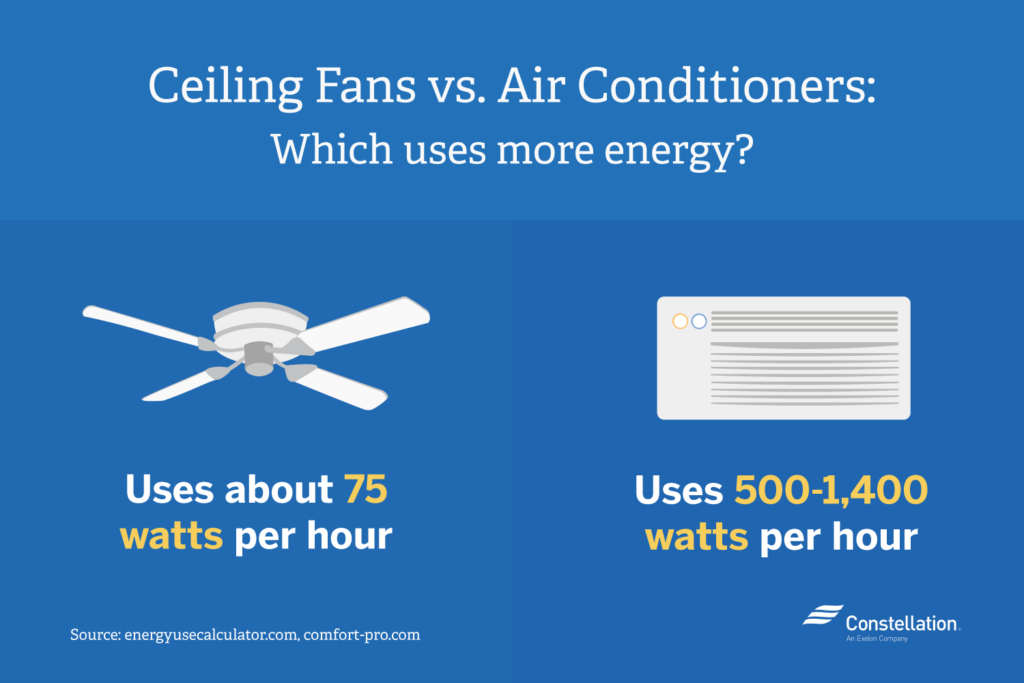
Let me put your mind at ease right away. Your fan is not an energy vampire. It’s more like a polite energy sipper, a tiny, whirring buddy that just wants to help you feel less like a melted candle. Compared to, say, your air conditioner, which is basically an entire energy dragon breathing fire (and cold air) into your home, your fan is a mere kitten lapping milk.
Think about it. An average window or portable fan typically uses between 50 to 100 watts of power. To put that into perspective, an old-school incandescent light bulb might use 60 watts. So, your fan is basically like running a slightly enthusiastic light bulb that makes wind.
A typical 100-watt fan running for 10 hours a day would use 1 kilowatt-hour (kWh) of electricity. Now, electricity prices vary wildly, but let's say you're paying around 15 cents per kWh. That means your fan is costing you a grand total of... wait for it... 15 cents a day!
That's right. For the price of roughly one M&M (depending on your bulk buying habits), you get a full 10 hours of breezy bliss. Is your mind blown? Mine too! It’s less than that fancy coffee you're probably not actually holding right now.
Ceiling Fans: The Silent, Efficient Heroes
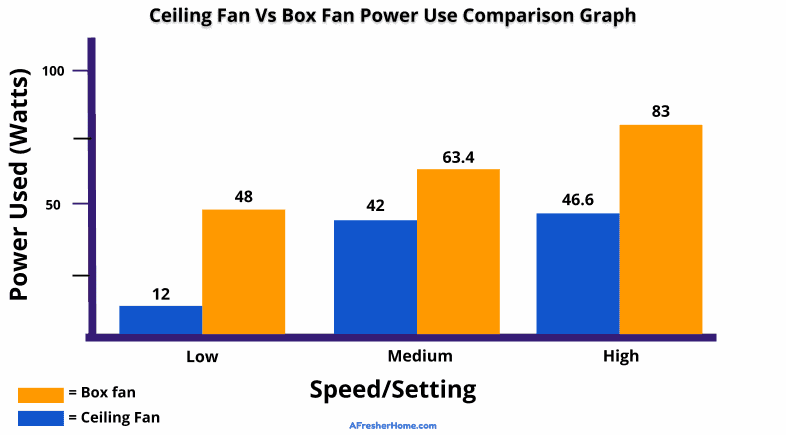
Now, what about those elegant spinning giants on your ceiling? Ceiling fans are often even more efficient, especially the newer models with DC motors. They can use as little as 15 to 20 watts on their lowest setting. That's like charging your phone and still having energy left over for a tiny, digital ant! It's ridiculously low.
Here's a fun fact that might surprise you: fans don't actually cool the room. Nope! They just move air around. What they *do* is create a wind-chill effect on your skin, making you *feel* cooler. It's like a tiny, personal magic trick for your body.
This is why it's a bit of an energy faux pas to leave your fan running in an empty room. It's not cooling the furniture or the cat (unless the cat is *really* hot). You're just paying to stir up the same warm air. So, if you're leaving the house, hit that switch! Your wallet will thank you, and the fan won't feel lonely, it promises.
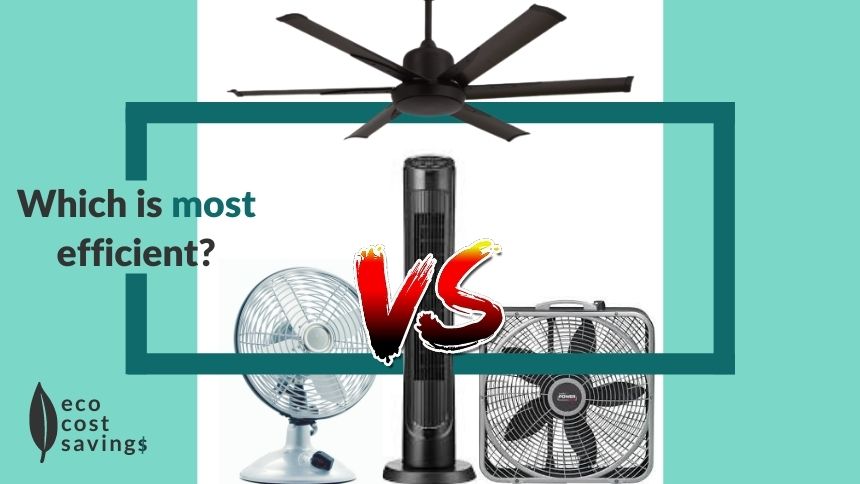
The Infamous Box Fan vs. Pedestal Fan vs. Tower Fan Showdown!
Are some fans greedier than others? Generally, the bigger the fan and the stronger the motor, the more power it'll draw. A hefty box fan might lean towards the higher end of that 50-100 watt spectrum, while a sleeker tower fan or a smaller personal desk fan will be on the lower end, sometimes as little as 25-30 watts. Think of it as the difference between a small sip and a slightly larger sip – still nowhere near chugging from the energy keg.
And let's not forget the "oscillating" feature. Does all that head-swiveling waste power? Marginally! It’s a tiny motor doing a tiny job. You’re talking about pennies of pennies. Don't sweat it. Let your fan bob its head with pride!
"But What If I Leave It On All Night, Every Night?!"
Okay, let's address the panic scenario. Let's say you're a creature of habit, and your fan becomes your soothing white noise machine all night long. A 100-watt fan running for 8 hours while you sleep is 0.8 kWh. At 15 cents/kWh, that's still just 12 cents a night. Over a month, that's about $3.60. For blissful sleep and feeling cool? That's a steal!
Seriously, your phone charger, even when not charging, might be using a tiny bit of "phantom power" (though modern ones are much better). Leaving a fan on is often less of an energy guilt trip than other forgotten electronics.
The Verdict: Embrace the Breeze!
So, the next time you feel that glorious gust of manufactured wind, relax. Your fan isn't going to send your electricity bill to the moon. It's a remarkably energy-efficient way to stay comfortable without breaking the bank or contributing significantly to global energy woes.
In fact, using a fan can often allow you to turn your thermostat up a few degrees on your air conditioner, which *will* save you significant money. So, in a strange, roundabout way, your fan might actually be a money-saving hero! Who knew a simple spinning contraption could be so noble?
Go forth, my friends, and fan yourselves freely. Your wallet (and the planet, to a smaller degree) will forgive you for that minuscule energy indulgence. Now, who's buying the next round of imaginary lattes?