Picture this: It's the height of summer, the sun is blazing down like a jealous god, and your RV, bless its heart, is starting to feel less like a home on wheels and more like a
It’s a question that has plagued RVers for generations, right up there with "Did I remember to dump the tanks?" and "Where did I put the good instant coffee?" The answer, my friends, is less a simple number and more a wild goose chase through the jungle of electrical currents. But fear not, for I am here to guide you, armed with humor and hopefully, some clarity!
The Great Wattage Mystery: It's Not a Single Number!
First off, let's get one thing straight: there isn't a single, universal "RV AC wattage" number. It's like asking "How much does a car cost?" Well, it depends, doesn't it? Is it a rusty pickup or a luxury sports car? Your RV AC is no different. Its appetite for watts depends on several things, primarily its BTU rating.
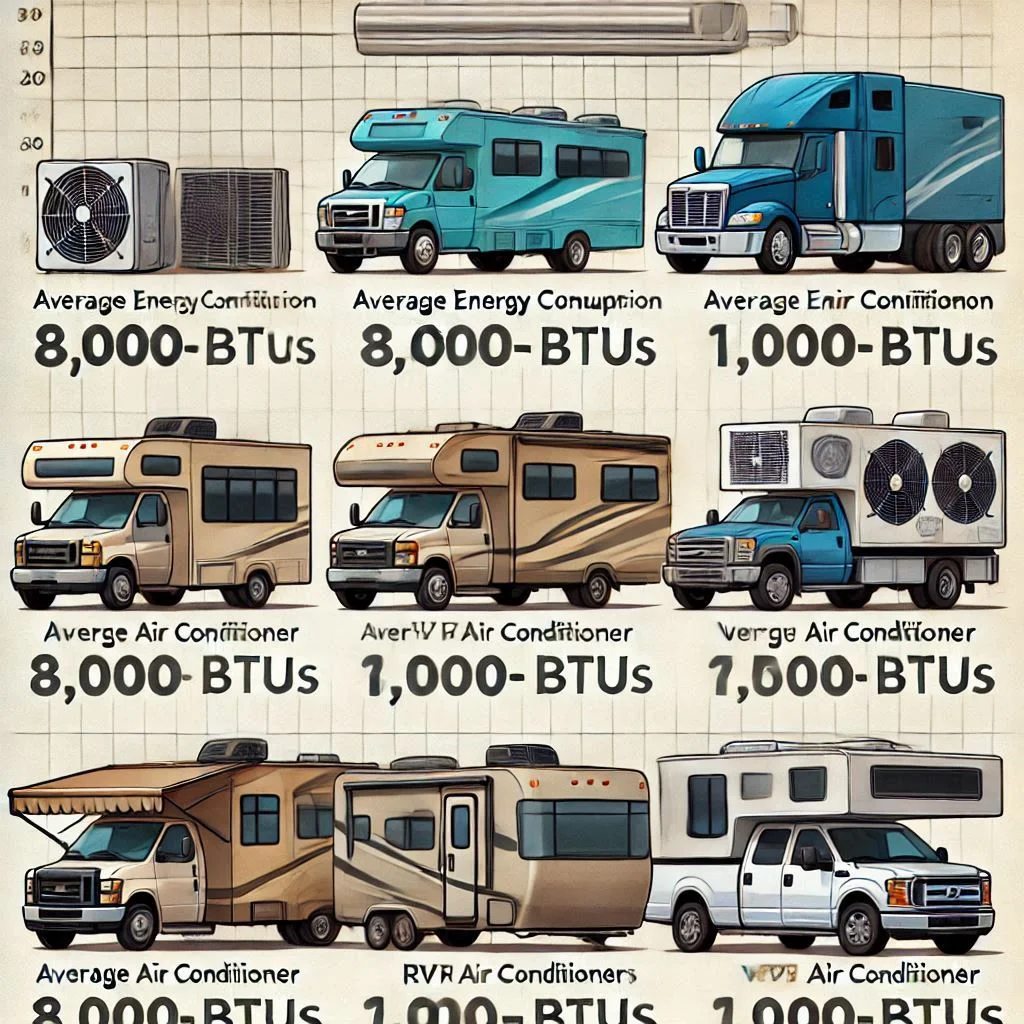
BTU stands for British Thermal Units, which sounds incredibly fancy for measuring how much heat an AC unit can remove. Most RVs come with either a 13,500 BTU or a 15,000 BTU AC unit. Some monster rigs might even have two! And just like a person's appetite, the bigger the unit, the more "food" (electricity) it wants.
The Two-Headed Wattage Beast: Starting vs. Running Watts
This is where things get truly interesting, and often, quite surprising. Your AC unit has two distinct power modes, kind of like a teenager: calm and collected most of the time, but then a sudden, massive surge of energy when it wants something. We're talking about running watts and starting watts.
Running watts are the steady, continuous power your AC needs once it's up and humming along. This is the "calm teenager" phase, just quietly chilling. For a typical 13,500 BTU AC, you're usually looking at around 1,200 to 1,700 running watts. A 15,000 BTU unit might chew through 1,500 to 2,000 running watts.
But then there's the starting watts. Oh, the starting watts! This is the
So, our 13,500 BTU unit that runs at 1,500 watts might need a whopping 3,000 to 4,500 watts to start up. And that 15,000 BTU beast? It could demand 3,500 to over 5,000 watts for that initial kick. This momentary but immense power draw is why many a generator has choked and died a wheezing death when trying to fire up an RV AC.
Don't Forget the Neighbors! (Other Appliances)
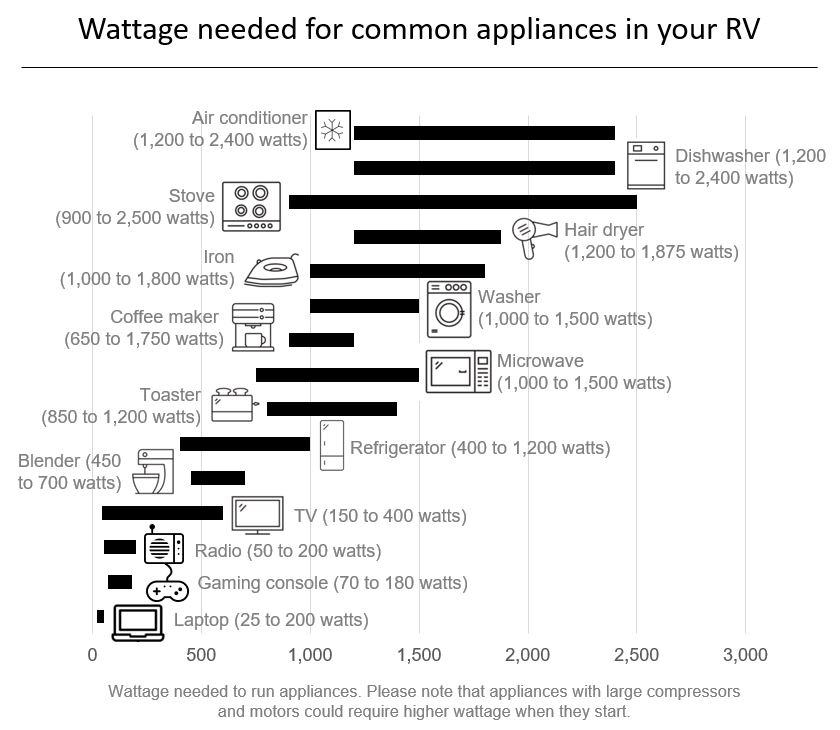
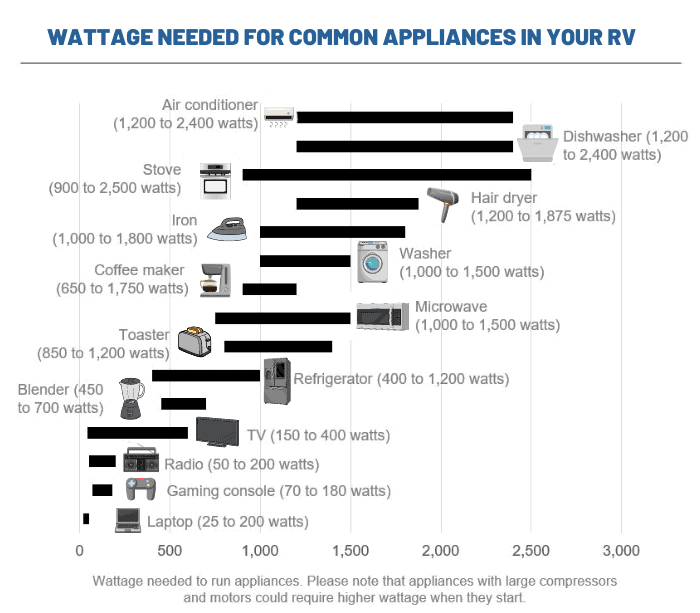
Now, while your AC is the undisputed king of power consumption, it's not the only one at the party. Your microwave, your coffee maker, even your hair dryer (gasp!) are all jostling for power. If you're running your AC off a generator or limited shore power, you need to factor in everything else. It's like trying to run a marathon while carrying a fridge on your back – something's gotta give!
A good rule of thumb? Always assume your AC will need a bit more than the factory sticker says, especially if it's an older unit. And always, always factor in those other hungry appliances.
The RV Wizardry: Soft Start Kits
Is there a way to tame the starting watts beast? You bet there is! Enter the hero of our story, the soft start kit. This little piece of RV magic is an absolute game-changer. What it does, in simple terms, is
With a soft start kit installed, that initial starting surge can be reduced by up to 70%! This means a generator that used to choke on your AC might now purr contentedly. You could even run your AC on a smaller, quieter generator (like a 2,200-watt inverter generator) or even some larger battery inverters. It’s like teaching your AC unit some manners.
So, What Size Generator Do I Actually Need?
This is the million-dollar question, or rather, the several-hundred-dollar-generator question. If you want to run your single RV AC unit comfortably, plus a few minor things (lights, phone chargers), without a soft start kit, you’re generally looking at a generator in the 3,000 to 4,000-watt range. This gives you enough headroom for that starting surge.
However, if you install a soft start kit, you can often get away with a much smaller generator, like a 2,200-watt or 2,500-watt inverter generator. These are usually lighter, quieter, and more fuel-efficient. It’s the difference between hauling a behemoth and carrying a briefcase.
Tips for a Cooler, Less Watt-Hungry RV Experience
- Park in the Shade: Sounds obvious, right? But even partial shade can dramatically reduce how hard your AC has to work.
- Insulate, Insulate, Insulate: Good insulation in your RV (and even reflective window covers) keeps the cool air in and the hot air out.
- Pre-cool: If you have shore power, run your AC for an hour or two before you go off-grid. It’s easier to maintain cool than to create it from scratch.
- Don't Be a Door-Dasher: Every time you open that RV door, you're letting in the heat monster. Try to minimize it!
- Monitor Your Power: Devices like RV power monitors can show you exactly how many watts each appliance is drawing. Knowledge is power, literally!
The Takeaway: It's All About Balance
Understanding how many watts your RV AC needs is less about memorizing a number and more about understanding the dynamics of power. It’s about the fierce initial surge and the calmer running current. It’s about factoring in your other gadgets and, perhaps most importantly, knowing that clever inventions like soft start kits can truly change your RVing game.
So, next time you're sweating bullets, dreaming of that glorious chill, you’ll know exactly what’s happening behind the scenes. And with a little planning, you can ensure your RV stays a cool oasis, even when the outside world feels like the surface of the sun. Happy camping, and may your watts always be sufficient!