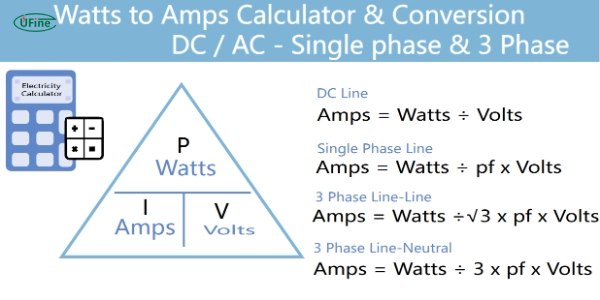
Ever gazed at the back of your phone charger, a hairdryer, or even a light bulb? You probably noticed a bunch of mysterious numbers and letters. Among them, two often pop up like old friends at a party: Watts and Amps. It’s natural to wonder, “How many Watts are in an Amp?” It sounds like a straightforward question, right? Like asking how many minutes are in an hour, or how many cookies are in a batch.
But here’s where the fun begins, and why this seemingly simple query leads to a rather entertaining secret! It turns out, you can’t just swap Watts for Amps directly. It’s like asking how many “loudness” are in a “speed.” They’re related, sure, but they’re measuring totally different things! This little puzzle is what makes understanding electricity so curiously special and engaging.
The Missing Ingredient: Say Hello to Volts!
To truly answer the question, we need to introduce a third player to our electrical party: Volts. Think of electricity like a flowing river. Each part of that river represents something different:
- Amps (short for amperes) are like the volume of water flowing past a point in the river. It’s the sheer amount of electrical current, the number of tiny electrical "workers" hustling by. More Amps mean more electrical workers on the job!
- Volts (short for voltage) are like the pressure or force pushing that water. Is it a lazy, meandering stream or a powerful, rushing waterfall? High Volts mean a strong push, making those electrical workers hustle even faster!
- And finally, Watts (short for wattage) are the grand total – the overall power or energy being delivered. It’s the total work that river can do, like how much energy it has to turn a giant water wheel or power a whole village.
So, you see, you can’t just have "how many Watts in an Amp" because it’s missing that crucial "push" from the Volts!
Why This Is So Entertaining and Special
This isn't just about dry science; it’s about solving a mini-mystery that powers our entire world! Once you grasp that you need all three—the volume (Amps), the push (Volts), and the total power (Watts)—it unlocks a new way of looking at everyday things. It’s like discovering the secret ingredient in your favorite recipe! You feel a little bit like an electrical detective, suddenly understanding the cryptic language on your devices.
For example, a device that uses fewer Amps but has a lot of Volts might still have a high Wattage, meaning it's powerful even if not a huge "volume" of electricity is flowing. Or, you could have lots of Amps at low Volts, also leading to significant Watts. It’s all about the combination!
Connecting the Dots: The Simple "Secret"
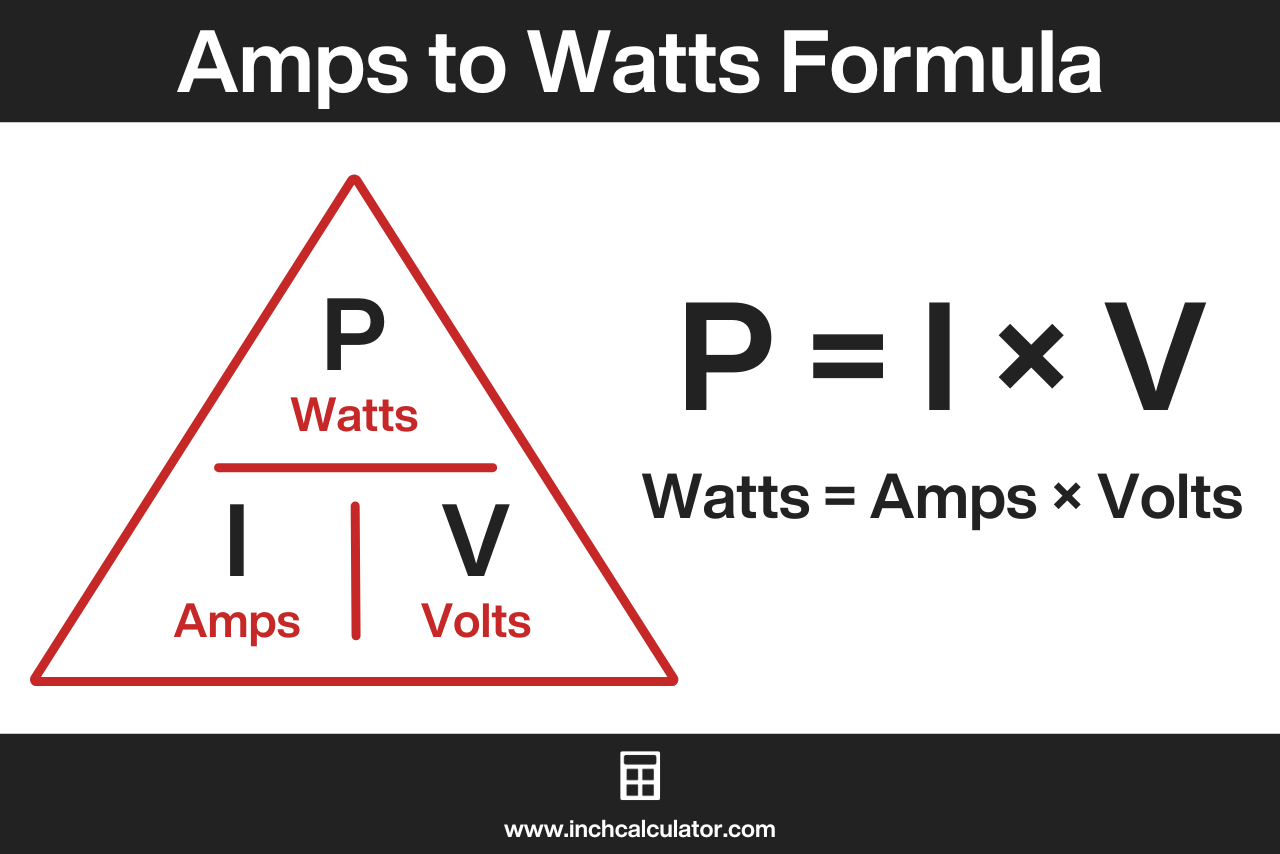
The really fun part? These three electrical amigos work together in a super simple way. If you want to know the total power (your Watts), you just multiply the force (your Volts) by the volume (your Amps). That's it!
So, the next time you look at a device and see it uses, say, 120 Volts and 2 Amps, you can quickly do the math (120 x 2 = 240) and know it’s a 240-Watt device! Suddenly, those numbers aren't so mysterious. You're not just plugging something in; you're plugging into a fascinating, dynamic interplay of electrical forces.
This simple insight makes electricity a little less intimidating and a lot more captivating. It transforms those confusing labels into a secret language you can now understand. So go ahead, peek at your electronics! See if you can spot the Volts and Amps, and maybe even calculate the Watts. It’s a neat little piece of everyday magic, and now you’re in on the secret!