Hey there, energy enthusiast! Or maybe just someone who’s stared at their electricity bill with a slight furrow in their brow, wondering if their toaster is secretly plotting world domination (and charging them for it). Either way, you’ve landed in the right spot, because today we’re tackling a question that often trips people up: “How many watts in a kilowatt-hour?”
And I’m going to tell you something right off the bat, like a spoiler for a movie you haven't seen yet: it’s a bit of a trick question! *Gasp!* Don't worry, no pop quizzes here, just some friendly demystification. Think of it less like a math problem and more like a riddle we’re solving together, over a virtual coffee (or a perfectly brewed cup of tea, whatever floats your electric boat).
The Great Power vs. Energy Showdown!
To truly understand why "watts in a kilowatt-hour" is like asking "how many miles in an hour," we need to meet our two main characters: Power and Energy. They sound similar, but they're about as different as a cheetah and the distance it runs.
First up, Watts (W) are units of power. Think of power as the rate at which electricity is being used or produced at any given moment. It’s like the speedometer in your car, telling you how fast you're going right now – say, 60 miles per hour. A high-wattage appliance (like a hair dryer or a microwave) uses a lot of power quickly, while a low-wattage LED bulb sips power gently.
Now, enter the Kilowatt-hour (kWh). This is where things get interesting! A kilowatt-hour is a unit of energy. And energy, my friend, is all about power used over time. If watts are your car's speed, then kilowatt-hours are the distance you've traveled. You wouldn't ask, "How many miles in an MPH?" right? That just doesn't compute! Similarly, you don’t find watts *in* a kilowatt-hour; rather, watts are part of what *makes up* a kilowatt-hour when time is added to the equation.
Breaking Down the Kilowatt-Hour (It's Easier Than It Sounds!)
Let’s dissect that fancy-sounding kilowatt-hour:
- Kilo-: This simply means "one thousand." So, a kilowatt is 1,000 watts. Just like a kilometer is 1,000 meters. See? Easy peasy!
- Watt: We just covered this! It's our unit of power, the "how fast."
- Hour: This is the critical missing piece! It's the "for how long."
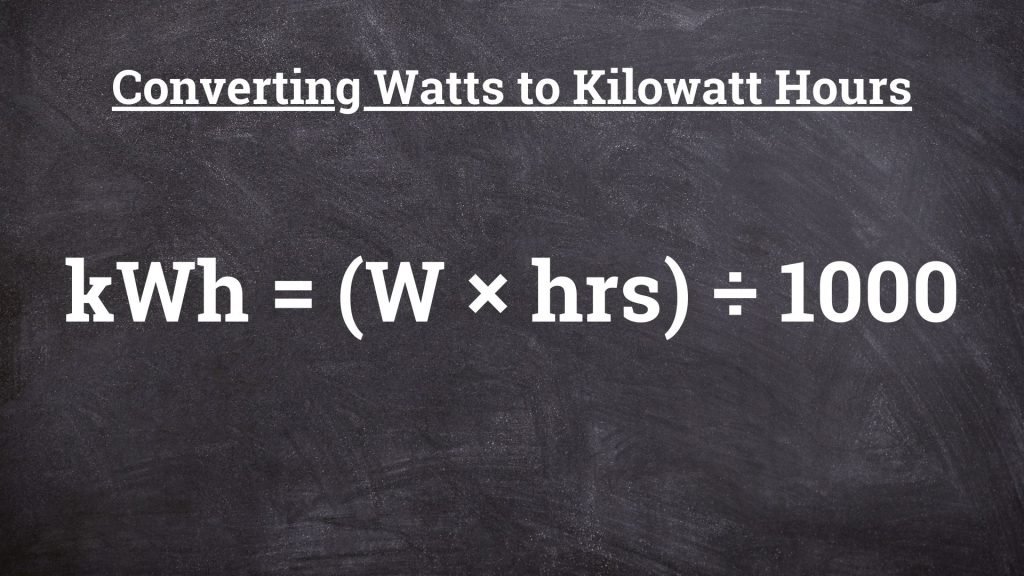
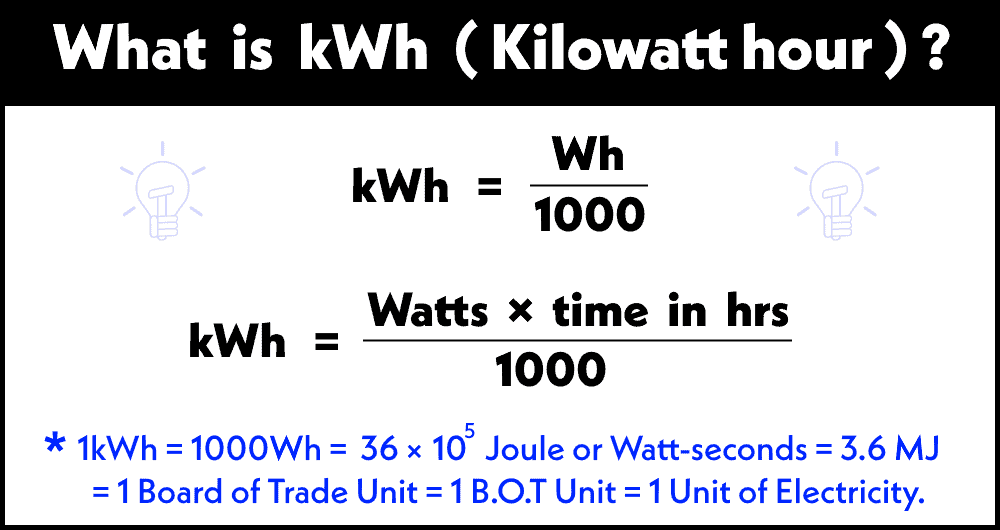
So, a kilowatt-hour (kWh) is literally one thousand watts of power being used for one continuous hour. It's the total energy consumed over that period. Your electricity company charges you for every kWh you consume, not just how powerful your appliances are.
Let's make it super clear with a couple of examples:
- Imagine a powerful space heater that uses 1,000 watts (1 kW). If you run it for one hour, you've used 1 kWh of energy.
- What if you have a super energy-efficient LED light bulb that only uses 10 watts? You'd have to leave that little trooper on for a whopping 100 hours (10W * 100 hours = 1000 Wh, which is 1 kWh) to consume the same amount of energy! Talk about dedication.
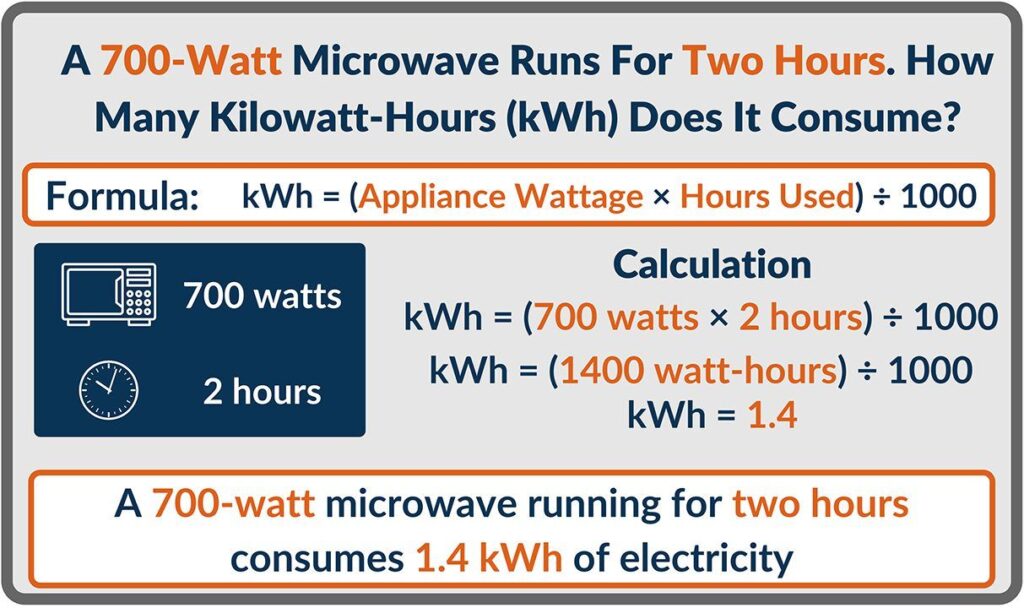
- Or, consider your microwave, maybe it’s a 1,500-watt beast. If you run it for two hours (not recommended for your dinner, or your ears), that would be 1.5 kW * 2 hours = 3 kWh.
See? It's all about how much power an appliance draws and for how long it draws it. The longer something powerful runs, the more kWh it racks up!
Why Does This Matter to You (Besides Sounding Smart at Parties)?
Understanding the difference between watts and kilowatt-hours is actually pretty empowering! When you look at an appliance, you often see its wattage. This tells you how much juice it demands when it's on. But when you look at your electricity bill, it's the kilowatt-hours that tell the real story of your consumption and, more importantly, your cost!
Knowing this helps you make smarter choices:
- You can estimate how much energy your gaming PC or that mega-TV is actually costing you.
- It helps you appreciate why turning off lights (especially the older, higher-wattage ones) or unplugging unused electronics (vampire power!) can genuinely shave pennies (and sometimes dollars!) off your bill.
- It makes you the resident energy guru, capable of explaining this wonderfully nuanced concept to baffled friends and family.
The Smiling Conclusion
So, to wrap up our little energy chat: you don't ask "how many watts in a kilowatt-hour" because they're different beasts entirely. Watts are about the intensity of energy use (power), and kilowatt-hours are about the total amount of energy used over time. One can't exist without the other, but they're not interchangeable!
You’ve just leveled up your energy literacy, my friend! You’re now equipped to look at your appliances and your bills with a newfound understanding, making you a savvier, smarter, and potentially richer energy consumer. Go forth and conquer your power usage – and maybe treat yourself to something nice with those energy savings. You’ve earned it!
.png)