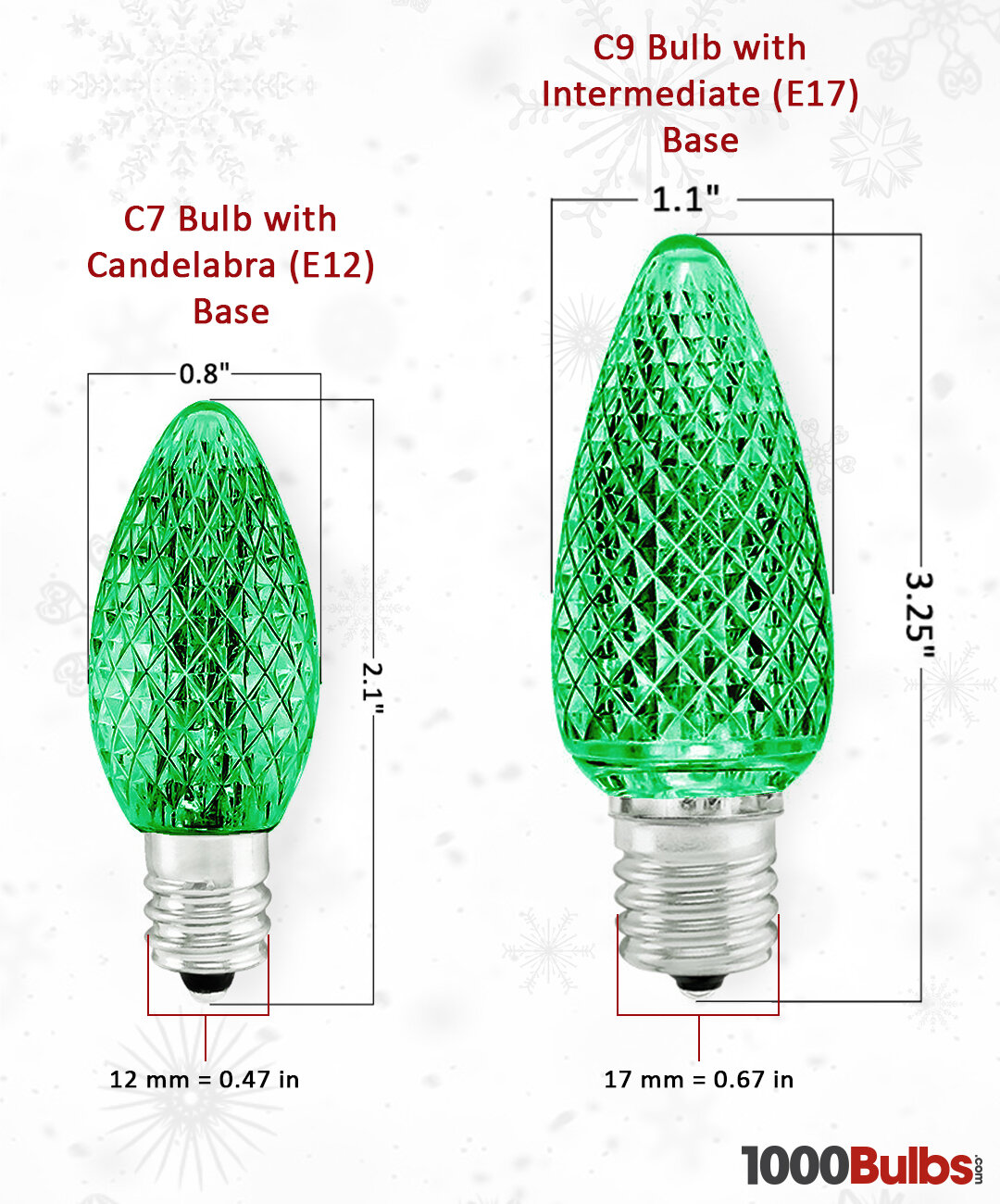
Hey there, friend! Grab a coffee, settle in. We're about to tackle one of life's truly pressing, coffee-chat-worthy questions. And no, it's not "Why do socks disappear in the dryer?" (A mystery for another day!). Today, we're diving into the delightful, often dazzling, world of those classic
You know the ones, right? The big, glorious, often colorful lights that adorned our childhood homes, made every rooftop look like a festive wonderland, and generally just screamed, "Happy holidays!" They're chunky, they're iconic, and they bring a serious dose of nostalgia.
So, How Many Watts Are We Talking About?
This is where it gets a little interesting. Because, like most things in life, the answer isn't a simple, cut-and-dry number. It’s not a one-size-fits-all kind of deal. Oh no. We need to do a little detective work here, you and me.
The wattage of a C9 bulb actually
The Incandescent C9: A Bright, Hot, "Energy Hog" Story
Let's start with the OG, the classic, the bulb that probably lit up your grandma's house. We're talking about the incandescent C9 bulb. These bad boys are the ones that give off that incredibly warm, almost magical glow. But let's be real, they also get
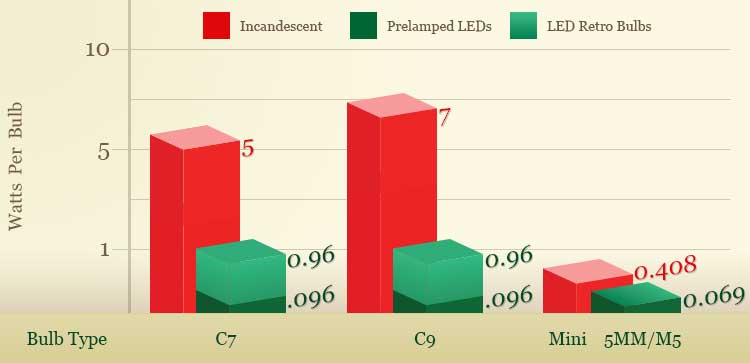
And for good reason! They're basically tiny heaters designed to emit light. Because of how they work (heating a filament until it glows), they consume a fair bit of electricity. For your typical incandescent C9 bulb, you're usually looking at somewhere around 5 to 10 watts per bulb.
Let's take 7 watts as a really common example. Think about it: if you have a string of 25 of these beauties, that's 25 bulbs x 7 watts/bulb = 175 watts for just
And if you're like me, you don't stop at one string. Oh no. You've got several going, maybe even a dozen. Hooking up multiple incandescent strings can quickly add up, taxing your circuit, requiring heavy-duty extension cords, and sometimes, sending you fumbling for the breaker box. Who wants that in the middle of a festive evening?
Enter the LED C9: The Cool, Efficient Game-Changer
Now, let's talk about the new kid on the block, the superstar of sustainability: the LED C9 bulb. These are the modern marvels that give you that same festive C9 look, but with a fraction of the power consumption. And guess what? They stay nice and
The difference in wattage here is, frankly, astounding. While an incandescent C9 sips (or rather, gulps) 5-10 watts, an LED C9 is often in the range of 0.5 to 1 watt per bulb. Seriously. Some are even less!
Let's use 0.8 watts as a typical example for an LED C9. If you have that same string of 25 bulbs, you're only looking at 25 bulbs x 0.8 watts/bulb = 20 watts total for the entire string! Compare that to the 175 watts of its incandescent cousin.
This means you can connect
Why Does Knowing the Wattage Even Matter?
Good question! And one worth answering over another sip of coffee. Knowing the wattage is actually super important for a few key reasons:
- Your Wallet: Lower wattage equals lower electricity bills. Simple math, happy bank account.
- Circuit Capacity: Every electrical circuit in your home has a limit. Overload it, and you'll trip a breaker. Knowing your total wattage helps you avoid unexpected darkness.
- Safety: Incandescent bulbs generate a lot of heat. High wattage can mean more heat, which can be a fire risk if bulbs are touching flammable materials or if wiring is old/damaged. LEDs run much cooler.
- Convenience: How many strings can you connect? With LEDs, the answer is usually "a lot!" With incandescents, you're severely limited.
How Do You Tell Which Is Which?
Usually, the packaging will proudly declare "LED" if they are. If you have loose bulbs, LEDs often have a more complex internal structure visible through the plastic lens, and a different base design. Incandescents have that clear filament in the middle.
But the easiest way? Look for the wattage printed on the bulb's base or on the original packaging. If it says 7W, it's incandescent. If it says 0.8W, it's LED. And if it's old, hot to the touch, and unlabelled? It's probably an incandescent, and a hungry one at that!
The Takeaway, My Friend
So, the next time you're admiring those gorgeous C9 bulbs, remember the big distinction. Incandescent C9s typically use 5-10 watts per bulb, making them beautiful but power-hungry. LED C9s, on the other hand, sip a tiny 0.5-1 watt per bulb, giving you all the festive cheer with a fraction of the energy cost and heat.
Go forth and light responsibly! And maybe, just maybe, treat yourself to some new LED C9s. Your future self (and your electric bill) will thank you. Cheers!