Ever found yourself staring at an appliance label or an electricity bill, seeing terms like "watts" and "kilowatts," and wondering what on earth the difference is? You're not alone! It might sound like a super technical topic, but really, it's just a simple measurement that helps us understand the power that makes our modern lives tick. And honestly, once you get it, it feels a bit like unlocking a secret code for your home and beyond!
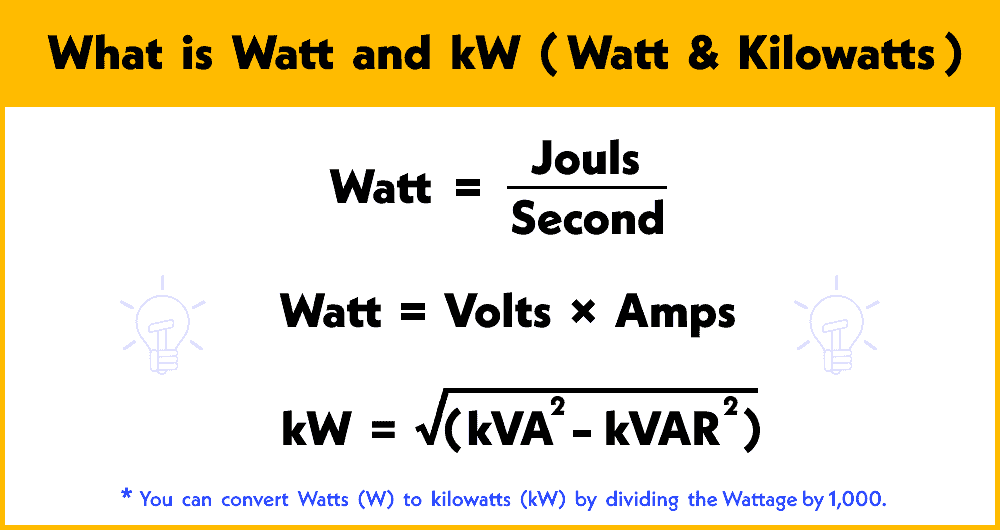
So, let's unravel this little mystery. At its heart, a watt is a unit of power. Think of it as the rate at which energy is used or produced. A light bulb uses watts, your hairdryer uses watts, even your phone charger uses a tiny amount of watts. When you see a higher wattage number, it simply means that appliance needs or uses more power at any given moment.
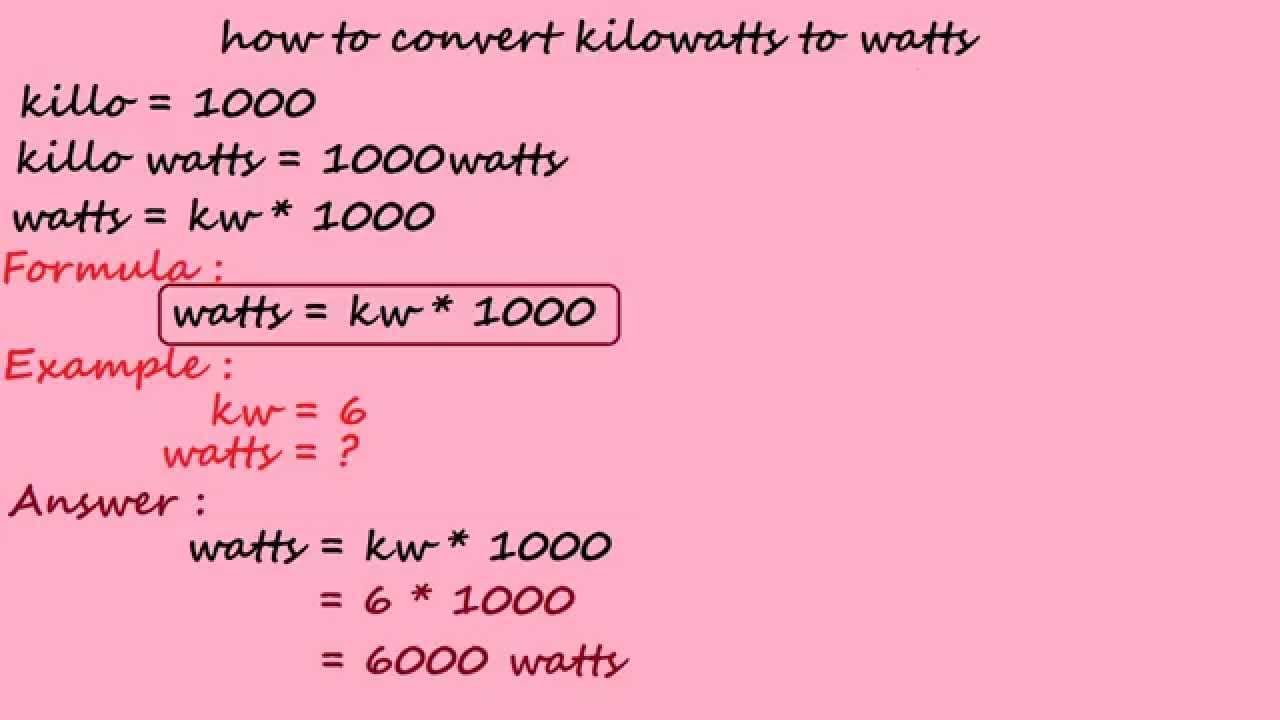
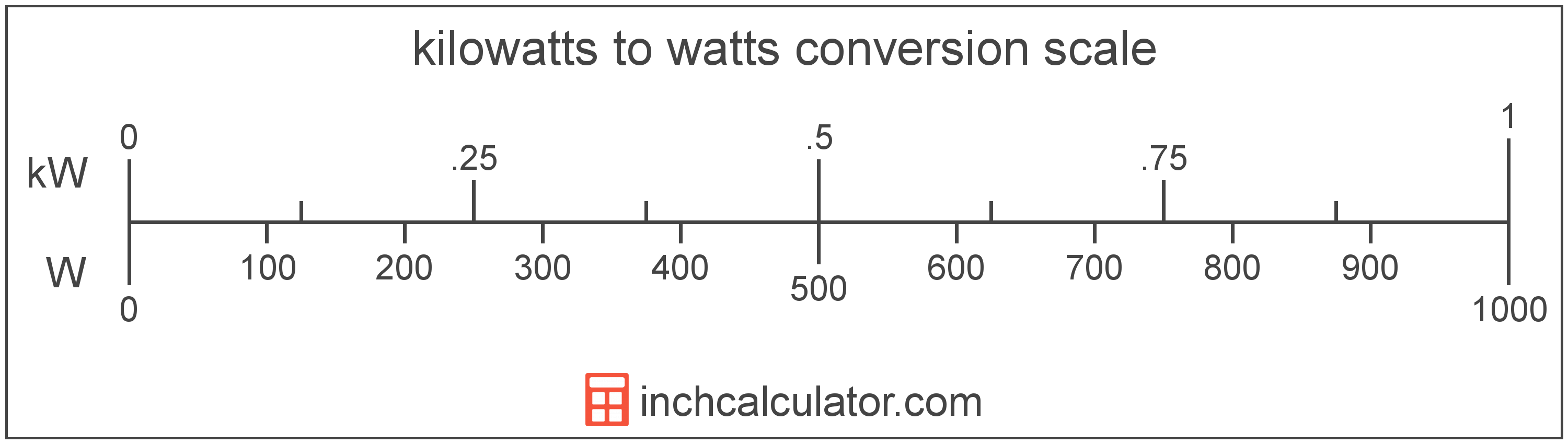
Now, where does the kilowatt come in? It's even simpler than you might think! The prefix "kilo-" literally means one thousand. You've encountered it before: a kilogram is 1,000 grams, and a kilometer is 1,000 meters. Following this pattern, a kilowatt (kW) is simply 1,000 watts. That's it! So, if you have an appliance that uses 1,000 watts, you could also say it uses 1 kilowatt of power.
Why bother with kilowatts then? Well, for a very practical reason: convenience! Imagine talking about a powerful electric oven that uses 3,000 watts. It's much easier to say it uses 3 kilowatts, isn't it? It's like measuring a long road in kilometers instead of thousands of meters. This simple conversion helps us talk about larger amounts of power in a much more manageable way, especially when discussing big appliances, entire homes, or even cities' energy grids.
Understanding this conversion offers some real benefits in your daily life. For starters, it helps you demystify your electricity bill, which often charges you by the kilowatt-hour (kWh) – a measure of how much power you've used over time. Knowing the difference between watts and kilowatts allows you to better estimate how much electricity your high-power devices consume. It also empowers you to make smarter choices when buying new appliances, comparing their energy efficiency, or even considering solar panels, which are often rated in kilowatts.
Want to explore this a bit more yourself? It's super easy! Next time you're in your kitchen or laundry room, take a peek at the labels on your appliances. You'll likely see their power consumption listed in watts. Try converting a few of these to kilowatts in your head. For example, a microwave that says "1200W" actually uses 1.2 kW. Look at your electricity bill and see if you can spot the total kWh used, then think about how many kilowatts you might be using at peak times. It’s a fun, little mental exercise that brings a bit more clarity and control to your energy consumption. Happy exploring!