Hey there, energy explorer! Ever found yourself staring blankly at an appliance label or an electricity bill, seeing all those mysterious "W"s and "kW"s, and just wishing someone would break it down for you? You’re not alone! It’s one of those things that sounds super technical but is actually, like, *way* simpler than you think. And trust me, understanding it can make you feel like a mini-superhero of your own home’s power consumption. So, grab your imaginary coffee, let’s chat!
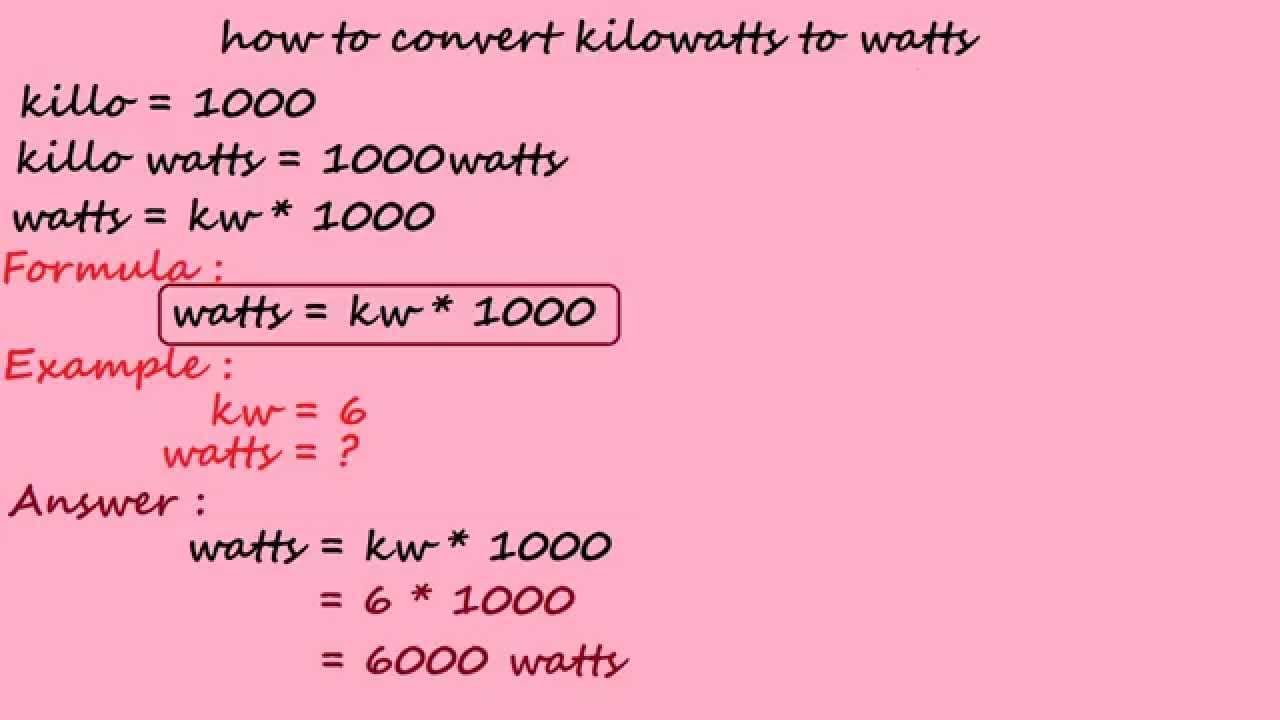
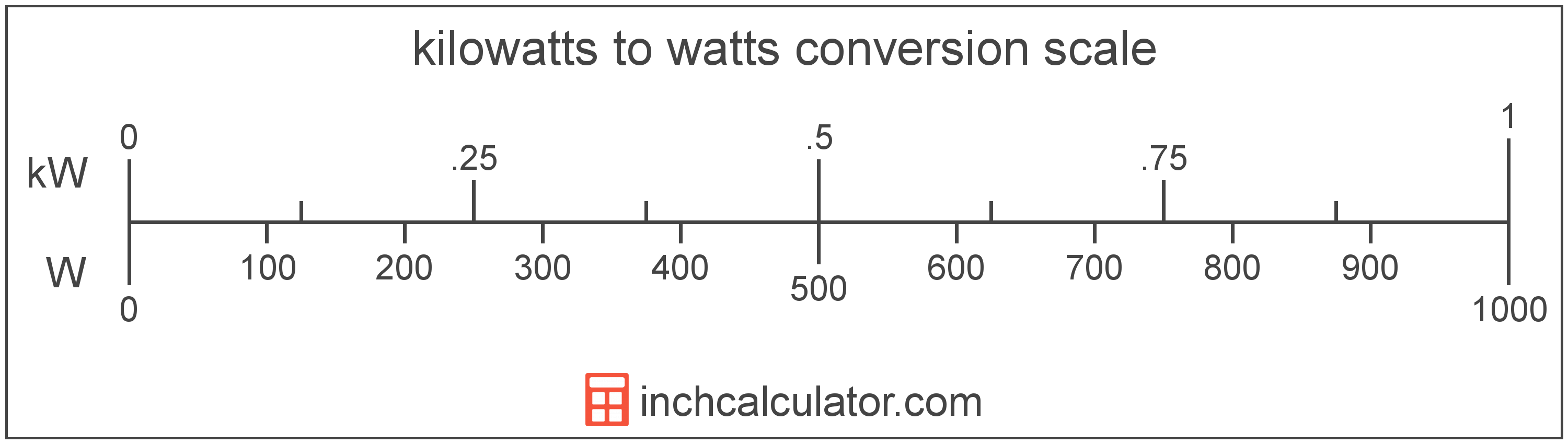
The big question, the one that probably brought you here: How many watts in 1 kilowatt? Ready for the grand reveal? Drumroll, please… *one kilowatt* (that’s "kW" for short, by the way) is exactly 1000 watts. Yep, a neat, tidy, beautiful thousand. See? Not so scary already!
The "Kilo" Connection: A Friendly Explainer
Let's demystify that "kilo" part. It’s actually your best friend in this electrical journey. Think about it: what does "kilo" usually mean? Like in *kilogram*? A thousand grams, right? Or *kilometer*? A thousand meters. Ta-da! It’s the same deal here. "Kilo" just means a thousand of something. So, a *kilowatt* is just a fancy way of saying one thousand watts. Simple, right?
Imagine if we had to say "My hair dryer uses one thousand eight hundred watts!" every time we talked about its power. Sounds like a mouthful, doesn't it? Much easier to say "My hair dryer is 1.8 kilowatts!" See how that works? It’s basically just a convenient shorthand, a way to make big numbers smaller and easier to talk about. It's like calling a hundred pennies a dollar – same value, different name, easier to count.
Watts vs. Kilowatts: The Power Players
So, what *are* watts, then? In a nutshell, a watt is a unit of power. It tells you how much energy an electrical device needs to *operate* at any given moment. Think of it like a car's horsepower – it indicates how much "oomph" it has. A small light bulb might only be 60 watts. A powerful microwave? Probably closer to 1000 watts, or 1 kilowatt. Your hair dryer? Maybe 1500-2000 watts (1.5 to 2 kilowatts). The bigger the number, the more power it's drawing *right now* to do its thing.
So, when you see "W" on a tiny gadget, you know it's probably using just a few watts. When you see "kW" on a larger appliance like a dishwasher or a washing machine, you know it's got a bit more juice. They're just different scales of the same thing. One's like inches, the other's like feet. Same measurement, different unit.
But Wait, There’s More! Enter the Kilowatt-Hour (kWh)
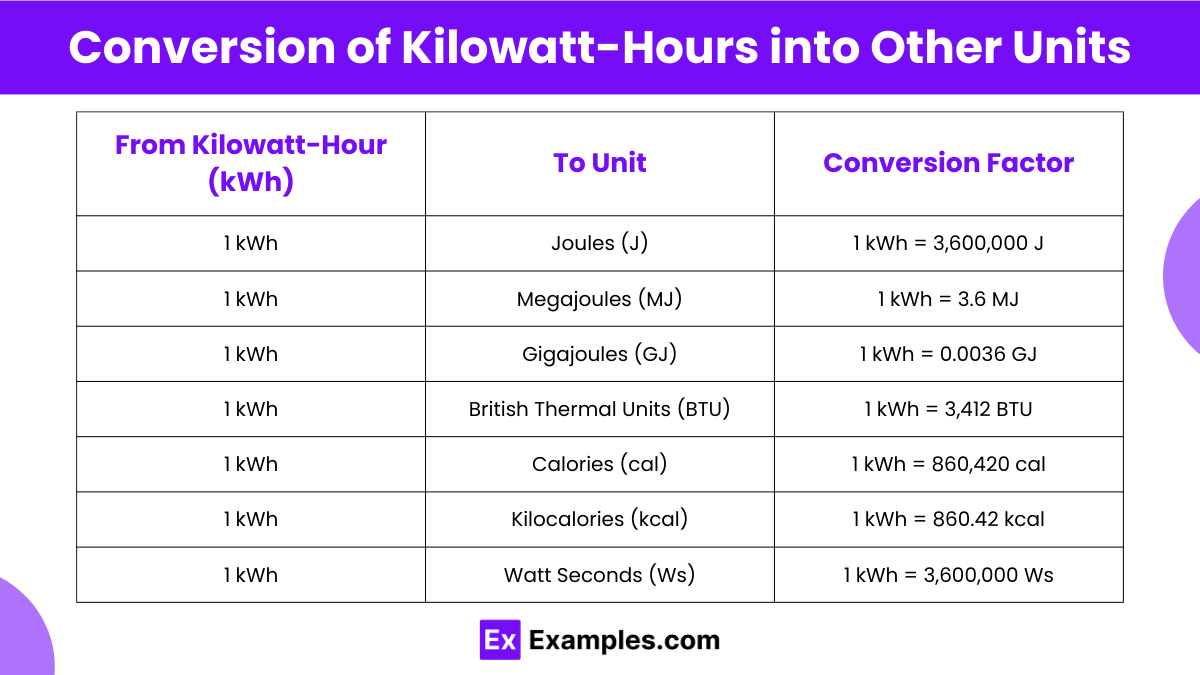
Okay, now for the *really* important part, the one that affects your bank account and makes your electricity bill make sense: the kilowatt-hour, or kWh. This is where most people get a little tangled, but it's crucial.
Remember how a kilowatt is about power? How much "oomph" something has? Well, a kilowatt-hour is about energy consumed over time. It's like asking: "How much oomph did this thing use, and for how long?"
Think of it this way: a kilowatt (kW) is like how fast your car *can go* – its speed. A kilowatt-hour (kWh) is like how far your car *actually travels* – the distance. Your electricity company doesn’t charge you for how fast your fridge *could* cool (kW); they charge you for how much energy it *actually used* to stay cool all month (kWh).
So, if you have a 1 kilowatt (1000-watt) microwave and you run it for exactly one hour, you've used 1 kilowatt-hour (kWh) of electricity. See? The "hour" part is key!
That little 60-watt light bulb? If you leave it on for 10 hours, it uses 600 watt-hours, which is 0.6 kWh (since 1000 watt-hours = 1 kWh). Not much, right? But if you leave a 2kW space heater on for 5 hours? That's 10 kWh! That's where your bill starts to add up.
Why Does Any of This Matter To Me?
Understanding the difference between watts/kilowatts (power) and kilowatt-hours (energy over time) empowers you, dear friend! When you’re buying appliances, knowing the watts or kilowatts gives you an idea of how powerful they are. When you’re looking at your electricity bill, you’ll know those dreaded "kWh" numbers are what you’re actually paying for. It helps you make smarter choices about what appliances to run, and for how long, potentially saving you some cash and reducing your carbon footprint. Pretty cool, huh?
So, next time you see "1 kW" on something, you’ll confidently know it means 1000 watts. And when you see "kWh" on your bill, you’ll remember it’s all about power *over time*. You’re officially an energy savvy human! Go forth and shine!