Ever stared at the back of your favorite gadget, maybe a phone charger or that new air fryer, and seen a jumble of numbers like volts and watts? You're not alone if you've ever wondered, "Wait, how many volts are actually *in* a watt?" It’s a common, delightfully human question, and it points to a slight misunderstanding that we’re about to clear up with a smile and a dash of electrifying enlightenment!
Here's the fun part: you can't ask "how many volts in a watt" because they're not interchangeable. It’s a bit like asking how many miles per hour are in a gallon of gas. See? They’re both related to your car, but they measure totally different things.
Meet the Dynamic Duo: Volts and Watts
Let's break it down in a way that makes perfect sense, even before your morning coffee kicks in.
Imagine electricity flowing through wires like water through a pipe.
Volts (V): Think of volts as the pressure of that water. It's the "push" or the potential force behind the electrical current. A higher voltage means more electrical "pressure" is available to make things happen. This is why a typical US wall outlet offers about 120V, while many European countries pump out around 230V – more pressure for different appliances!
Watts (W): Now, watts are all about the power. It's the rate at which electrical energy is used or produced. In our water analogy, if volts are the pressure, then watts are the total amount of work the water is doing per second – perhaps spinning a turbine or filling a bucket. It's the ultimate measure of how much oomph your device is actually using.
So, a 60-watt light bulb uses 60 watts of power, regardless of whether it's plugged into a 120V or 230V outlet. What *does* change is the amount of electrical flow (amps), which adjusts to maintain that 60-watt output given the different voltage pressure. Clever, right?
The Secret Sauce: Amps!
To truly understand the relationship, we need to bring in the third Musketeer: Amps (A). Amps measure the current, or the volume of electricity flowing. Back to our water pipe: if volts are the pressure, then amps are the actual amount of water flowing past a point per second.
And here's the magic formula that links them all together, often attributed to the brilliant physicist Georg Ohm (though the power formula is a direct derivation, usually called Joule's Law in this context, but we simplify!):
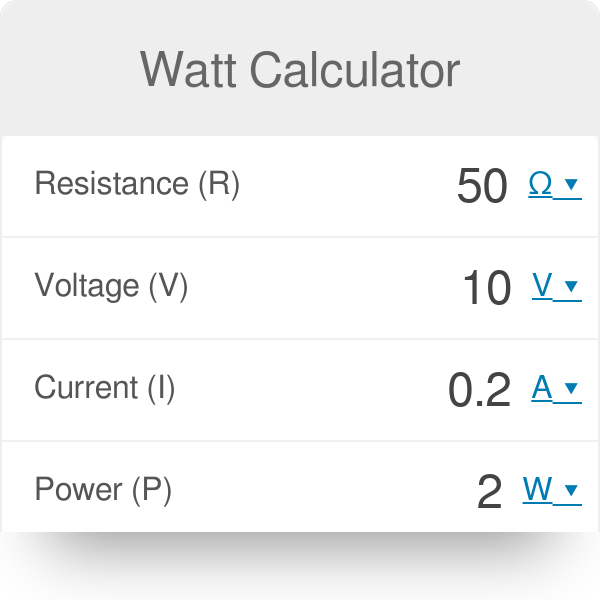
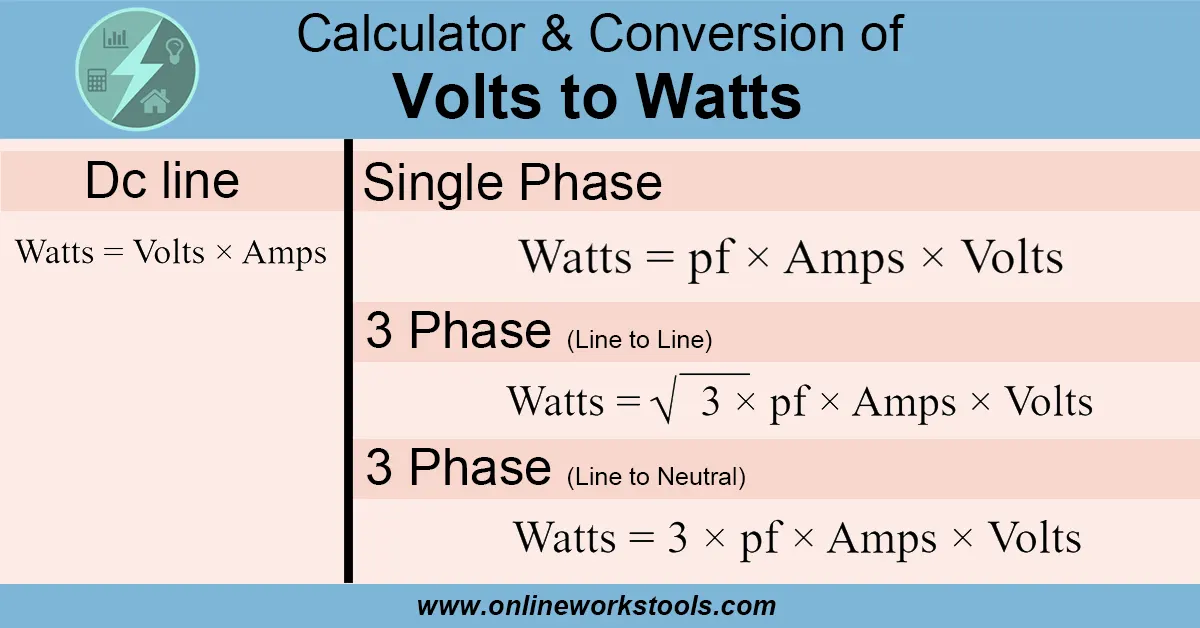
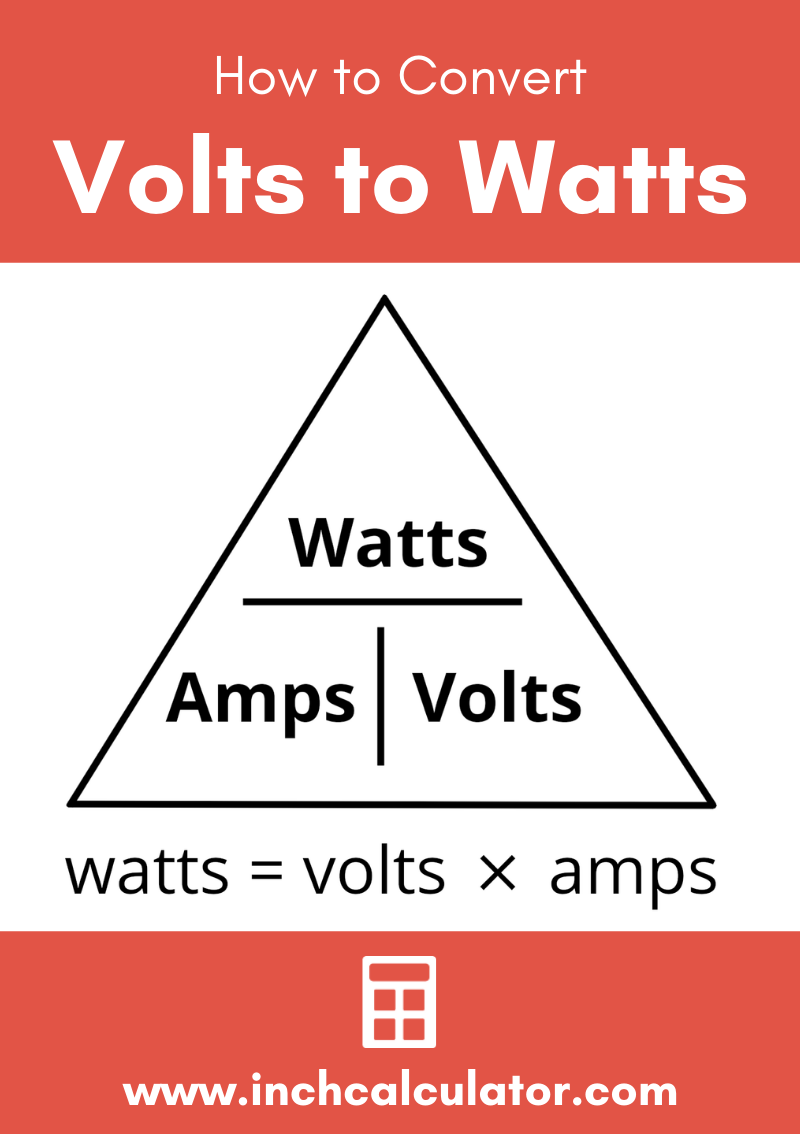
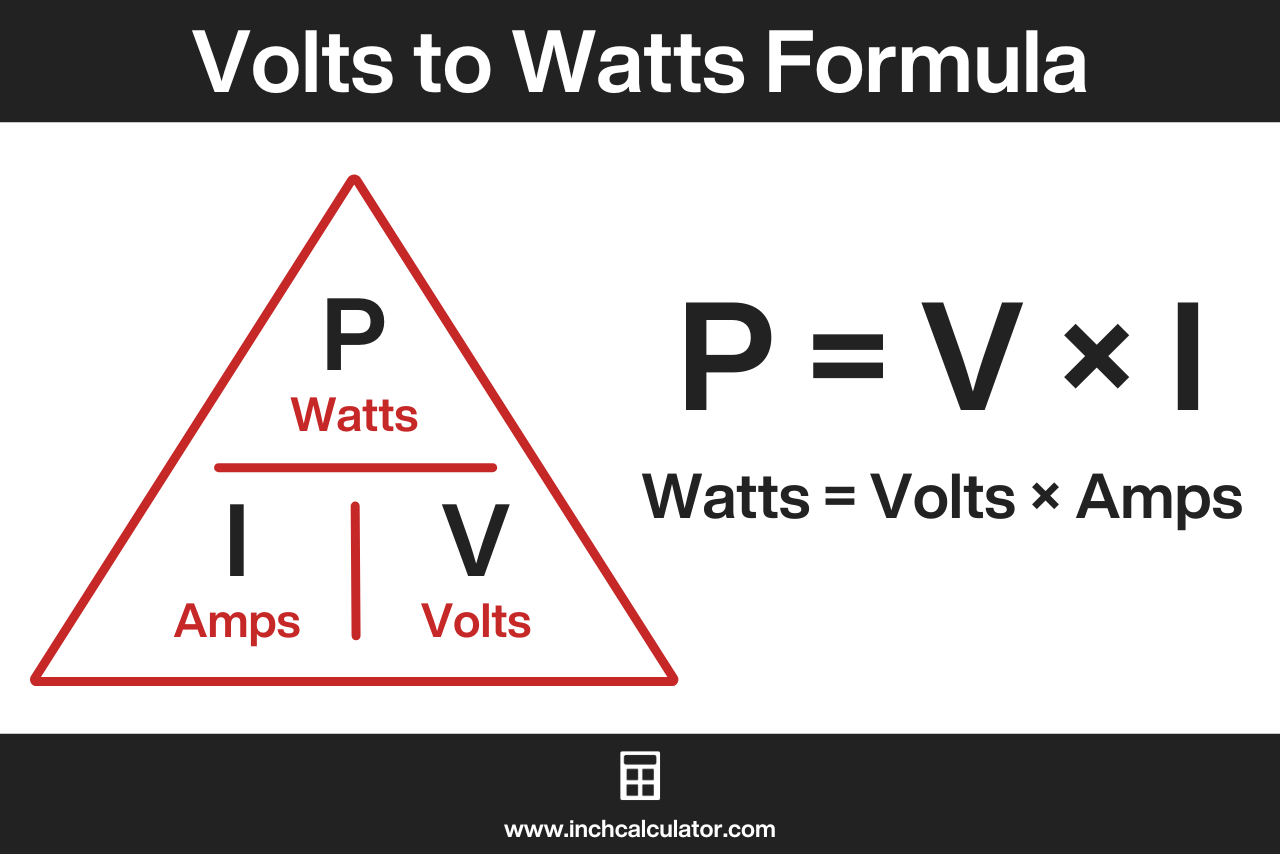
Watts = Volts × Amps
See? Watts aren't "made of" volts; they're the *result* of volts and amps working together. If you know any two of these values, you can always find the third. It's like a little electrical puzzle!
Why Does Any of This Matter in My Daily Life?
Great question! Understanding this isn't just for science enthusiasts; it’s genuinely practical.
1. Smart Charging & Gadgets:
Ever wondered why some phone chargers are "fast chargers"? They often deliver higher amps (and sometimes higher volts to compatible devices) to increase the total watts, pushing more power into your battery, faster. So, when you see a charger that's 5V/2A, it's delivering 10 watts (5 x 2). A 9V/2A charger would be 18 watts – much faster!
2. Travel Adapters & Safety:
When you travel abroad, you're primarily concerned with voltage. Plugging a 120V US hair dryer into a 230V European outlet without a voltage converter could damage it (or worse, create a spark show!) because of the massive difference in electrical pressure. Adapters just change the plug shape; converters change the voltage.
3. Your Energy Bill:
Your electricity bill is typically measured in kilowatt-hours (kWh). A kilowatt is 1,000 watts. So, if your fancy new gaming PC uses 500 watts for two hours, that's 1000 watt-hours, or 1 kWh. The higher the wattage of your appliances, the more energy they consume over time, and the more you pay. It’s the watts that count towards your bottom line!
4. Fun Facts & History:
The "watt" is named after James Watt, the Scottish inventor whose improvements to the steam engine were crucial to the Industrial Revolution. And "volt" honors Alessandro Volta, the Italian physicist who invented the first electric battery. Pretty cool, huh? We're living in a world built on their brilliant discoveries!
Connecting the Wires to Your World
So, while there aren't "volts in a watt," understanding how these fundamental forces of electricity interact gives you a secret superpower. You can now look at your gadgets with a discerning eye, make smarter choices about energy consumption, travel with more confidence, and perhaps even impress your friends at your next trivia night.
It’s not just about wires and currents; it’s about demystifying the unseen forces that power our modern lives, making us more informed, safer, and a little bit more magical in our everyday understanding. Shine on!