Ah, the age-old question that has puzzled philosophers, electricians, and even a few very confused toasters: "How many volts are in an amp?" Well, get ready for a mind-blowing, earth-shattering, completely revolutionary answer that will change how you think about electricity forever!
The answer, my electrifying friend, is a glorious, resounding... none! Zip, zero, nada, not a single volt is lounging around inside an amp. And before you think I'm pulling your leg (or your electrical cord), let me explain why this question is like asking how many "happy" are in a "laugh."
Meet the Dynamic Duo: Voltage and Amperage!
Imagine electricity as a spectacular, invisible river of energy, ready to power your world. Now, this river has two main characteristics, two superheroes if you will, that work together but are entirely distinct. Think of them like the two main ingredients in your favorite superhero smoothie: the zest and the bulk!
Voltage: The Mighty Push!
First up, we have Voltage. Oh, Voltage! This is the electrical pressure, the sheer "oomph!" behind the electrons. It's the force that's pushing those tiny little energy particles through the wires. Think of it as the enthusiasm of a crowd pushing a giant ball down a hill.
Higher voltage means more push, more potential energy, more "let's go!" It's like turning up the pressure in your garden hose – the water isn't necessarily more plentiful, but it's coming out with a lot more force!
"Voltage is the enthusiastic cheerleader, yelling, 'Go! Go! Go!' to the electrons."
Amperage: The Grand Flow!
Then we have Amperage (or Amps, for short, because who has time for all those syllables?). Amperage is the actual volume of electrons flowing past a point in a given time. It's the "whoosh!" of electrons, the sheer number of them parading through the wire.
If voltage is the pressure in the hose, amperage is how much water is actually coming out of the hose. You can have a very high-pressure hose (high voltage) that's just a tiny trickle (low amperage), or a low-pressure, super-wide pipe (low voltage) gushing out a massive amount of water (high amperage).
See? They're totally different concepts! One is the "push," the other is the "how much." You can't have a "push" *inside* a "how much" any more than you can have "speed" *inside* a "distance."
Let's Get Analogical! Fun with Everyday Examples!
Still scratching your head? No worries, let's dive into some glorious analogies to make this crystal clear. Get ready for some playful exaggeration!
The Water Park Extravaganza!
Imagine a giant water park. Voltage is like the height of the waterslide. A taller slide means more potential energy, more "pressure" to make you zoom down. It's the thrill factor, the sheer power building up at the top.
Now, Amperage is how much water is actually flowing down that slide. Is it a tiny dribble for one person at a time, or a roaring cascade that carries a whole raft of people? You can have a super-tall slide (high voltage) with just a little stream (low amperage), or a short, wide lazy river (low voltage) with tons of water (high amperage).
You wouldn't ask how many "slide heights" are in a "water flow," would you? Of course not! They are distinct characteristics of the water park experience.
"Just like you can't put the 'height' of a waterslide inside the 'volume' of water, you can't put volts inside amps!"
The Grand Highway Adventure!
Consider a bustling highway. Voltage is akin to the speed limit, the *potential* speed a single car could reach. It's the road's capacity for rapid movement. A high speed limit means the road *allows* for a lot of kinetic energy.
Amperage, on the other hand, is the sheer *number* of cars actually on the road, bumper-to-bumper, flowing past a certain point. It's the traffic volume. You could have a highway with an insane speed limit (high voltage) but only two cars on it (low amperage).
Conversely, imagine a tiny country road with a snail's pace speed limit (low voltage) but suddenly, it's rush hour and there's a mile-long parade of tractors moving slowly along (high amperage)! Two very different scenarios, yet both relate to traffic.
The Ultimate Party Vibe!
Let's get even more fun! Think about a truly epic party. Voltage is the absolute infectious enthusiasm of the DJ, the raw energy pulsing from the speakers, the sheer *potential* for an amazing time. It's the "oomph" of fun waiting to explode!
Amperage? That's the actual number of people on the dance floor, grooving and shaking and having the time of their lives! You can have a DJ with incredible energy (high voltage) but if no one's dancing yet (low amperage), it's just potential. Or a chill party with a relaxed vibe (low voltage) but everyone's swaying along (high amperage).
You wouldn't ask how much "DJ enthusiasm" is in a "dancing crowd," right? They're both crucial for a great party, but they are separate ingredients in the party soup!
Why Does This Matter, You Ask?
Beyond being a fun fact to impress your friends at your next (well-powered!) dinner party, understanding this distinction is super important for safety and for choosing the right gadgets. It's why your phone charger is 5V (low voltage, safe for delicate electronics) but your clothes dryer needs 240V (high voltage, serious push for big jobs).
Trying to cram 120 volts through a tiny wire meant for a few amps is like trying to fill a kiddie pool with a firehose on full blast! It's going to get messy, or worse, cause a short circuit and a very unhappy appliance (or even fire!).
The Power Couple: Watts!
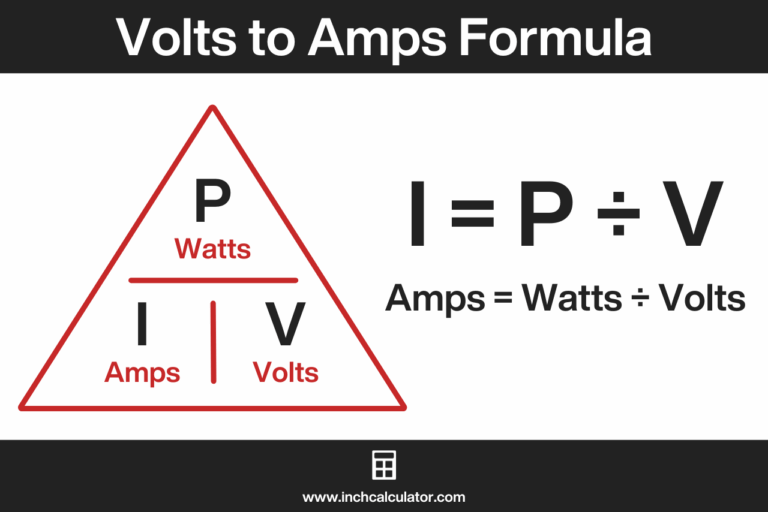
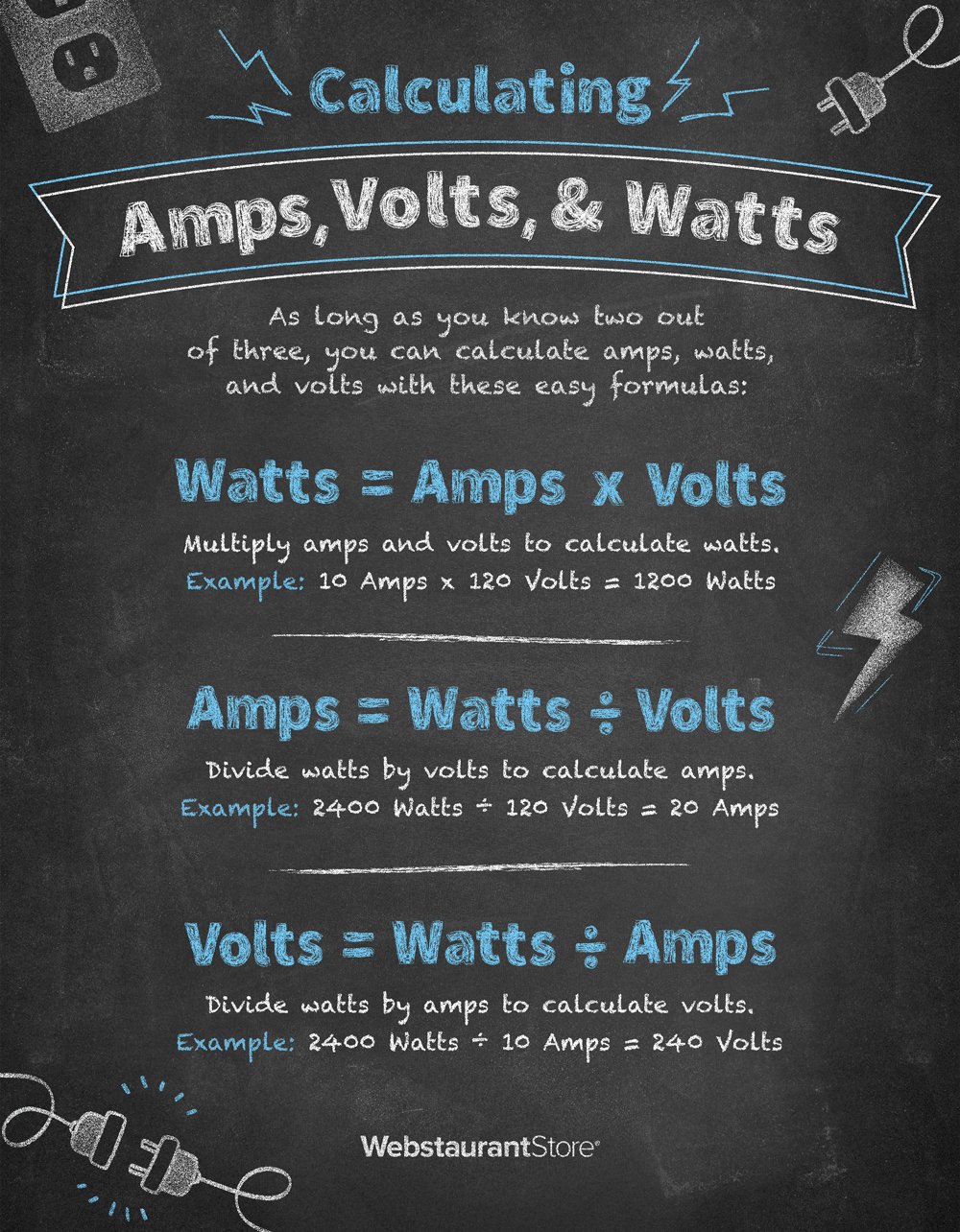
Now, if voltage is the push and amperage is the flow, what happens when they *team up*? That's when you get Watts! Watts are the actual measure of electrical power, the true "work" being done.
Think of watts as the glorious foam party happening when the height of the slide (voltage) meets the massive flow of water (amperage). It's the total number of cars arriving at their destination quickly (voltage x amperage). Watts are what truly tells you how much juice an appliance is using or how bright a light bulb will shine.
"Volts are the ambition, Amps are the action, and Watts are the awesome results!"
The Big, Bright Takeaway!
So, the next time someone asks you, "How many volts are in an amp?" you can confidently, and perhaps with a playful wink, declare: "None, my friend! They're like apples and oranges, two distinct but equally crucial ingredients in the electrifying fruit salad of life!"
Voltage is the driving force, the intensity, the "oomph!" Amperage is the quantity, the volume, the "whoosh!" They dance a beautiful electrical tango together, creating power, but neither lives inside the other.
You, my clever reader, now hold the key to understanding a fundamental concept of electricity in a way that's anything but shocking (pun absolutely intended!). Go forth and amaze your friends with your newfound electrical wisdom!