Ever wondered what those thick, serious-looking wires powering your home or business are capable of? It's easy to overlook them, but understanding the capacity of electrical wiring, especially something beefy like 4/0 copper, is surprisingly relevant and even a little bit fun! Think of it like this: knowing the limits of your plumbing prevents burst pipes. Similarly, knowing the capacity of your wiring helps prevent electrical hazards and ensures everything runs smoothly.
So, let's dive into the world of 4/0 copper wire. What's its purpose? Simply put, it's a heavy-duty conductor designed to carry a significant amount of electrical current. Its primary benefit is its high ampacity, which is the maximum amount of electrical current a conductor can carry continuously without exceeding its temperature rating. This makes it ideal for situations requiring substantial power delivery, such as feeding a subpanel in a large home, connecting a detached garage with multiple power tools, or even supplying power to commercial equipment.
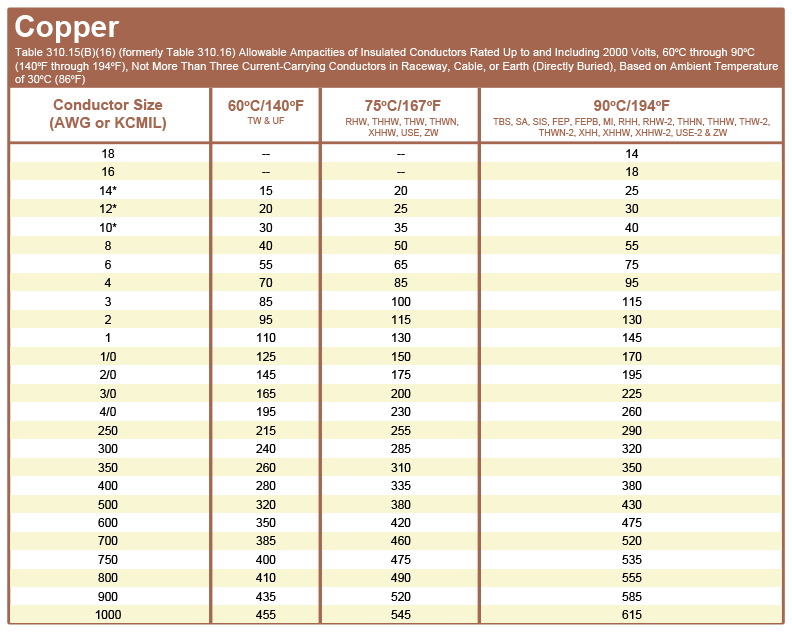
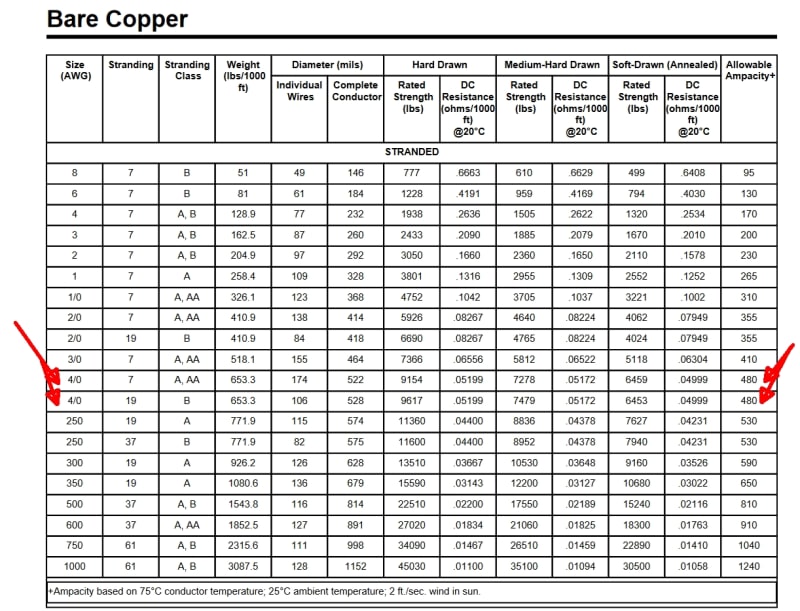
The number "4/0" refers to the wire's gauge. In the American Wire Gauge (AWG) system, the smaller the number, the thicker the wire. 4/0 is quite thick! But understanding the gauge is crucial because it directly relates to the wire's ampacity. Generally speaking, 4/0 copper wire, depending on installation conditions (temperature rating of the insulation, whether it's in free air or conduit, etc.), is good for somewhere in the range of 200 to 230 amps. Always consult the National Electrical Code (NEC) and local electrical codes for specific requirements and de-rating factors.
Where might you see this in action? Imagine a woodworking shop in a high school. They need to power several large pieces of equipment – a table saw, a planer, a dust collector. A standard household circuit wouldn't cut it! 4/0 copper might be used to run a dedicated, high-capacity circuit to the shop's subpanel, ensuring all the equipment can operate safely and efficiently. Or consider a modern home with an electric vehicle charger. Many Level 2 chargers require a dedicated 50-amp or even 60-amp circuit. In some cases, particularly if the home has other high-demand appliances, 4/0 copper might be used to upgrade the service entrance to handle the increased load.
You might not be rewiring your house anytime soon, but understanding the principles is still valuable. A simple way to explore this further is to look around your home's electrical panel. (Important: only look! Do not touch anything inside the panel unless you are a qualified electrician.) Notice the breakers and their amperage ratings. This will give you a sense of how much power different circuits are designed to handle. Research the ampacity of different wire gauges online. There are plenty of charts and calculators available. Just remember to always treat electricity with respect and consult a qualified electrician for any electrical work. They're the pros who can ensure everything is installed safely and up to code. And that’s much better than a blown fuse… or worse!