Hey there, ever found yourself staring at an appliance label, scratching your head, and wondering, "Exactly how many amps are in one watt?" If so, you're not alone! It's one of those questions that sounds super simple, but the answer is a bit like asking, "How many apples are in one orange?" – they're related, but they're measuring different things!
So, let's dive into this electrifying mystery with a smile, shall we? No complicated formulas that'll make your brain fizz, just good old, friendly explanations. Promise!
Watt-ing for an Answer?
You're probably hoping for a straightforward number, right? Like, "Oh, there are 0.5 amps in a watt!" or "It's a solid 2 amps per watt!" But here’s the thing, and this is where it gets a little quirky: there isn't a fixed number of amps in a watt. *Gasp!* I know, right? It's like finding out your favorite superhero actually needs to nap sometimes.
Think of it this way: watts measure power. Amps measure current. They're related, absolutely, but they need a third friend to complete the picture. And that friend is...
Introducing the Voltage Vibe!
Drumroll please... enter voltage! Ah, voltage, the unsung hero of many electrical conversations. Without voltage, our question is essentially missing a crucial piece of the puzzle. It's like trying to bake a cake with flour and sugar but forgetting the eggs. (Don't try that at home, trust me.)
Here’s a super simple way to think about it:
- Voltage (Volts): This is the push or the pressure that gets electricity moving. Imagine it as the height of a waterfall. A taller waterfall (higher voltage) has more potential energy.
- Current (Amps): This is the flow or the amount of electricity moving. Think of it as how much water is actually pouring over that waterfall.
- Power (Watts): This is the total work being done. It's the combination of how much water is flowing AND how hard it's pushing. It's the overall power of the waterfall!
So, you see, a watt is born when amps and volts decide to get together and make some magic happen. They're a team!
The Super Easy Relationship (No Math Brain-Busters!)
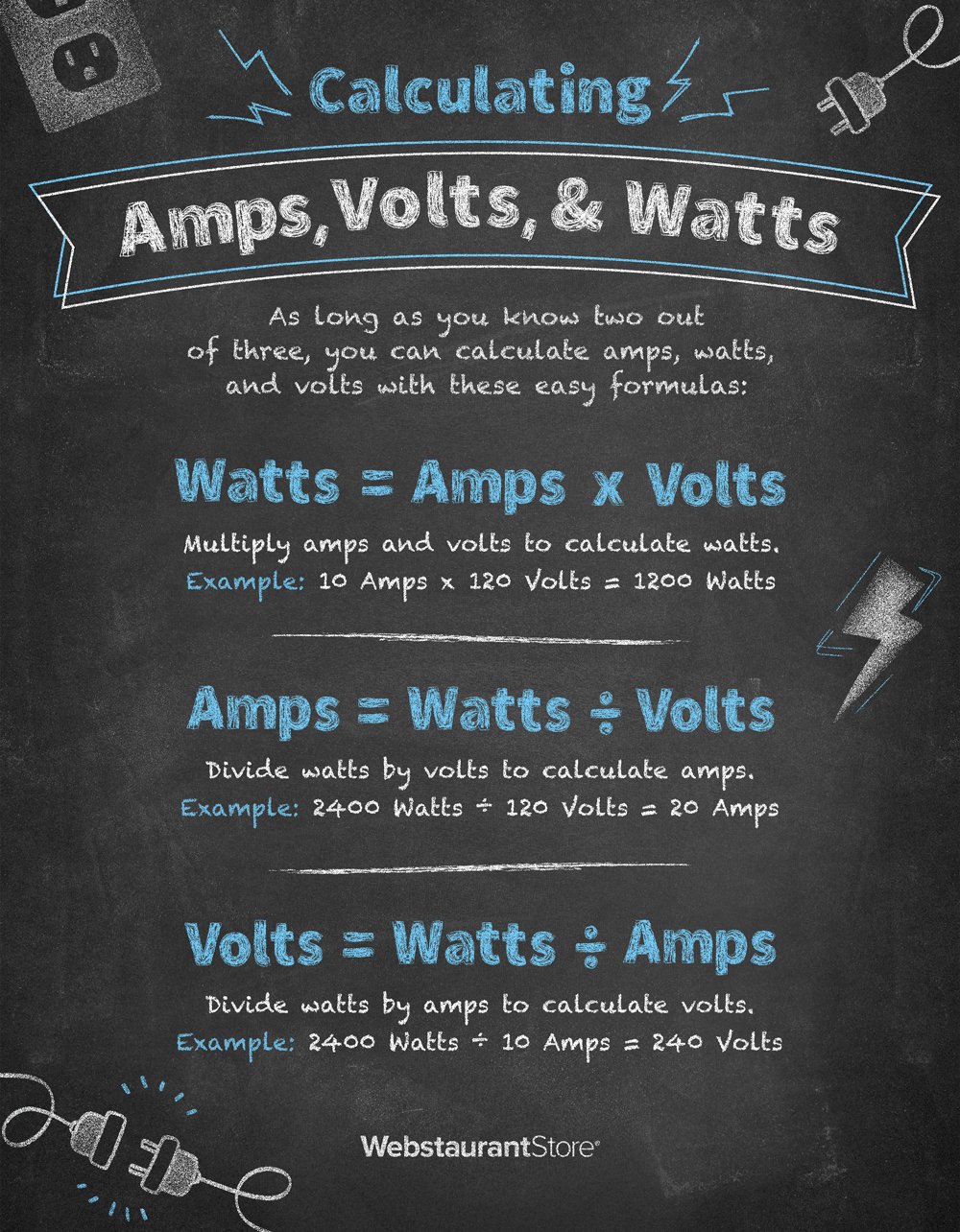
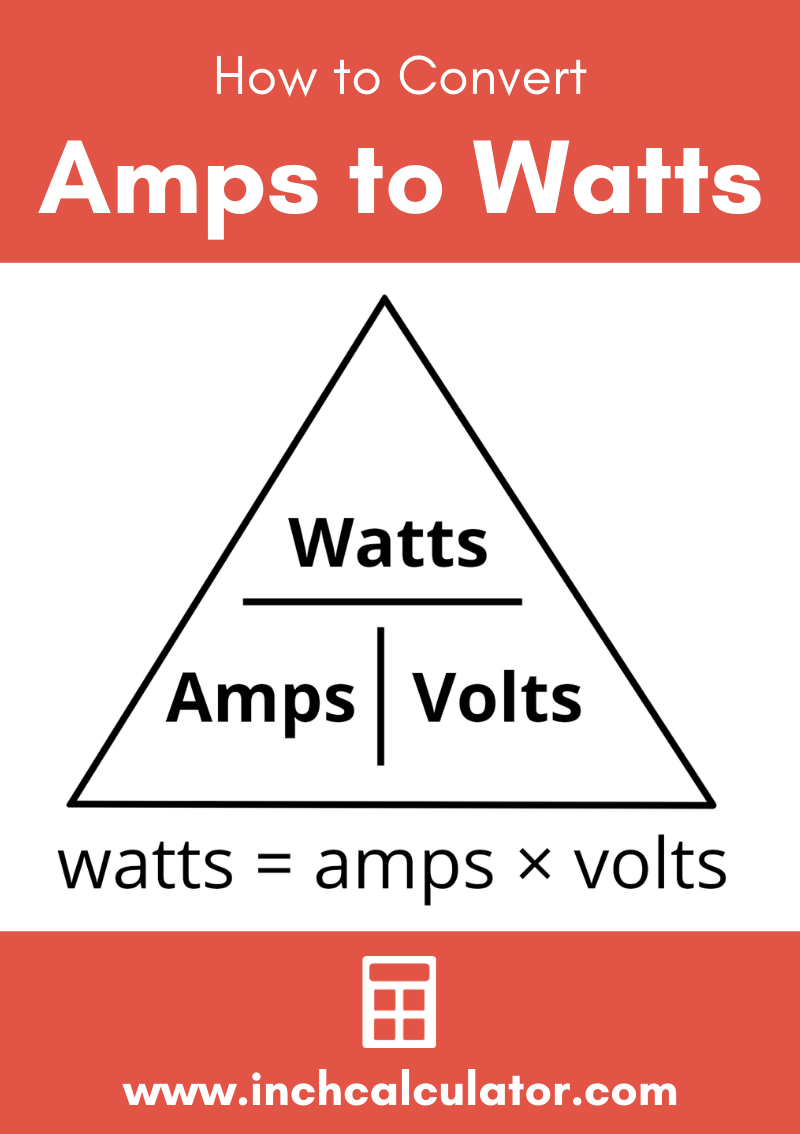
The relationship between them is actually quite simple, and it's taught in schools with a friendly formula: Watts = Amps × Volts. Or, as I like to call it, the "WAV" equation, because it makes a nice, powerful sound!
Now, if you want to figure out amps, all you have to do is rearrange that little formula like a pro. Ta-da! Amps = Watts / Volts.
See? No black magic here, just a little bit of electrical teamwork!
Let's Get Real: Examples!
This is where it all clicks. Let's say you have an appliance that uses 100 watts of power. How many amps is that? Well, it depends on the voltage!
-
In your car (typically 12 Volts DC):
Amps = 100 Watts / 12 Volts = approximately 8.33 Amps
That's quite a bit of current for a relatively small amount of power!
-
In your home (standard 120 Volts AC in North America):
Amps = 100 Watts / 120 Volts = approximately 0.83 Amps
Notice how for the same 100 watts, the amps are much lower at a higher voltage? That’s because the "push" is stronger, so you need less "flow" to do the same amount of work!
-
In some parts of the world (240 Volts AC):
Amps = 100 Watts / 240 Volts = approximately 0.41 Amps
Even lower! Isn't that neat? Higher voltage means lower amperage for the same power.
So, the next time someone asks you "How many amps are in 1 watt?" you can confidently say, "Well, my friend, that depends entirely on the voltage!" and then drop some knowledge like a pro. You'll sound super smart, I promise!
Why Does This Even Matter?
Understanding this relationship isn't just for showing off at parties (though you totally can!). It's actually super practical. It helps you understand:
- Why certain wires are thicker than others (thicker wires handle more amps!).
- Why you can't just plug your European toaster into an American outlet without an adapter (different voltages!).
- Why your car battery can deliver huge amounts of current at low voltage to start your engine, while your phone charger uses tiny amounts of current at low voltage.
It's all about making sure the right amount of electricity is flowing safely and efficiently to power your gadgets and gizmos!
You're Electrifyingly Smart!
So there you have it! The mystery of amps and watts, unraveled with a little help from their buddy, voltage. You've just powered up your brain with some cool electrical knowledge without even breaking a sweat. Give yourself a high five, because understanding how the world works, even in its tiniest electrical currents, is pretty darn awesome.
Keep being curious, keep asking questions, and remember: life's a journey of learning, and every little spark of knowledge adds up to a brighter, more understanding you!