Alright, gather 'round, folks! Imagine we're here, sipping our favorite beverages, and someone pipes up, "So, how long *can* one of those swirly sky-monsters actually last?" It's a great question, isn't it? Most people probably picture them just whirling around for ages, like an angry, destructive toddler who's decided your town is the ultimate toy box. But the truth is, it’s a bit more nuanced, and often, much quicker than you’d think! Unless, of course, it's one of the truly *legendary* ones.
The "Blink and You'll Miss It" Tornado
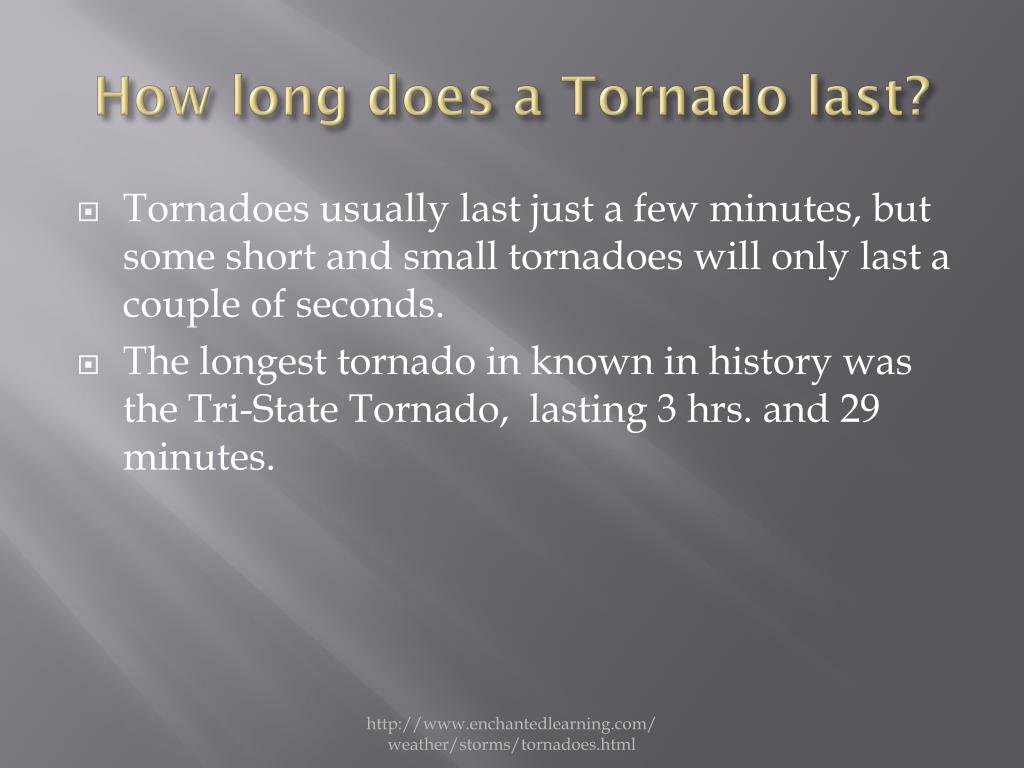
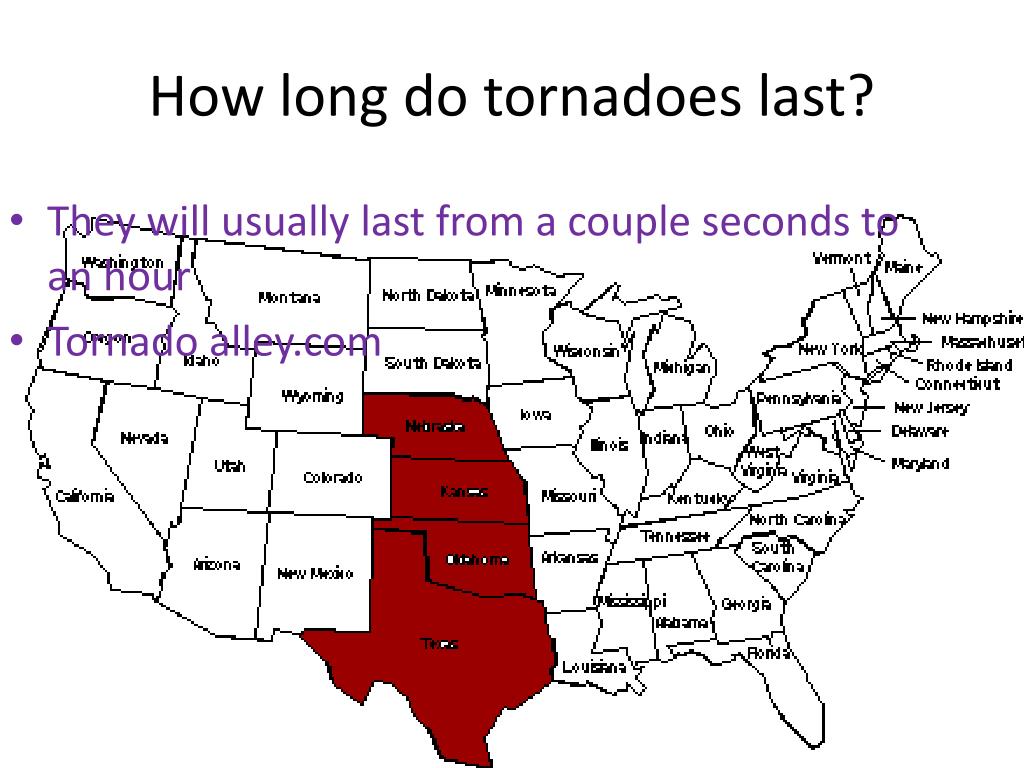
Let's get this straight off the bat: the vast majority of tornadoes are total divas. They show up, cause a ruckus, and then they're gone. We're talking mere minutes here. Seriously. Many tornadoes last for less than 10 minutes. Some are even quicker, like that awkward conversation you have when you run into an ex at the grocery store. Poof, gone, relief washes over you.
In fact, about 75% of all tornadoes decide they've had enough fun within 10 minutes or less. They’re like those guests who arrive, say hello, grab a snack, and then remember they have "other plans." They touch down, dance a bit, cause some localized chaos, and then lift back into the clouds as quickly as they appeared. So, for the average tornado, don't expect a feature film; think more of a TikTok video. A very destructive, wind-swept TikTok video.
Why the Short Attention Span?
You might wonder, why so brief? Well, tornadoes are incredibly powerful, but they're also incredibly high-maintenance. They need a very specific set of atmospheric conditions to form and sustain themselves: warm, moist air rising, cool dry air sinking, wind shear – it's like a meteorological recipe for disaster. If even one ingredient goes slightly off, the whole thing can collapse faster than a house of cards in a strong breeze.
They essentially consume the energy they need from the storm that spawns them. Once that local pocket of conducive conditions is used up, or the tornado moves into an environment that's less favorable (say, a different wind pattern or terrain), it starts to lose its steam. It's like trying to keep a perfectly spinning top going forever; eventually, friction and gravity win. For tornadoes, atmospheric forces are their friction and gravity.
The Marathon Runners: Supercells
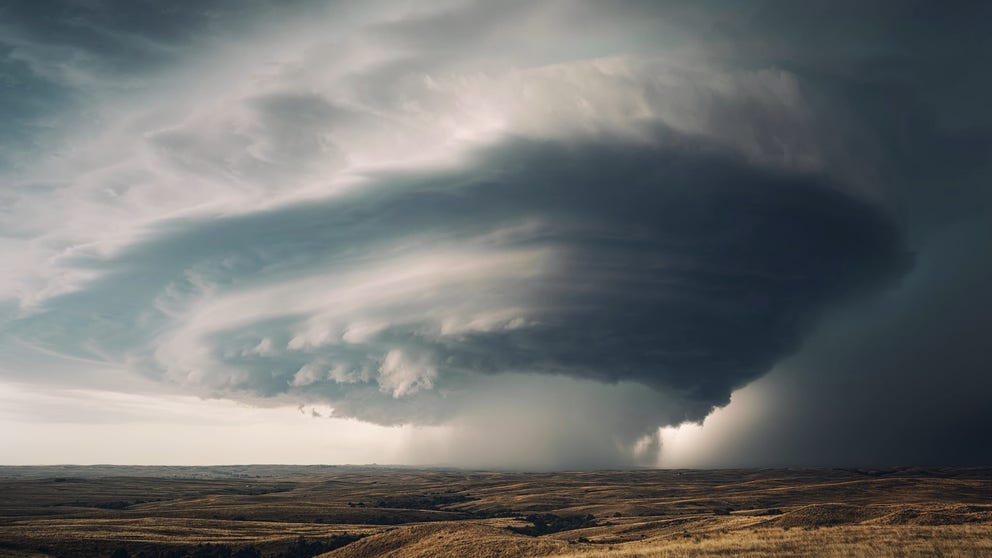
Ah, but then we have the exceptions. The long-distance runners of the tornado world. These are usually born from
This mesocyclone is like an internal, self-sustaining power plant for the storm. It constantly feeds energy into the system, allowing a tornado (or sometimes even multiple tornadoes in succession) to persist for much longer periods. These supercells can rotate for hours, spitting out tornadoes as they go, or maintaining one incredibly powerful and long-lived one. These are the ones that make the news for all the wrong reasons, unfortunately.
The Grand-Daddy of Them All: The Tri-State Tornado
And now, for the mind-boggling record-holder. The legendary, the infamous, the
Yes, you read that correctly. Three. And. A. Half. Hours. Most tornadoes don't even manage to get properly dressed in that time! It tracked an incredible
So, What's the Takeaway?
In conclusion, when someone asks how long a tornado lasts, the safest answer is:
However, a select few, usually spawned by powerful supercells, can persist for a surprisingly long time, becoming truly destructive forces of nature. So, next time you hear a tornado warning, remember that while it might feel like forever, it’s hopefully just a quick scare. And for goodness sake, don't try to time it yourself – just