Have you ever paused to wonder about the magical substance that heats your home and cooks your dinner? We’re talking about natural gas, of course. It just *appears* in your pipes, doesn't it?
But how on earth does it get there? How do people actually *find* natural gas? It's not like spotting a lost sock under the couch, is it?
Honestly, it feels like one of life’s great mysteries. We all know how to find our car keys (eventually), but finding an invisible gas deep underground?
It’s practically science fiction, yet it’s happening all the time. And here's my slightly unpopular opinion: it's incredibly, almost ridiculously, hard to find.
It’s Not a Treasure Map (Sadly)
Wouldn't it be grand if finding natural gas involved an old, crumpled map? "X marks the spot!" you'd yell, shovel in hand.
Alas, there are no pirate legends pointing to gas reserves. You can’t just sniff it out like a truffle pig, either.
Try as you might, standing over your backyard with a hopeful expression won't yield results. No dowsing rods will magically twitch for gas.
Finding natural gas is not a simple game of hide-and-seek; it's more like playing advanced, invisible poker with Mother Earth.
Meet the Earth Detectives
So, if we can't just stumble upon it, who does the finding? Enter the real heroes: the geologists.
These aren't just folks who like rocks; they're like super-sleuths of the Earth's crust. They study the deepest, oldest secrets of our planet.
They’re trying to figure out where ancient plants and animals got squished into energy. This process takes millions of years, mind you.
Tapping the Earth: The Sound of Science
Now, how do these geologists actually "see" underground? Do they have super-X-ray vision? Nope!
They use something called seismic surveys. Think of it like giving the Earth a gentle tap, then listening very, very carefully.
Huge trucks or special equipment send out sound waves into the ground. These waves travel deep, deep down.
When the sound waves hit different layers of rock, they bounce back up. It's like an echo, but from miles below your feet.
Special microphones, called geophones, listen to these echoes. They map out the underground layers based on how the sound bounces.
Imagine tapping on a wall to find a stud; this is like doing that on a massive, geological scale. It's surprisingly low-tech in concept, high-tech in execution.
Reading the Earth's Ultrasound
All those echoes create a complex picture. It's like an ultrasound for the planet.
Geologists then interpret these squiggly lines and colorful maps. They're looking for certain rock formations.
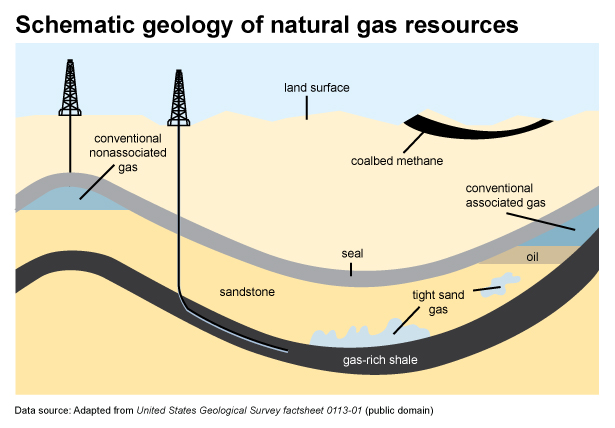
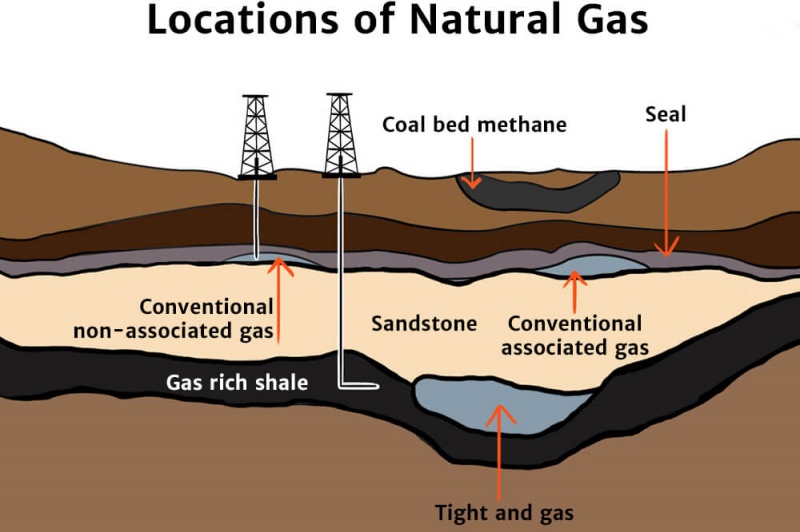
They know that natural gas tends to get trapped in specific kinds of porous rock. It’s usually sealed in by other, impermeable rock layers.
They're looking for geological "traps" – underground domes or folds that act like giant invisible bottles.
It's an incredibly detailed and painstaking process. It requires years of training and a serious knack for puzzles.
The Big Gamble: Time to Drill
Even with all that science, finding natural gas is still a massive gamble. The seismic data only gives them a best guess.
It's like looking at a blurry photo and trying to guess what's behind the wall. Sometimes you're right, sometimes you're very wrong.
The only way to truly confirm if there’s gas is to start drilling. This is where the real investment begins.
Drilling a well is expensive, time-consuming, and takes serious machinery. It's not a backyard DIY project.
They send a giant drill bit down, sometimes for miles. It’s like trying to hit a tiny bullseye that's hidden in total darkness, several kilometers away.
You’d think after all that high-tech listening, they’d be 100% sure. Nope! It's still often a leap of faith, a very expensive one at that.
When You Hit the Jackpot (or Not)
If they strike gas, it’s a huge celebration! All that hard work, all that guesswork, finally pays off.
The gas then needs to be processed, purified, and sent through pipelines. This is another whole incredibly complex system.
But often, they drill and find nothing. Just empty rock. Dry holes, as they're called, are a common, costly disappointment.
Imagine searching for buried treasure, digging a massive hole, and finding nothing but dirt. That's the reality for many drill sites.
The Unsung Marvel of Your Stove
So, the next time you turn on your stove or feel the warmth from your furnace, take a moment to appreciate it.
That invisible, odorless gas is the result of millions of years of geology and incredibly clever human ingenuity.
It traveled from ancient organic matter, through seismic waves, geological interpretation, and deep, expensive drilling.
It's truly a marvel that we manage to find it at all. It’s a testament to science, persistence, and a whole lot of educated guessing.
My unpopular opinion stands: finding natural gas is one of the most obscure and difficult tasks we undertake, and it's amazing we've gotten so good at it. It certainly puts finding your remote control into perspective!