Ever stared at your electric bill, feeling like it’s written in ancient runes? Those mysterious numbers, the kWh… what do they even mean? Are they a secret code from an alien civilization, or perhaps the tally of how many times your cat tried to turn on the TV with its mind? Well, buckle up, buttercup, because we're about to demystify that electrical beast and turn you into a budget-savvy wizard!
What’s a kWh Anyway? (The Super Fun Explanation!)
Think of electricity as a race car. The wattage is how powerful that car is (how fast it *could* go if it really floored it!), and the hour is how long it actually *drives*. Put 'em together, and you get kilowatt-hour, or kWh – that's the actual *distance* your electrical device travels in the world of energy consumption! It's simply a fancy, grown-up way of saying how much *energy* something uses over time. No magic involved, just a little math, which we promise will be more fun than a barrel of monkeys!
Here’s the secret sauce, the magic equation for uncovering your appliance's energy appetite:
(Appliance Wattage / 1000) x Hours Used = kWh Consumed
Then, you just multiply that by the price your electricity company charges per kWh, and BAM! You've got your cost! Let's break down this electrifying calculation step-by-step!
Step 1: Be an Energy Detective! Find the Wattage!
First things first: channel your inner Sherlock Holmes and become an energy detective! Most appliances have their wattage (often labeled with a big "W" or "WATT") printed right on them – usually on a sticker on the back, bottom, or hiding in plain sight in the user manual. A hairdryer might be a mighty 1800W, a light bulb a humble 60W, and your fabulous gaming PC could be anywhere from 300W to a power-hungry 800W. If you can't find it, a quick online search for " [Appliance Name] wattage" usually does the trick! It's like a tiny scavenger hunt, but with the prize of saving money!
Step 2: Conquer the "Kilo"! Convert to Kilowatts!
Remember that "kilo" in kWh? It just means "thousand." So, to get from regular old watts to kilowatts (kW), you simply divide your wattage by 1000. It's like changing 1000 pennies into one dollar – same value, just a different unit! So, an 1800W hairdryer becomes 1.8 kW. A 60W light bulb becomes 0.06 kW. See? Easy peasy, lemon squeezy!
Step 3: How Long Did It Party? Estimate Hours Used!
Next, guesstimate how many hours your appliance is actually running. This is where your inner time-traveler comes in! Did you blast your hairdryer for 10 minutes a day? That's about 0.17 hours (10/60). Is your trusty fridge chugging along 24/7 (though it cycles on and off, so we're talking about its *effective* run time, which is often estimated)? Your reading lamp might glow for 4 hours every evening. Be realistic, but don't sweat the small stuff – we're going for a good estimate here, not a NASA-level precision measurement!
Step 4: Calculate the kWh! (Your Appliance's Energy Score!)
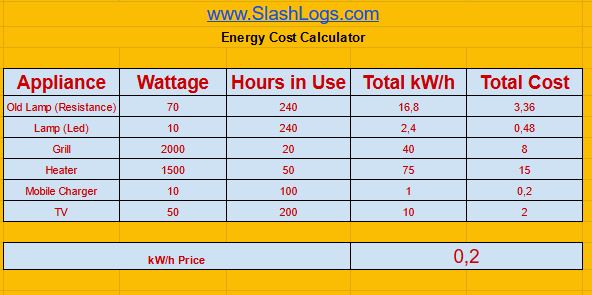
Now for the truly fun part! Multiply your kilowatts (from Step 2) by your hours used (from Step 3). This gives you the appliance's total energy consumption in kWh!
kW x Hours = Total kWh Used
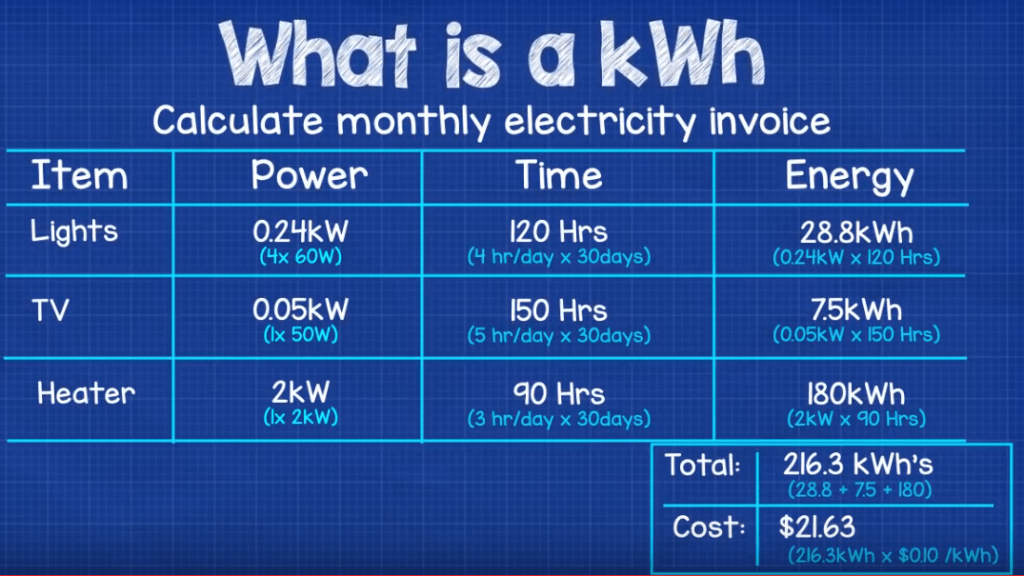
Let's try our 60W (0.06kW) light bulb that’s on for 4 hours: 0.06 kW x 4 hours = 0.24 kWh. Ta-da! That's the energy it slurped up – your appliance's personal energy score!
Step 5: Unlock the Mystery! Find Your "Cost Per kWh"!
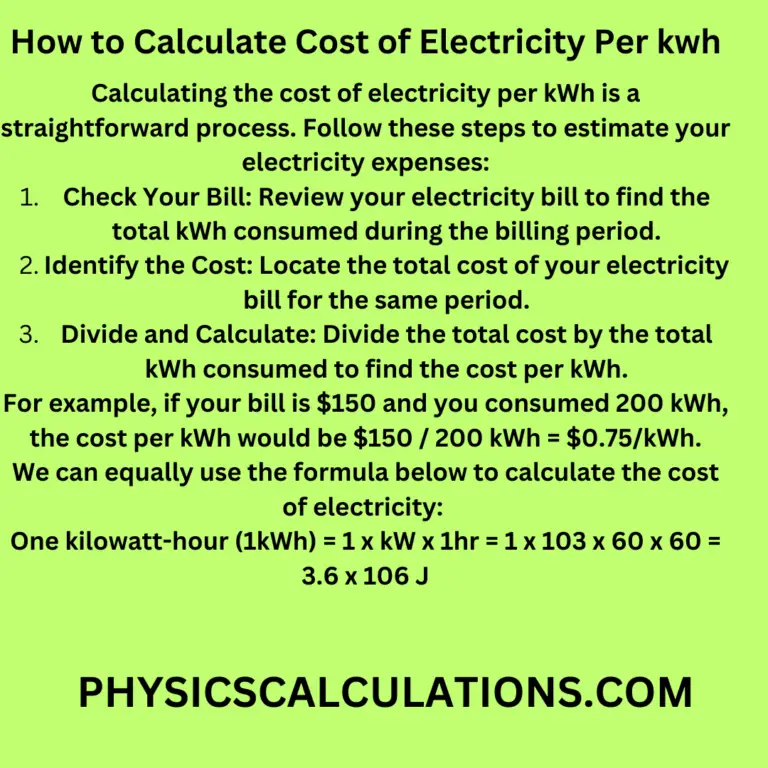
Grab your latest electric bill! Don't be shy, it won't bite! Somewhere on there, usually in a breakdown of charges, you'll find the cost per kWh. It might be called "delivery charge," "supply charge," or just "rate." It's usually a number like $0.12 or $0.15. This is the magical number that turns energy into cold, hard cash (or rather, the cost of it). Let's pretend for our example that your power company charges $0.15 per kWh. Got it? Excellent!
Step 6: The Grand Reveal! Calculate Your Appliance's Cost!
Finally, take your total kWh used (from Step 4) and multiply it by your cost per kWh (from Step 5). This is it, the grand finale, the big reveal!
Total kWh Used x Cost Per kWh = Appliance Cost
Our light bulb example: 0.24 kWh x $0.15/kWh = $0.036. So, running that 60W bulb for 4 hours costs you less than 4 cents! Phew, that's practically free!
What about that 1.8kW hairdryer used for 10 minutes (0.17 hours)? First, find the kWh: 1.8 kW x 0.17 hours = 0.306 kWh. Then, calculate the cost: 0.306 kWh x $0.15/kWh = $0.0459. Still less than a nickel! See? It's not so scary now, is it? You're now equipped with the power to decipher your energy usage and spot those energy hogs (looking at you, always-on space heater!). Go forth, savvy energy user, and may your electric bills be ever comprehensible!