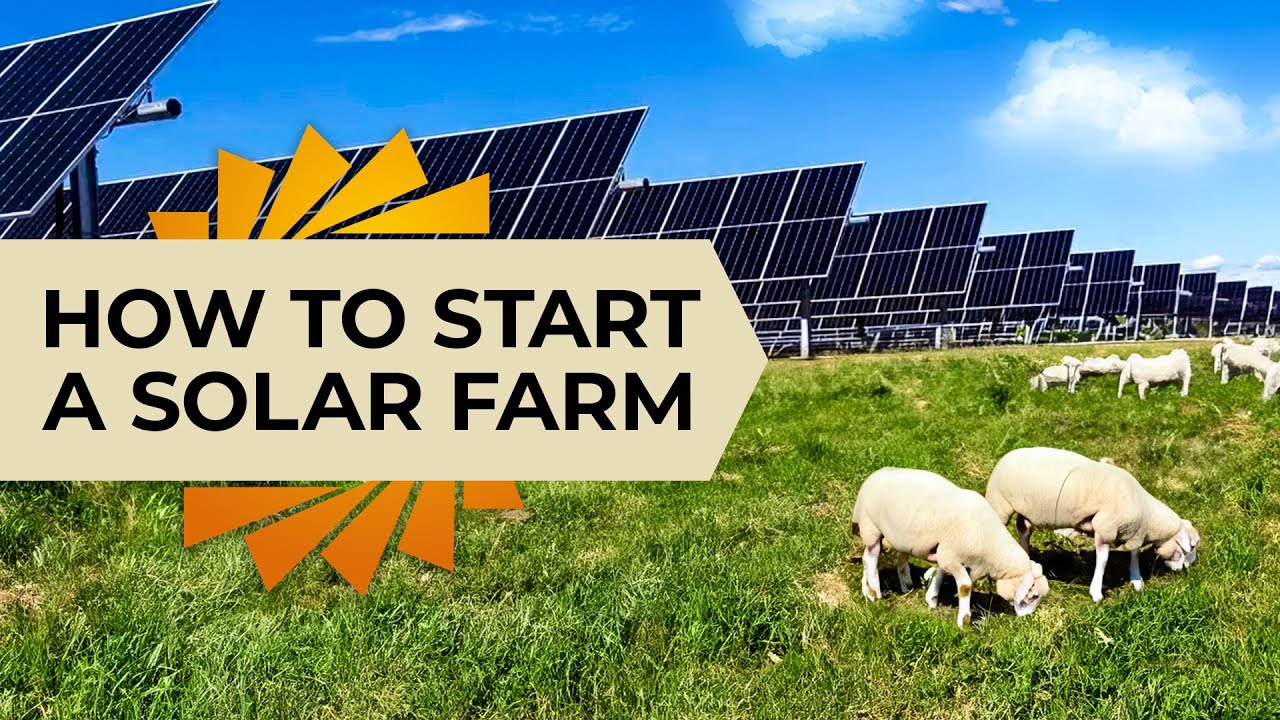
Ever gazed at the sun and thought, "You know, that big fiery ball of gas could be making me some serious coin"? Welcome, my friend, to the whimsical world of starting a solar farm! Now, before you start picturing yourself on a tractor, wearing a wide-brimmed straw hat, surrounded by glinting panels like some futuristic farmer, let's chat. This isn't just about sticking a few panels on your roof; we're talking about a utility-scale operation. Think of it as going from a lemonade stand to owning a national soda brand.
The Grand Vision: From Daydream to Megawatts
First things first, you need a dream. A big, shiny, solar-powered dream. You're not just planting seeds; you're planting sun-catching seeds. Imagine a field so vast, so filled with silent, shimmering panels, that it looks like a sci-fi convention sponsored by IKEA. This is where the magic begins. You're not just making electricity; you're making clean electricity. You're basically a superhero, but instead of a cape, you wear sensible shoes and carry a spreadsheet.
The core idea? Convert sunlight into electricity, then sell that electricity to the grid. Sounds simple, right? It's like baking a cake: you just need flour, sugar, eggs, and an industrial-scale bakery, a distribution network, and an army of food safety inspectors.
Land, Glorious Land: Location, Location, Solar-Powered Location!
Next up, land. And not just any land. We're looking for prime real estate for sun worshippers. Think wide-open spaces, flat as a pancake, with minimal tree cover. No one wants to buy power from a farm that's constantly playing peek-a-boo with a grumpy oak tree. You're essentially casting directors, looking for the perfect, unobstructed stage for your solar actors.
Crucially, this land needs to be near a transmission line – a giant electrical highway. If you build your farm in the middle of nowhere and the nearest power line is a camel ride away, you're going to have an incredibly efficient, incredibly useless solar farm. It's like having a gold mine but no road to get the gold out. Proximity to infrastructure isn't just a fancy phrase; it's the difference between profit and a very expensive sunbathing spot for squirrels.
The Cash Conundrum: Funding Your Field of Dreams
Alright, let's talk turkey, or rather, talk solar dollars. Building a solar farm is not a weekend DIY project. We're talking millions. Yes, millions. Think of it as buying a small country, but instead of citizens, you get silicon. This is where you put on your serious face and channel your inner financial wizard.
You'll be looking at everything from bank loans (prepare for a lot of paperwork – they like to know you're serious), to government grants (hello, climate change incentives!), and even attracting private investors. You might find yourself explaining the intricacies of photovoltaic cells to someone who thinks "watt" is a question. But hey, it's all part of the adventure! Sometimes, you can even sell the *idea* of future energy to corporations who want to look green. It's like selling invisible, eco-friendly unicorns.
The Bureaucracy Boogie: Permits, Permits, Permits!
Ah, permits. The joyous dance with bureaucracy. You'll need permits from the local authorities, the state, possibly the federal government, and maybe even a permission slip from the resident groundhog. Each permit is a gatekeeper, and you'll need to convince them all that your solar farm won't turn the local deer population into disco dancers or block migratory bird paths (unless, of course, you're building a disco deer solar farm, which... actually, let's table that for now).
Environmental impact assessments will become your new favorite bedtime reading. You might find yourself in town hall meetings explaining why your clean energy project is, in fact, good for everyone, despite Mrs. Henderson's concerns about reflective glare bothering her prized petunias. Patience, my friend, is a virtue, especially when dealing with paperwork that has more signatures than a celebrity's autograph book.
Designing Your Sun Trap: Engineering the Future
Now for the fun part: designing the actual farm! This isn't just throwing panels haphazardly into a field. We're talking sophisticated engineering. Every panel needs to be angled just right, like a supermodel posing for the perfect photo. You'll need to figure out where the inverters go (they're like the brains of the operation, converting DC power to AC power), how the cables will run, and what kind of racking system will withstand the local weather without launching panels into the stratosphere during a strong gust of wind.
Think of it as a giant, incredibly expensive LEGO set, but instead of instructions, you have highly paid engineers, and instead of tiny plastic bricks, you have thousands of fragile, light-absorbing rectangles. It's a delicate ballet of efficiency and resilience, ensuring your farm can capture as much sunshine as possible, rain or shine (mostly shine).
The Hardware Hustle: Panels, Inverters, and More!
Once the design is locked down tighter than a drum solo at a library, it's time to acquire the goods. We're talking about tons of solar panels, inverters, miles of cabling, and structures to hold everything up. Imagine coordinating the delivery of enough mirrors to cover a small town. This isn't Amazon Prime with free two-day shipping; it's a logistical challenge that would make a seasoned chess master break a sweat.
You'll need to source high-quality equipment. This isn't the time to skimp. Cheaper panels might save you a buck today, but they'll cost you a lot more in lost energy and maintenance down the line. Think of it like buying cheap shoes for a marathon – not a great idea. Quality components ensure your farm runs efficiently and reliably, turning sunlight into sweet, sweet revenue for decades.
Building Your Empire: Installation Day!
And then, the moment of truth: construction. This is where your flat, empty field transforms into a glittering beacon of renewable energy. Armies of workers will descend, drilling, mounting, wiring, and generally making your vision a reality. It's a symphony of heavy machinery and human ingenuity, a veritable dance of diligence. During this phase, you’ll want to visit often, perhaps in a hard hat, looking very serious and important, even if you’re just there for the free coffee.
Safety is paramount here. Working with electricity and heavy equipment isn't like playing with toy trains. But seeing those panels go up, row after magnificent row, is an incredibly satisfying experience. It's like watching your garden grow, but instead of tomatoes, you're harvesting clean power.
Connecting to the Grid: Plug It In!
Your solar farm is built! The panels are shining! But wait, where does the power go? You need to connect to the electrical grid. This is the final hurdle, and it often involves working closely with your local utility company. They need to ensure your shiny new power plant plays nicely with their existing infrastructure. It’s like introducing a new, energetic puppy to an old, grumpy cat. There's a lot of cautious sniffing and careful integration.
Once connected, your farm starts feeding clean energy directly into homes and businesses. You're not just a farmer; you're a power broker, a green energy guru, a solar baron! Every flick of a light switch, every charging phone, could be powered by your ingenious efforts.
Maintenance and Monitoring: Keeping the Sun Shining on Your Wallet
Once operational, it’s not set-it-and-forget-it. Solar farms need love. Panels need cleaning (bird droppings are surprisingly effective at blocking sunlight), inverters need monitoring, and any issues need quick resolution. Think of it as owning a very large, silent herd of highly productive, sun-eating machines. Regular check-ups ensure they stay happy and productive.
But here’s the kicker: the sun won’t charge you rent. Once your investment is paid off, that sunshine is practically free power for decades to come. You’ve harnessed the ultimate renewable resource, creating a legacy of clean energy and, hopefully, a very comfortable retirement fund. So, are you ready to become a titan of lumens? The sun is waiting!