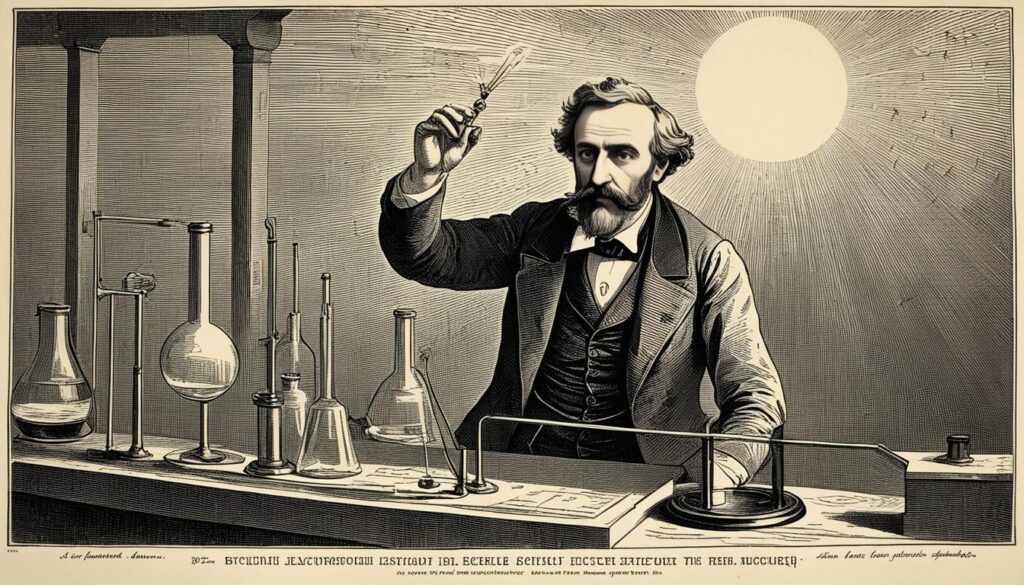
Ever stop to think about where that incredible burst of energy comes from when the sun hits your face on a crisp morning? We often take it for granted, but the story of how we first understood solar energy is surprisingly captivating. It all started with a young French physicist named Edmond Becquerel, and a bit of serendipity.
So, let's dive into the fascinating journey of how Edmond Becquerel stumbled upon the photovoltaic effect – the foundation of all things solar!
Accidental Genius: A Lab, a Father, and a Spark
Picture this: Paris, 1839. Edmond Becquerel, just a bright-eyed 19-year-old, is working alongside his father, Antoine César Becquerel, in their family laboratory. Now, Antoine was no slouch himself – a renowned physicist specializing in electrochemistry. Edmond was essentially learning at the feet of a master, immersed in a world of wires, solutions, and electrical currents.
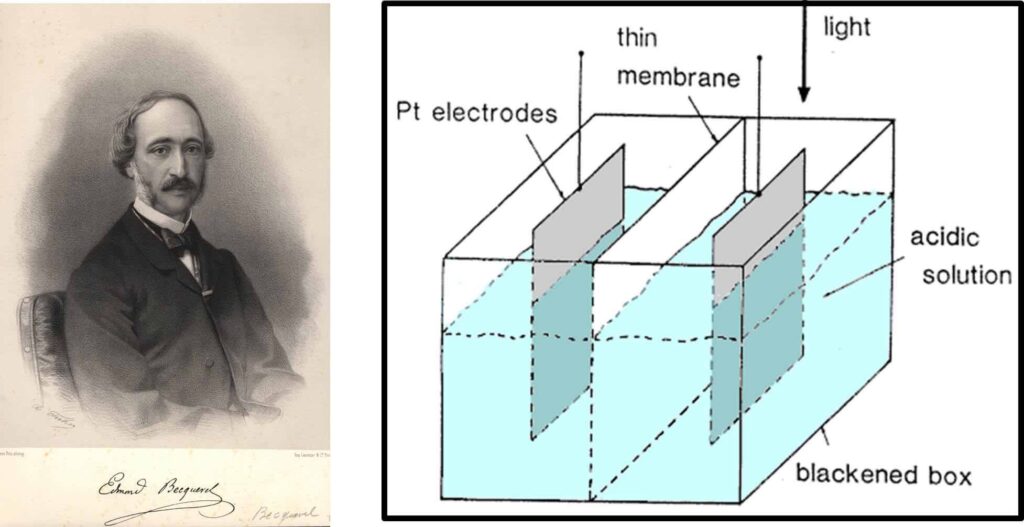
The father-son duo were experimenting with electrolytic cells, devices that use electricity to drive chemical reactions. They were particularly interested in how light might influence these reactions. Think of it like trying to jump-start a science fair project, but with slightly more sophisticated equipment.
Here's the kicker: They weren't actively searching for solar energy. It wasn't like Edmond woke up one morning and said, "Today, I'm going to unlock the power of the sun!" It was more of an "oops, I accidentally discovered something revolutionary" kind of moment. These things often happen in science.
The Eureka Moment: Light Meets Electrodes
During one experiment, Edmond was using an electrolytic cell with two platinum electrodes dipped in a conductive solution. He noticed something peculiar: when he shined light onto the cell, the electric current increased. Boom! A light bulb moment – literally and figuratively.
He had discovered that light, in this case, sunlight, could directly generate electricity. This phenomenon he observed is now known as the photovoltaic effect. He was the first person ever to witness this effect, making him a true pioneer. Think of him as the Christopher Columbus of solar energy.
Fun Fact: While Becquerel's initial discovery was groundbreaking, the electricity generated was very weak. It wasn’t powerful enough to, say, power your iPhone (imagine the battery life back then!). It would take decades of further research and technological advancements to harness solar energy for practical applications.
From Lab to Legacy: Building on Becquerel's Brilliance
Becquerel meticulously documented his findings, laying the groundwork for future scientists. People like Albert Einstein, who later provided a theoretical explanation of the photovoltaic effect in 1905 (earning him a Nobel Prize!), built upon Becquerel’s observations. Without Becquerel's initial discovery, Einstein might not have had the experimental basis to develop his groundbreaking theory.
Over time, scientists experimented with different materials and cell designs. It took almost a century before solar cells became efficient enough for widespread use. The development of silicon-based solar cells in the mid-20th century was a major breakthrough, paving the way for the solar panels we see on rooftops today.
Practical Tip: Thinking about going solar? Research local incentives and rebates! Many governments offer financial assistance to homeowners who invest in solar energy systems, making it more affordable and environmentally friendly.
The Ripple Effect: Solar Power Today
Today, solar energy is a rapidly growing industry, playing a crucial role in the global transition towards cleaner, more sustainable energy sources. From powering homes and businesses to fueling electric vehicles and even spacecraft, the photovoltaic effect discovered by Edmond Becquerel has transformed our world.
It’s pretty incredible to think that such a simple observation in a 19th-century laboratory could have such a profound impact on the 21st century. Becquerel's legacy lives on every time a solar panel converts sunlight into electricity, quietly contributing to a greener future.
Cultural Reference: Check out documentaries on renewable energy. They often highlight the history of solar power and the key figures who made it possible, like our man Edmond!
Reflecting on Our Daily Sunshine: Next time you feel the sun's warmth, remember Edmond Becquerel. His accidental discovery reminds us that even the smallest spark of curiosity can ignite a revolution. It also highlights the importance of scientific exploration and the potential for unexpected breakthroughs to shape our world for the better. And hey, maybe that little bit of sunshine can inspire you to tackle your own (solar-powered?) project!