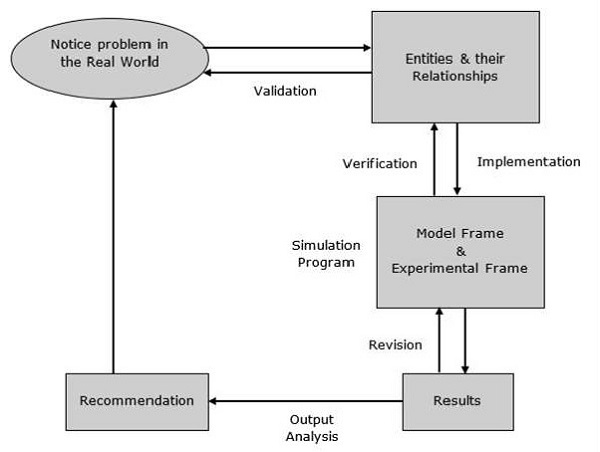
Ever wondered about the difference between a model and a simulation? They both sound pretty techy, right? But they're actually super cool and way more fun than you might think. Let's break it down in a way that won't make your brain hurt.
Models: The Blueprint
Think of a model as a blueprint. It's a simplified representation of something real. It captures the most important aspects of whatever it is representing. It helps us understand how it works.
Imagine a toy car. It's a model of a real car. It doesn't have a real engine or a working radio. But it shows you the basic shape and design of a car.
That's the essence of a model. It's about simplifying reality to make it easier to grasp.
Types of Models
Models come in all shapes and sizes. Some are physical, like that toy car. Others are mathematical, like equations that predict the weather.
Architects use models to show what a building will look like. Scientists use models to understand how diseases spread. Economists use models to predict how the economy will behave.
The beauty of a model is its versatility. It can be used to represent almost anything you can imagine.
Simulations: The Show in Action
Now, let's talk about simulations. Think of a simulation as a show, or a movie. It takes a model and puts it into action.
It's not just a static representation. It's a dynamic one, where things change and evolve over time. A simulation is about seeing what happens.
Imagine playing a video game where you're driving that toy car. You can steer, accelerate, and brake. You can see how the car responds to different situations. That's a simulation in action.
Simulating the Real World
Simulations are used to explore possibilities without actually doing them in real life. This can be incredibly useful and safe.
Pilots use flight simulators to practice flying in dangerous conditions. Doctors use surgical simulators to hone their skills. Engineers use simulations to test the strength of bridges.
By running a simulation, you can test limits and make mistakes without real-world consequences. It's a fantastic tool for learning and innovation.
The Key Difference: Static vs. Dynamic
The easiest way to remember the difference is this: A model is static. A simulation is dynamic.
A model is like a photograph. It captures a moment in time. A simulation is like a movie. It shows how things change over time.
The model sets the stage. The simulation plays out the story.
"A model is a representation; a simulation is the enactment of that representation."
Why Are They So Cool?
So, what makes models and simulations so fascinating? It's the power to explore the unknown. The ability to predict what might happen.
They allow us to experiment with different scenarios. They help us understand complex systems. They let us make better decisions.
Imagine designing a new city. You could use a model to map out the streets and buildings. Then, you could use a simulation to see how traffic flows, how energy is used, and how people interact with the environment.
The Fun Factor
Let's be honest, playing with simulations is just plain fun. It's like having a virtual playground where you can try anything. You can do so without breaking things (too much!).
Ever played a city-building game like SimCity? That's a simulation! You get to design a city, manage its resources, and see how your decisions impact the citizens. It's addictive!
From video games to scientific research, models and simulations are all around us. And they are constantly evolving, becoming more realistic and powerful.
Real-World Applications
The applications of models and simulations are endless. They span every field, from science and engineering to business and entertainment.
Weather forecasting relies on complex models and simulations to predict storms and temperature changes. Financial analysts use models to predict market trends and manage risk. Movie studios use simulations to create stunning visual effects.
Even your GPS uses a model of the road network and a simulation of your movement to guide you to your destination.
Examples of Model and Simulation Use Cases
Here are a few specific examples to further illustrate their use:
- Climate Change: Climate scientists use climate models to simulate the Earth's climate system. They can project how different levels of greenhouse gas emissions will affect global temperatures, sea levels, and weather patterns.
- Traffic Management: Traffic engineers use traffic simulations to optimize traffic flow in cities. They can test different road layouts, traffic light timings, and public transportation systems to reduce congestion and improve travel times.
- Manufacturing: Manufacturers use simulations to design and optimize production processes. They can identify bottlenecks, improve efficiency, and reduce costs.
- Healthcare: Medical researchers use models and simulations to study diseases and develop new treatments. They can simulate the spread of a virus, the effects of a drug, or the outcome of a surgical procedure.
Getting Started
Intrigued? Want to explore the world of models and simulations for yourself?
There are tons of free and open-source tools available online. You can start with simple simulations and gradually work your way up to more complex projects.
Check out online courses, tutorials, and communities dedicated to modeling and simulation. You might just discover your new passion!
Tools and Resources
Here are a few resources to get you started:
- NetLogo: A free, multi-agent programmable modeling environment. Great for simulating complex systems.
- Python with libraries like NumPy, SciPy, and Matplotlib: Popular for building mathematical models and simulations.
- Blender: A free and open-source 3D creation suite. Used for creating visual models and animations.
The Future is Modeled and Simulated
Models and simulations are becoming increasingly important in our world. As technology advances, they will become even more powerful and versatile.
They will help us solve complex problems, make better decisions, and create a better future.
So, embrace the power of models and simulations. Explore, experiment, and have fun! The possibilities are endless.