Alright, settle in, grab a warm cuppa (or an iced one, your call!), because we’re diving into one of life’s great, slightly chilly mysteries: Does cold air go up or down? It’s a question that probably pops into your head every time you open the fridge, step into an air-conditioned room, or feel that sneaky draft under the door.
You’ve felt it, haven’t you? That sudden *whoosh* of icy air when you reach for the leftover pizza? Or the way your toes are mysteriously frigid even when the rest of you is cozy warm? It's not just your imagination playing tricks. There's a very real, very agreeable scientific reason behind it, and trust me, it’s not rocket science – it’s more like a really comfy, heavy blanket.
The Big Reveal: Down It Goes!
Let’s cut to the chase with the answer, then we can have some fun with the why. The short, sweet, and scientifically sound answer is this: cold air goes down. Always. No ifs, ands, or frosty buts about it. Think of it as a shy, somewhat weighty friend who prefers to hang out low to the ground.
Why, you ask? It all comes down to something called density. Imagine a room full of people. If everyone is really spread out and dancing freely (that's warm air), there’s a lot of space between them. But if everyone huddles together for a group photo (that's cold air), they take up less space, but there’s more *stuff* in that space. That "more stuff in less space" makes it denser, and therefore, heavier.
So, cold air is literally heavier than warm air. And what do heavy things do? They sink! Think of a big, sturdy rock in water compared to a floating leaf. The rock, being denser, goes straight to the bottom. Cold air is the rock in our atmospheric analogy, just gracefully, imperceptibly sinking.
Everyday Chilly Confirmations
You’ve experienced this phenomenon countless times, probably without even realizing you were conducting a mini-science experiment. Let’s list a few, just to make you nod along knowingly:
The Fridge Fiasco: Ever opened the refrigerator door and felt a blast of frosty air cascade out and hit your shins? That's not a tiny ninja fan pushing it out. That's the cold air, denser and heavier, literally *spilling* out and sinking to the floor. It's like a chilly waterfall designed exclusively for your feet.
Air Conditioning's Clever Trick: Most AC vents are high up on the wall, right? The AC unit pumps out glorious, cold air from above. But where do you feel the chill first? Pooling around your ankles and making you think you're wading through an invisible, icy puddle. That’s the cold air, diligently sinking, doing its job of cooling the whole room from the bottom up.
Drafty Doors and Windows: In the winter, if you have a drafty door or window, where does that icy whisper of a breeze seem to sneak in? Usually right at the bottom, making your feet protest. It's not being lazy; it's simply following the laws of physics, making a beeline for the lowest possible point.
The Battle of the Blankets: You’re snuggled up in bed, but your feet are still cold. You pile on another blanket. You probably just added more insulation, but you also probably trapped some of that heavier, colder air that was trying to sneak in around your toes. If you've ever thought about putting a heater low to the ground, you're intuitively understanding this principle!
What About Warm Air?
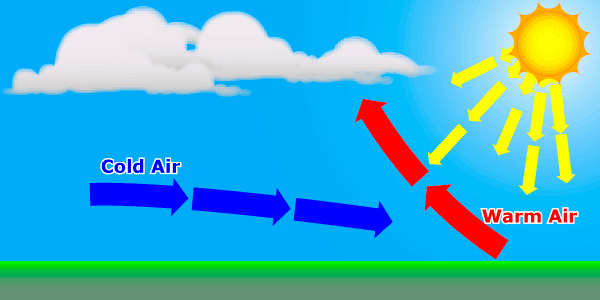
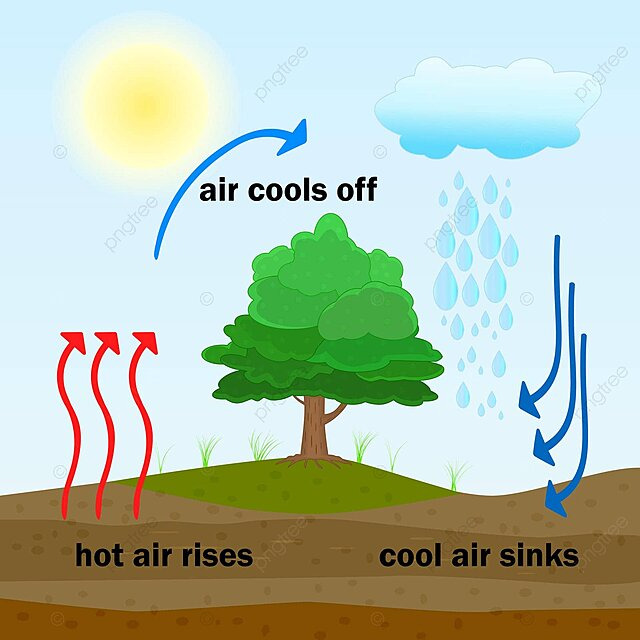
Just for completeness, because they're two sides of the same coin: if cold air goes down, then warm air goes up. It's lighter, less dense, and full of buoyant ambition. Think of a hot air balloon – it rises because the air inside it is heated, making it lighter than the air outside. That’s why heat rises, and why your attic is always the warmest part of your house (unless you're running a serious AC up there!).
This whole up-and-down dance is called convection, and it’s how heating and cooling works in a room. Cold air sinks, pushes warm air up, that warm air cools, sinks, and the cycle continues. It’s a beautifully efficient, invisible little ballet.
So, What Now?
Now that you're armed with this crucial, chill-inducing knowledge, you can approach life’s temperature quirks with a newfound understanding. Those cold spots by the floor? Totally normal. That refreshing rush from the open freezer? Expected. You’re not imagining things; you're just experiencing the undeniable truth that cold air is a ground-dweller.
So next time you shiver your way through a drafty room, give a little nod to science. And perhaps put on some thicker socks. Because when it comes to cold air, it’s always, always, down to business.