Ever just stood there, maybe by an open fridge or near a drafty window on a chilly day, and felt that distinct shiver? It’s funny how we experience these everyday things, but sometimes don't stop to think about why they happen. Like, have you ever really pondered: Does cold air go down or up?
It sounds like a simple question, right? But it's one of those things that, once you start thinking about it, opens up a whole cool world of science happening all around us, all the time. Let’s dive into this breezy mystery with a laid-back vibe and see what we can uncover!
The "Heavy" Truth About Cold Air
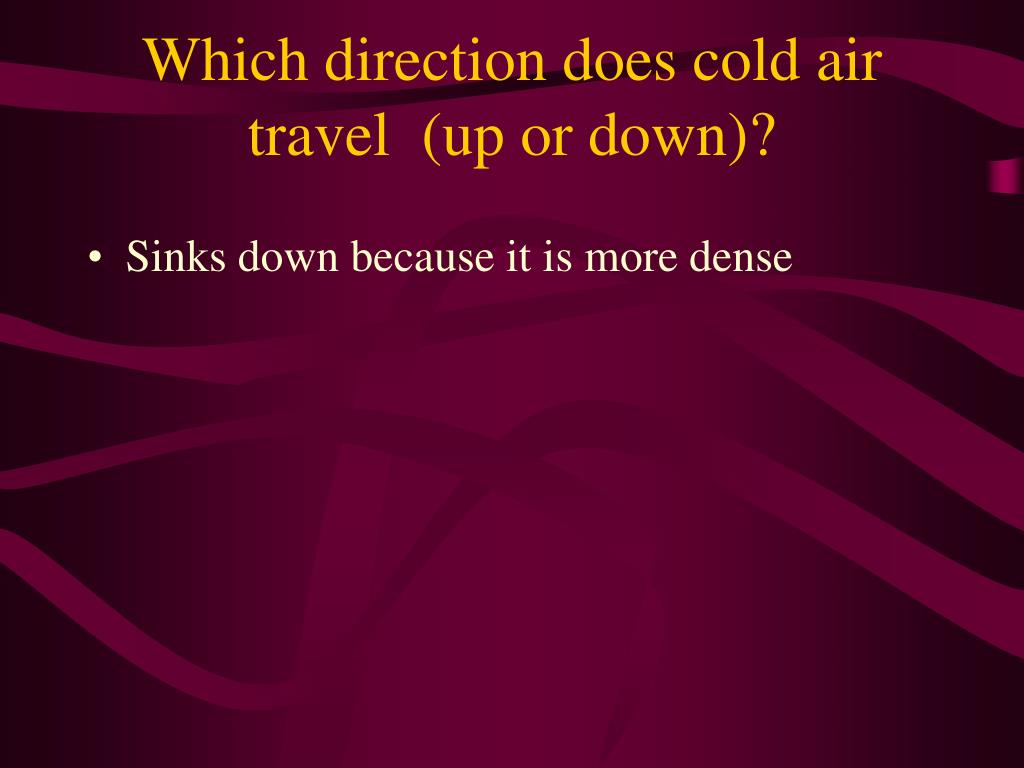
Okay, so let’s get straight to it. If you had to guess, what would your gut say? Most people probably feel like cold air just… drops. Like a chilly blanket settling over everything. And guess what? Your gut feeling is pretty spot on! Generally speaking, cold air definitely goes down. But why?
It all comes down to something called density. Don't let that fancy word scare you; it just means how much "stuff" is packed into a certain amount of space. Think of it like a crowded elevator versus an empty one. The crowded one is denser, right?
Here’s the deal: air is made up of tiny, tiny particles (molecules, if we’re getting technical). When air is warm, these particles are super energetic. They're zipping around, bouncing off each other, and generally spreading out. This makes warm air less dense, like a really chill crowd that’s not too packed together.
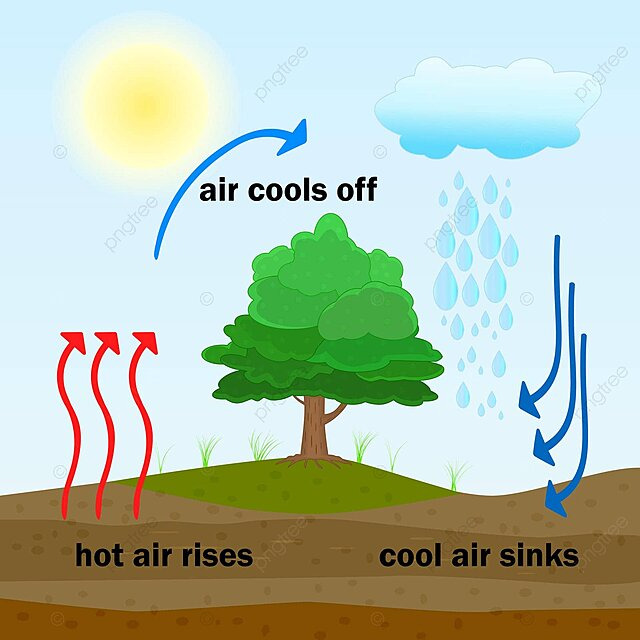
But when air gets cold? Those particles slow way down. They huddle closer together, becoming more compact. And when air particles are packed tightly together, that air becomes more dense. And here's the golden rule of density: denser things sink!
Where Do We See This Chilly Phenomenon?
Once you know this little secret about density, you start seeing examples everywhere. It’s actually pretty wild how much of our daily life is shaped by this simple principle!
Your Fridge and Freezer: Masterpieces of Cold Air Science
Think about your refrigerator. Where’s the cooling element usually located? Often, it’s near the top. Why? Because the cold air it produces immediately starts to sink, cascading down and cooling everything below it. The warmer air, being lighter, then rises to the top to be cooled, creating a continuous cycle. It’s like a tiny, perfectly orchestrated waterfall of cold!
That Winter Draft: A Cold Air "River"
Ever feel a cold draft along the floor from a window or door in winter? That’s not just your imagination. The cold air from outside seeps in, and because it's denser, it literally flows along the floor, like an invisible river of chill, making your toes regret not wearing thicker socks.
Basements and Valleys: Nature's Chill Pockets
This is also why basements and cellars are almost always cooler than the upstairs. Cold air sinks and collects there. Similarly, in nature, cold air often pools in valleys and low-lying areas, especially on clear, calm nights. This is why you often see frost in low spots even if higher ground is clear – the cold air just loves to settle down there.
So, Cold Air Always Sinks, Right? Mostly!
Now, you might be thinking, "Hold on! What about convection? Don’t heaters make warm air rise, and then the colder air sinks to replace it?" And you'd be absolutely right to think that!
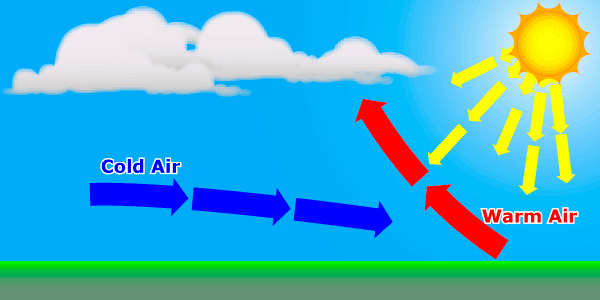
While it’s true that cold air fundamentally wants to go down because of its density, our world isn't a static place. There's a constant dance happening. When cold air sinks, it has to displace something, right? And what it displaces is warmer, lighter air, *forcing* that warmer air to rise. This is the heart of convection currents.
So, when you see air "moving up" that started out cold, it's usually because it's part of a larger system. It might be getting pushed up by warmer, rising air, or it's simply a draft created by other forces (like wind or a fan). It's not rising on its own accord because it suddenly decided to defy gravity; it's just being nudged along in the grand circulation.
Think of it like a seesaw. One side goes down, and the other *has* to go up. Cold air sinking is one side of that atmospheric seesaw, making warmer air rise on the other.
Why Bother With This Chilly Little Factoid?
Beyond satisfying our inner science geek, understanding this simple principle of cold air sinking is actually super practical and fascinating!
- Smarter Home Design: Architects and HVAC engineers use this knowledge to design more efficient heating and cooling systems, placing vents strategically to maximize comfort and energy savings.
- Understanding Weather: It helps us understand how weather patterns develop, from why foggy mornings occur in certain areas to how global air currents distribute heat around the planet.
- Food Preservation: Knowing where the cold air collects in your fridge helps you organize your groceries for optimal freshness!
So, the next time you open the freezer or feel a cool breeze around your ankles, take a moment to appreciate the subtle, invisible ballet of air molecules. It’s a beautiful, elegant demonstration of physics playing out right in front of you. And the answer to our original question? When left to its own devices, cold air definitely heads downwards, making room for the warmer, lighter air to dance its way up. Pretty cool, huh?