Ever wondered where that mysterious, gooey substance we call crude oil actually comes from? It's not just bubbling up randomly like a forgotten science experiment! Oh no, finding crude oil is like embarking on a grand, geological treasure hunt, millions of years in the making.
Imagine a world where tiny, microscopic creatures were the superstars of the ancient oceans. We're talking about things like plankton and algae – little marvels of life, happily floating and soaking up the sun's energy.
The Incredible Journey Begins: From Microbes to Moolah!
Millions upon millions of years ago, when dinosaurs might have been having a stroll, these little sea critters lived their lives. When they eventually finished their magnificent dance, they gently settled down to the bottom of those ancient seas, forming a rich, organic sludge.
Now, this wasn't just any old mud pile. This was the future's liquid gold in the making! It needed a very specific set of circumstances, almost like a secret recipe for the universe's most precious soup.
Getting Buried: The Cozy Blanket of Sediment
Over eons, layers of mud, sand, and other bits of rock slowly piled up. Picture it like a giant, geological lasagna! Each new layer added immense weight, gently pressing down on that ancient organic goo.
This burial was crucial! It created an oxygen-free environment. Without oxygen, those tiny bits of ancient life couldn't just rot away like your compost pile. Instead, they began a slow, incredible transformation.
"No oxygen allowed! This is a VIP party for future oil molecules only!"
The Ultimate Pressure Cooker and Earth's Gentle Oven
As more and more layers piled on, the pressure became absolutely colossal. It's like having a skyscraper – or ten! – sitting on top of you. This immense squeezing action was one key ingredient.
But wait, there's more! Deep beneath the Earth's surface, things get wonderfully warm. Not scorching hot like a volcano (that would cook it too much!), but a gentle, sustained heat. Think of it as a slow-cooker set to perfection for millions of years.
This precise combination of immense pressure and just-right heat gradually "cooked" that organic sludge. Over millions of years, the complex organic molecules broke down and rearranged themselves into the simpler hydrocarbon chains we know as crude oil, and often, natural gas too!
Hidden Hideouts: The Earth's Clever Traps
Now, once this amazing liquid treasure forms, it doesn't just sit there in big, underground lakes. Oh no, that would be too easy! Crude oil is actually found nestled within tiny pores and cracks inside specific types of rocks, kind of like water in a super dense sponge.
The Reservoir Rock: Earth's Spongy Storage Units
These special rocks are called reservoir rocks. They're typically porous and permeable, meaning they have lots of tiny spaces where the oil can collect and flow through. Sandstone and limestone are often the ideal candidates for these underground storage facilities.
But the oil needs to be *trapped* there, otherwise, it would just seep right back up to the surface! And that's where geological ingenuity comes into play.
The Cap Rock: The Unbreakable Seal
Above the reservoir rock, there's usually a layer of impermeable rock, known as the cap rock. Think of it as a perfectly sealed lid on a jar, preventing that precious crude oil from escaping its underground vault. Shale is a common material for these trusty lids.
These cap rocks, combined with fascinating geological structures, create the perfect hiding spots. It's like Mother Earth built herself a series of escape rooms, and the oil is desperately trying to get out, but can't!
Geological Structures: The Ultimate Oil Traps
Geologists spend their lives looking for these clever traps. Some of the most common ones are:
- Anticlines: Imagine a giant arch or an upside-down 'U' shape in the rock layers. Oil and gas, being lighter than water, migrate upwards and get stuck at the crest of these arches. It's like a natural ceiling collecting all the good stuff!
- Fault Traps: Sometimes, the Earth's crust cracks and layers of rock slip past each other, creating a 'fault'. If an impermeable rock layer slides next to a permeable reservoir rock, it can seal off the oil's escape route, creating a perfect trap.
- Salt Domes: Believe it or not, enormous blobs of underground salt can push up through rock layers, bending and distorting them. These salt domes create perfect pockets and seals where oil and gas can accumulate. They're like nature's giant, subterranean bubble-wrap!
The Big Reveal: Where Are These Treasures Hiding Today?
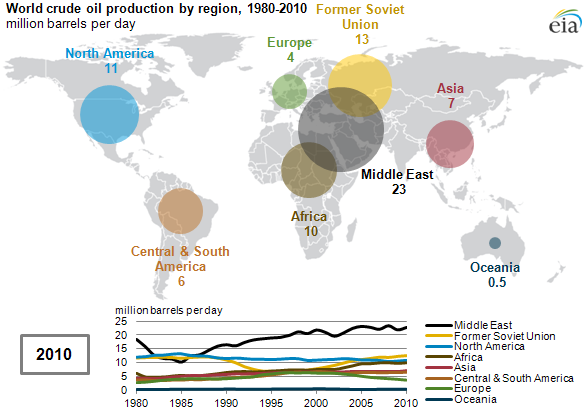
So, where in the world did all these perfect conditions come together to create such vast amounts of oil? It turns out, some places hit the geological jackpot more than others!
The Middle East: The Granddaddy of Oil Reserves
When you think of crude oil, your mind probably leaps to the Middle East, and for good reason! Countries like Saudi Arabia, Kuwait, Iran, Iraq, and the United Arab Emirates are absolutely dripping (pun intended!) with it.
Why so much? Millions of years ago, this region was covered by shallow, warm seas, absolutely brimming with those tiny plankton and algae. The conditions for burial, pressure, and heat were simply ideal for creating colossal reserves. It's like the universe's biggest batch of crude oil batter was cooked right here!
North America: From Gulf Coast to the Arctic Circle
The United States has significant oil fields, particularly in places like Texas, Oklahoma, and the famous Permian Basin. The Gulf of Mexico is also a massive offshore producer, with incredible deepwater drilling operations that defy belief.
Further north, Alaska's North Slope holds impressive reserves, often found in challenging, icy environments. And let's not forget our Canadian neighbours, especially Alberta, famous for its oil sands – a different, heavier type of crude that requires special extraction.
Russia: Vast and Deep
Spanning an enormous landmass, Russia boasts immense oil and gas reserves, particularly in the vast, often frigid regions of Siberia. Their fields are among the largest in the world, supplying energy across continents.
South America: Heavy Hitters and Deepwater Wonders
Venezuela is home to some of the world's largest known heavy crude oil deposits, specifically in the Orinoco Belt. Meanwhile, Brazil has emerged as a major player thanks to incredible deepwater discoveries off its Atlantic coast, pushing the boundaries of offshore technology.
Africa: A Continent of Black Gold
Various countries across Africa, like Nigeria, Angola, and Libya, are significant oil producers. Many of these reserves are found offshore, beneath the vast and beautiful Atlantic Ocean.
The Quest Continues: Finding Tomorrow's Fuel
Scientists and engineers are constantly on the lookout, using sophisticated seismic technology that sends sound waves deep into the Earth, listening for echoes that paint a picture of the layers beneath. It's like giving the Earth an ultrasound to find its hidden treasures!
From the scorching deserts of the Middle East to the icy depths of the Arctic, from the sun-drenched beaches of Brazil to the bustling shores of the Gulf of Mexico, crude oil is a testament to the Earth's incredible, patient processes.
So, the next time you marvel at the wonders of modern life, remember that it all began with tiny sea creatures, buried deep, cooked just right, and trapped in clever geological formations, waiting for us to discover their incredible secret. What an amazing planet we live on!