Okay, let's talk about that moment. You know the one. It’s a chilly evening, you’ve just settled onto the couch, maybe with a hot drink, and your trusty little space heater is humming away, radiating pure bliss. Or perhaps you’re deep into an epic gaming session, RGB lights ablaze, a powerful PC fan whirring like a tiny jet engine. Life is good, right? Pure, unadulterated comfort or digital adventure. Then the electricity bill lands in your inbox, and suddenly, that comforting hum sounds a lot like a cash register, and those RGB lights are flashing "dollar signs" in your eyes. Ouch.
That little moment of financial dread is exactly what got me thinking: how much does it actually cost to run something that pulls a significant amount of power? Specifically, let's dive into the world of 1500 watts per hour. Because, let's be real, a lot of our favorite creature comforts hover right around that mark.
So, What Exactly Is 1500 Watts?
Before we slap a price tag on it, let's get a grip on what 1500 watts (W) even means. Think of watts as the muscle an appliance uses to do its job. A 1500W appliance is a pretty strong contender in the power-hungry Olympics. We're talking about things like:
- Your average hair dryer on a high setting.
- Many powerful microwaves (though usually less than 1500W *cooking* power, they draw more).
- That super-efficient air fryer you can't live without.
- The aforementioned space heater keeping your toes toasty.
- Some high-end gaming PCs, especially when under heavy load, can easily push into this territory or higher.
- Powerful coffee makers or electric kettles.
Basically, if it heats something up quickly, spins something really fast, or has "turbo" in its description, it’s probably sucking down a good chunk of power, potentially 1500W or more. You know the suspects, don't you?
The Nitty-Gritty: Watts, Hours, and Your Wallet
Now, here's where we translate "power" into "money." When we talk about "watts per hour," what we're really getting at is how much power an appliance uses over a period of an hour. The electricity company, bless their hearts, doesn't bill you by the watt. They bill you by the kilowatt-hour (kWh). Don't let the fancy term scare you; it's pretty simple.
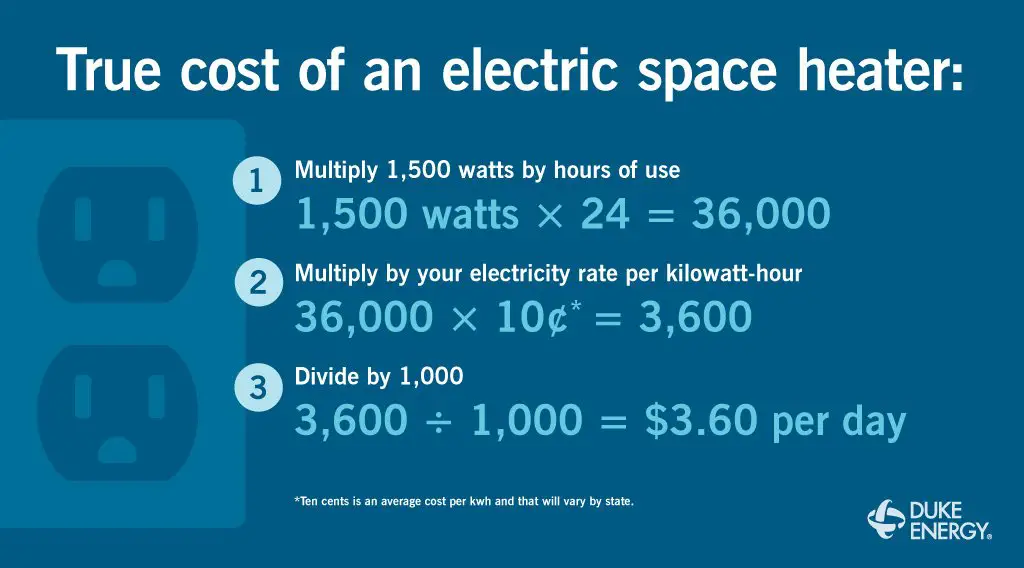
One kilowatt-hour is just 1000 watts used for one hour. So, if you've got an appliance that uses 1500 watts, and you run it for exactly one hour, you've used 1.5 kilowatt-hours (kWh). Get it? 1500W / 1000 = 1.5kW. Run for an hour = 1.5 kWh. Easy peasy!
Crunching the Numbers: The Cost!
Alright, drumroll please! To figure out the actual cost, we need one more piece of the puzzle: your electricity rate. This varies wildly depending on where you live, your energy provider, and even the time of day you're using power. For simplicity, let's pick a hypothetical average rate. Let's say your electricity costs $0.18 per kWh (that's 18 cents, for those of us who prefer plain English).
So, if a 1500W appliance runs for one hour:
1.5 kWh * $0.18/kWh = $0.27
That's right, about 27 cents. For one hour. Doesn't sound like much, does it? A quarter and a couple pennies. Hardly enough to make you swap out your space heater for a wool blanket, right?
Ah, but here's the kicker...
When 27 Cents Becomes Real Money
That 27 cents is just for one single hour. How many hours do you really use these things? Let's take that space heater again. What if you run it for 8 hours overnight to keep your bedroom cozy?
8 hours * $0.27/hour = $2.16
Okay, $2.16 a night. Still not breaking the bank. But wait, there's more! What if you do that every night for a month (let's say 30 days)?
30 days * $2.16/day = $64.80
Suddenly, that comfy little space heater is adding nearly sixty-five bucks to your monthly bill! And that's just for one appliance! What if your gaming PC pulls 1500W for 4 hours a day, alongside your air fryer for 30 minutes, and that speedy kettle for 10 minutes a few times a day? You start to see how those bills creep up.
And remember, we're using $0.18/kWh. If you live somewhere with higher rates (I've seen places hit $0.25/kWh or even more!), these numbers jump up even faster. Gulp.
The Takeaway: Knowledge is Power (and Savings!)
Understanding the cost of 1500 watts per hour isn't about shaming you for wanting to be warm or to dominate your online opponents. It's about being aware. It's about that moment of clarity when you connect the dots between your habits and that judging electricity bill.
So, next time you plug in a high-wattage appliance, take a moment. Check its label (usually stamped on the back or bottom) to see its wattage. Then, do a quick mental calculation based on your local electricity rate. You might be surprised. You might even decide that an extra sweater, or a quick kettle boil instead of prolonged warmth, is a pretty good deal after all.
Knowing this stuff really does put the "power" back in your hands. And hey, maybe that grandma-knitted blanket isn't so unfashionable after all, right?