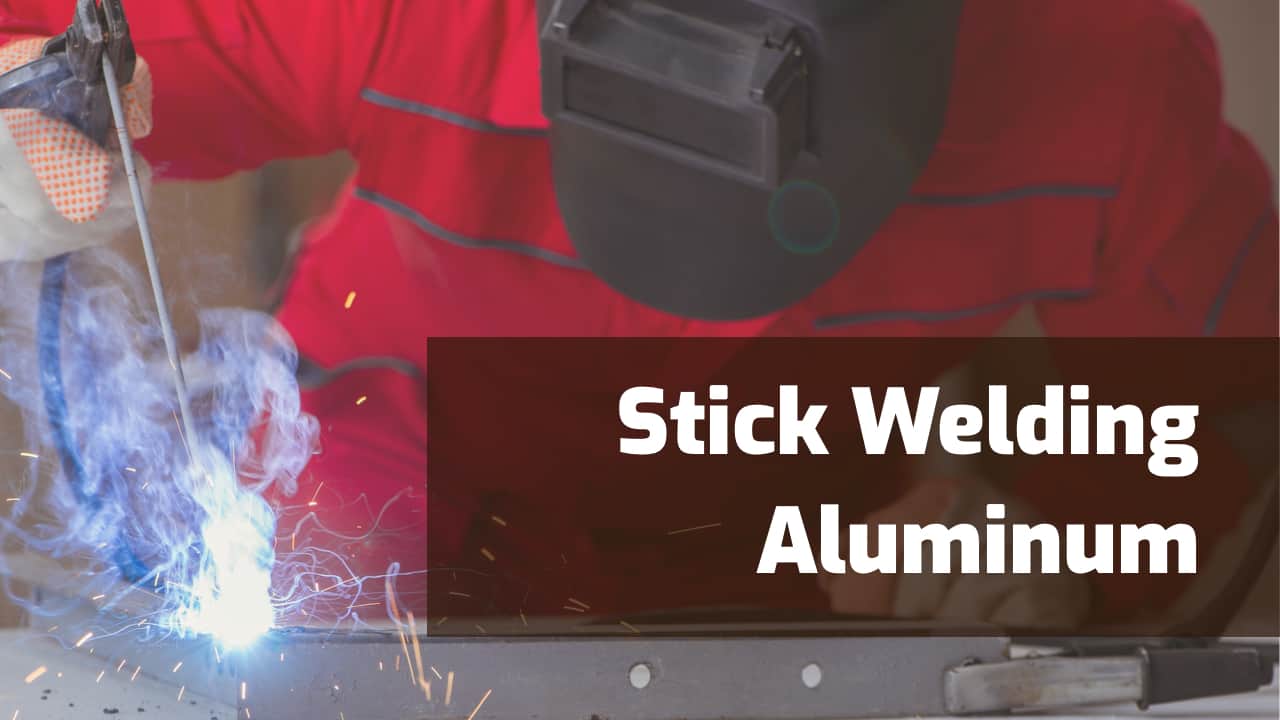
Hey there, curious craftsperson! Ever gazed at a sleek piece of aluminum – maybe a lightweight bike frame, a shiny boat hull, or even some cool artistic sculpture – and wondered, "Could I fix that myself? Could I join two pieces together? And what about with a good old-fashioned stick welder?"
It's a fantastic question, and one that often pops into the minds of DIY enthusiasts and budding fabricators. You see, stick welding (or Shielded Metal Arc Welding, if we're getting fancy) is the rugged, go-to workhorse for many. It's affordable, portable, and great for steel. But when it comes to aluminum...
The Big Question: Stick Welding Aluminum?
Alright, let's cut to the chase, shall we? Can you stick weld aluminum? The short, rather blunt answer is: generally, no. Or at least, not effectively, not easily, and certainly not beautifully for most applications.
Hold your horses, don't despair just yet! This isn't a dead end; it's just the beginning of understanding why aluminum is such a fascinating, albeit finicky, material to work with. Think of it as a puzzle with a different set of rules.
Why Aluminum Says "No Thanks!" to Most Stick Welders
So, what's the deal? Why isn't your trusty stick welder usually up for the aluminum challenge? A few key reasons:
1. The Pesky Oxide Layer: Aluminum naturally forms a thin, tough layer of aluminum oxide on its surface. This layer has a much higher melting point (around 3,700°F or 2,037°C) than the base aluminum itself (around 1,220°F or 660°C). Imagine trying to melt an ice cube with a rock-hard, super-hot shell around it!
2. Conductivity Crazy: Aluminum is an excellent conductor of heat. This means heat dissipates super fast from your weld zone, making it difficult to maintain a stable puddle and penetrate the material correctly. It's like trying to warm up a vast, cold room with a tiny candle – the heat just vanishes!
3. DC vs. AC: Most stick welding is done with Direct Current (DC). While you *can* find specialized DC aluminum electrodes (yes, they exist!), they are notoriously difficult to use. Why? Because you need Alternating Current (AC) for proper aluminum welding. AC creates a cleaning action that blasts away that stubborn oxide layer, allowing you to get to the pure aluminum underneath.
4. Hydrogen Porosity: Aluminum is like a sponge for hydrogen, especially when molten. And guess what? Moisture in electrode coatings or the air can introduce hydrogen, leading to bubbles and weakness (porosity) in your beautiful weld. Not exactly what you want for structural integrity!
But Don't Give Up! Here's How You *Can* Weld Aluminum!
Okay, so stick welding aluminum isn't the dream, but that absolutely doesn't mean you can't weld aluminum! In fact, there are fantastic, incredibly effective methods. This is where the real fun begins, because learning these techniques opens up a whole new world of possibilities!
Enter the King: TIG Welding (GTAW)
If aluminum welding were a royal court, TIG welding would be the undisputed monarch. Why? Because TIG (Tungsten Inert Gas) allows for incredible control, precision, and the ability to produce gorgeous, clean welds on aluminum.
It uses an inert gas (usually argon) to shield the weld, a non-consumable tungsten electrode, and typically an AC current with a high-frequency arc. That AC current? It's the secret sauce for busting through that oxide layer! TIG welding aluminum is a skill that takes practice, but oh boy, is it rewarding! Think intricate sculptures, aerospace parts, and custom fabrication – all gleaming aluminum masterpieces.
The Workhorse Alternative: MIG Welding (GMAW)
Need to weld aluminum faster, perhaps on thicker material, and maybe don't need the super-fine precision of TIG? Say hello to MIG welding aluminum! This is often considered the next best option and is fantastic for many DIY and industrial applications.
MIG welding aluminum requires a few specific setups: a spool gun or push-pull gun to feed the soft aluminum wire without kinking, 100% argon shielding gas, and the right wire type. While it's generally done with DC Electrode Positive (DCEP), the continuous feeding wire helps push through the oxide. It's faster to learn than TIG, and you can really get some serious work done with it – think boat repairs, trailer fabrication, or custom car parts!
The Simpler Solution: Aluminum Brazing/Soldering
For non-structural, lower-stress repairs or joining thinner aluminum pieces, you might not even need a full-blown welder! Aluminum brazing or soldering rods offer a surprisingly effective and accessible solution. These special rods have a lower melting point than aluminum and create a strong bond using just a propane torch or an oxy-acetylene torch.
It's an excellent entry point for simple repairs, like a cracked garden chair or a small boat leak. No fancy equipment needed, just careful heating and a steady hand. Isn't that neat?
Why This Matters to You: The Fun Factor!
So, why should you care about all this? Because understanding *how* to work with aluminum, even if it's not with a stick welder, unlocks a treasure trove of creative and practical possibilities! Aluminum is lightweight, corrosion-resistant, and looks fantastic. Imagine:
- Building custom bicycle racks or lightweight utility carts.
- Repairing aluminum boat props or railings.
- Creating stunning metal art for your home or garden.
- Fabricating unique automotive parts that are both strong and light.
The ability to join this versatile metal means you're not limited to just steel. You gain a superpower of sorts, expanding your creative toolkit exponentially! It empowers you to build, fix, and invent with a whole new material.
Go Forth and Weld!
While your trusty stick welder might not be the right tool for aluminum, the world of aluminum welding is vibrant and welcoming. It's a journey into new techniques, new challenges, and incredible rewards. Whether you dive into the mesmerizing dance of TIG, the efficient hum of MIG, or the gentle warmth of brazing, learning to weld aluminum is a skill that truly pays off.
So, don't let the initial "no" deter you. Instead, let it fuel your curiosity! Look up some TIG welding videos, research MIG setups for aluminum, or grab some brazing rods for a small project. You'll be amazed at what you can achieve. The world of aluminum fabrication is waiting for you, and it's going to be a whole lot of fun discovering it!