Ever found yourself melting into your sofa during a heatwave, muttering about your AC unit being about as effective as a polar bear in a desert? Or maybe you're in the market for a new one, and the salesperson casually asks, "How many tons are you thinking?" and your brain just short-circuits. Tons? Is my air conditioner going to weigh as much as a small car? Am I buying a tiny freight train for my living room?
Relax, take a deep breath (hopefully of some actual cool air!). We've all been there. This 'ton' business is one of those wonderfully confusing jargon terms that makes you feel like you need an engineering degree just to stay comfortable. But don't worry, it's not nearly as complicated as it sounds, and it certainly has nothing to do with the actual physical weight of your shiny new unit.
What in the World is an AC 'Ton' Anyway?
Alright, let's clear up this tonnage mystery. Back in the day, before fancy compressors and refrigerants, people used to cool their homes (or more likely, their breweries or icehouses) with actual blocks of ice. A "ton" of cooling power historically referred to the amount of heat absorbed by one ton of ice melting over a 24-hour period. Wild, right? So, when you hear "one ton" for an AC unit, think of it as the cooling capacity equivalent to that much melting ice.
Today, it’s a standard unit of measurement for an AC’s ability to remove heat from your home. Think of it less like weight and more like the oomph or horsepower of your air conditioner. A 1-ton AC unit can remove 12,000 BTUs (British Thermal Units) of heat per hour. So, a 2-ton unit handles 24,000 BTUs, and so on. It's all about how much heat that bad boy can kick out of your house and send packing!
Connecting Tons to Your Cozy (or Not-So-Cozy) Square Feet
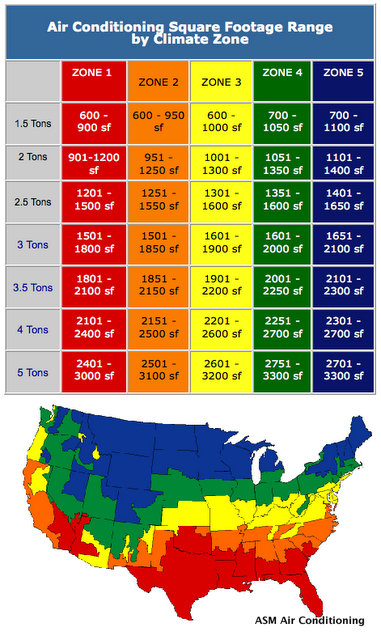
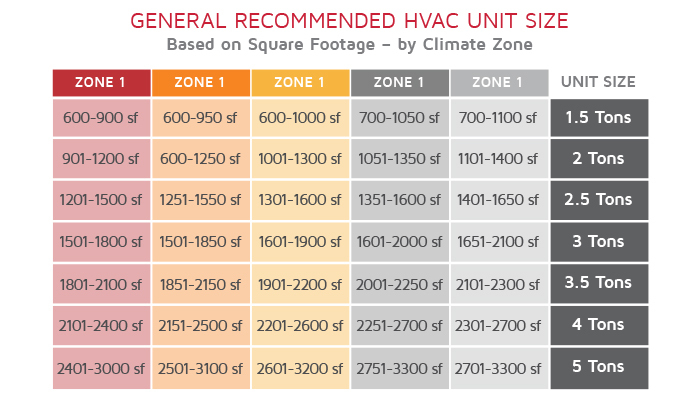
Now that we know a 'ton' isn't about crushing your foundation, how does it relate to the size of your space? This is where the magic happens, or rather, where the guidelines come in. There's a sweet spot, a Goldilocks zone, for matching your AC's tonnage to your home's square footage.
Generally speaking, you need about one ton of cooling capacity for every 400-600 square feet of living space. But hold your horses! This isn't a hard-and-fast rule written in stone. It's more like a suggestion from a very wise, very experienced friend who understands you have unique quirks.
Here’s a rough idea to get you started:
- Small apartment (around 600-900 sq ft): You're probably looking at a 1.5 to 2-ton unit.
- Medium-sized home (around 1000-1500 sq ft): A 2.5 to 3-ton unit might be just right.
- Larger abode (around 1600-2400 sq ft): You're likely in the 3.5 to 4-ton territory.
- Sprawling estate (over 2500 sq ft): We're talking 5 tons or even more, possibly multiple units!
Why Your House Isn't "Average" (and that's okay!)
Remember how I said it’s a guideline? That's because your home has its own personality, and some homes are just… a little extra. Many factors can sway the ideal tonnage up or down. Think of it like cooking a recipe – the base ingredients are there, but you might need more spice depending on your taste!
- Window Wonderland: Got lots of big, sunny windows? They're basically heat magnets, letting in all that glorious sunshine (and heat!). You might need a bit more cooling power to fight against that.
- Insulation Situation: Is your attic insulated like a cozy winter cabin, or is it more like a sieve? Good insulation keeps the cool air in and the hot air out, meaning your AC doesn't have to work as hard.
- Ceiling Heights: High ceilings mean more air volume to cool, so you might need a bump in tonnage. It's like trying to cool a normal room versus a cathedral!
- Kitchen Maestro: Do you bake sourdough daily or whip up elaborate feasts? All that oven heat adds to the load. My kitchen becomes a sauna when I'm on a cookie-baking spree!
- People Power: A bustling family of six generates more body heat than a single person living alone. More warmth to combat!
- Sunny vs. Shady: Does your house bask in direct sun all day, or is it happily shaded by big trees? Location, location, location!
The Dangers of Going Too Big or Too Small
You might think, "Well, if in doubt, I'll just get a bigger unit! More power, right?" Wrong! Oversizing your AC is like buying a monster truck to pick up a single carton of milk. It'll get the job done quickly, but then it'll stop, leaving your milk (and your house) feeling clammy.
An oversized unit cools your house too fast, cycling on and off rapidly. This "short cycling" means it doesn't run long enough to effectively remove humidity, leaving you with that unpleasant, damp, sticky feeling even though the air might be cool. Plus, it's less energy-efficient and puts more wear and tear on your unit. You’ll be cool, but you’ll be uncomfortably cool, and your wallet won't be happy either.
On the flip side, an undersized unit is a sad story. It's like asking a poodle to pull a freight train. It'll run and run and run, trying its little heart out, but it'll never quite catch up. You'll still be hot, your energy bills will be astronomical, and the poor unit will wear out much faster from constant operation.
The Smart Move: Call in the Pros!
While these guidelines are super helpful for understanding the basics, when it comes down to actually buying and installing an AC unit, always, always consult a professional HVAC technician. They perform something called a "load calculation" (sometimes called a Manual J calculation), which takes into account all those quirky factors of your home – windows, insulation, orientation, even your Aunt Carol’s propensity for leaving the front door open!
They’ll give you the most accurate recommendation for the perfectly sized unit for *your* home, ensuring you stay cool, comfortable, and efficient. So next time someone asks about tonnage, you can confidently explain, "It's about the cooling power, not the weight, silly!" And then let the experts do the real heavy lifting (of calculations, that is).