Ever stared at your electricity bill, eyes glazing over at lines like "Energy Consumption: 350 kWh"? You're not alone. It's like looking at a grocery receipt that just says "Food: 17 units" – utterly unhelpful for understanding what you actually consumed. But fear not, my energy-bewildered friends! Today, we’re going to demystify the mighty Kilowatt-Hour, or as I like to call it, the Kilo-What-Now-Hour?, with all the casual charm of a barista explaining a particularly complicated latte order.
Imagine, if you will, the Kilowatt-Hour as the currency of work that your appliances perform. It’s not just how much power they *can* draw, but how much power they *actually use* over a period of time. Think of it like this: a high-performance sports car has a lot of horsepower (that’s its potential power). But if it just sits in the garage, it's not actually *doing* anything. You only pay for the fuel it burns when it’s out on the road, zooming around for a certain amount of time. That's your Kilowatt-Hour – the zooming around for a specific duration!
Deconstructing the Kilo-What-Now-Hour
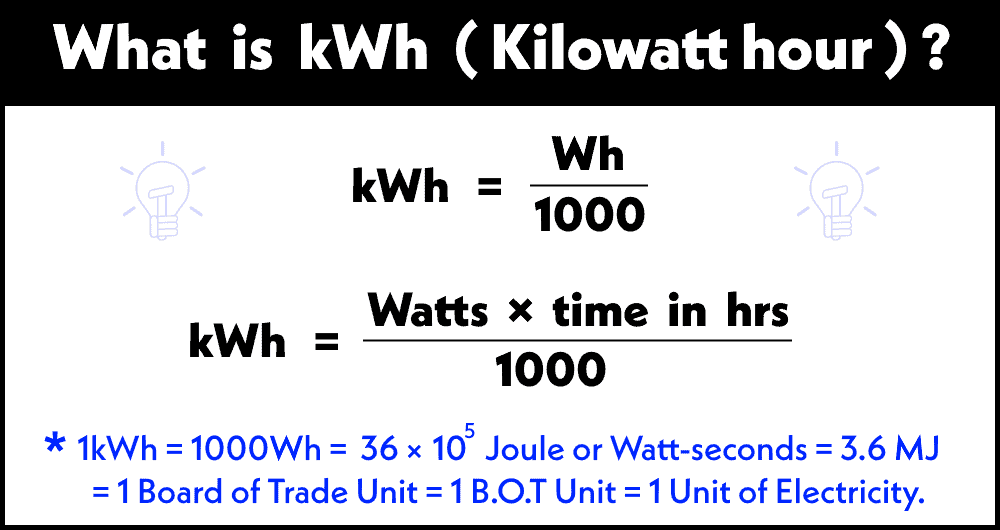
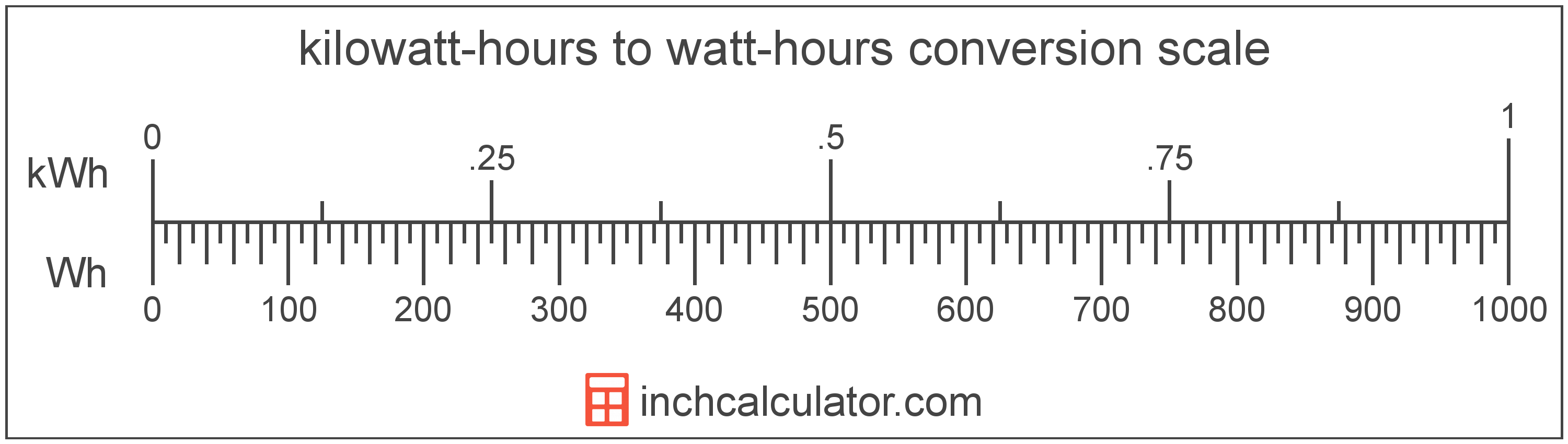
Let's break it down like a bad breakup. First, you have the Kilowatt (kW). This is a unit of power. It’s the "oomph," the "oomph-factor," the sheer might an appliance demands at any given moment. A kilowatt is 1,000 watts. Your kettle, for example, might be a 2-kilowatt beast when it’s boiling water, screaming at the top of its electrical lungs. Your fancy new hairdryer? Easily a kilowatt or two of pure, hot air fury. It’s the muscle, the flex, the "watch me lift this heavy thing" moment for your devices.
Then we have the Hour (h). This part is blessedly straightforward. It’s sixty minutes. The time it takes to brew a decent cup of coffee, scroll endlessly through social media, or question all your life choices. You know, an hour. Simple.
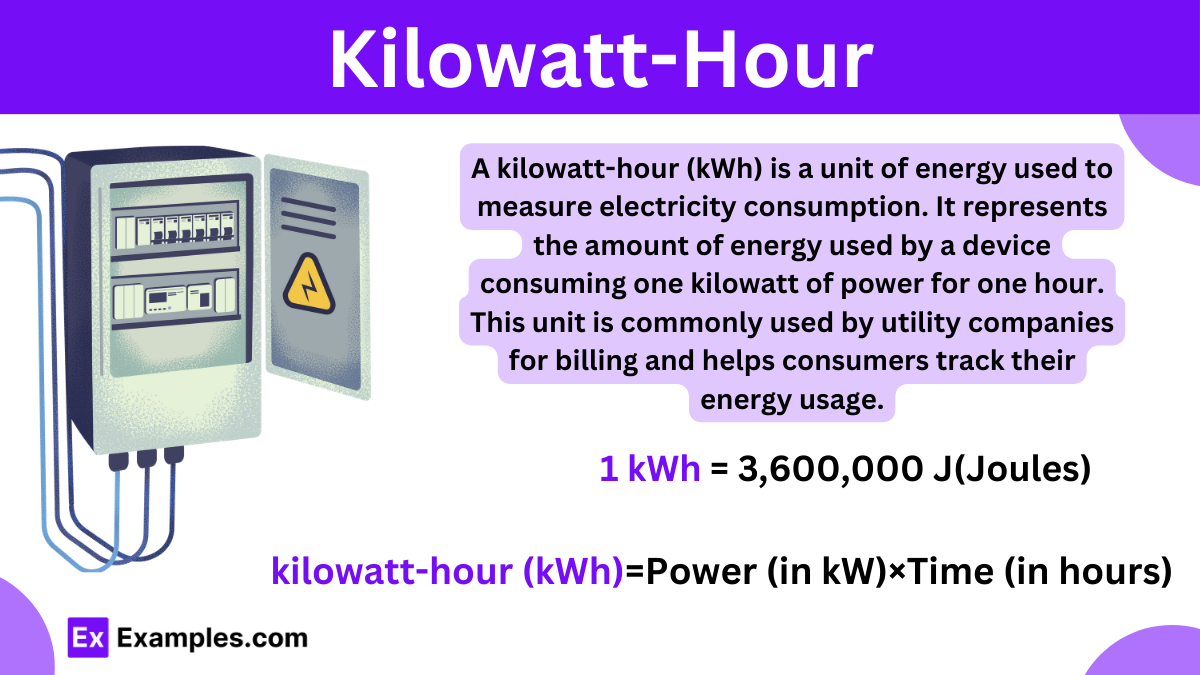
Now, smash them together like two overly enthusiastic scientists at a convention, and you get the Kilowatt-Hour (kWh)! This is the total amount of energy consumed. So, if your 1-kilowatt microwave runs for one whole hour (goodness, what are you cooking in there?), it has consumed 1 kilowatt-hour of energy. If your 2-kilowatt kettle boils for half an hour (which would probably evaporate all the water on Earth), it also uses 1 kWh. See? It's all about the power multiplied by the time.
Your electricity company isn't charging you for how *powerful* your hairdryer is; they're charging you for how *long* you unleash that power onto your unfortunate hair. It’s the billable unit, the undeniable proof of your electrical indulgence. It's the little invisible helper doing chores for your appliances, and each chore costs a certain amount of kWh.
What Can 1 kWh Actually Do? Prepare to Be Amazed!
Here’s where it gets fun and surprisingly insightful. What kind of heavy lifting can one single Kilowatt-Hour do for you? Let's talk specifics, shall we?
-
Boil a Kettle: Your standard 2kW kettle takes about 3-4 minutes to boil. This means 1 kWh could boil your kettle roughly 15 to 20 times! That’s enough tea to host a very large, very caffeinated garden party for all your neighbours. Or just you, repeatedly.
-
Watch TV: A modern 50-inch LED TV sips power, maybe 100 watts (0.1 kW). With 1 kWh, you could binge-watch your favorite show for a staggering 10 hours straight! That's almost an entire season of *The Great British Bake Off*! Just remember to blink.
-
Run Your Fridge: Your fridge is a silent hero, but it’s always on. A typical modern fridge might use around 0.1 to 0.2 kWh *per day*. So, 1 kWh could keep your snacks cold for anywhere from 5 to 10 days! Suddenly, your fridge looks like a minimalist superhero, silently preserving your hummus and leftover pizza for nearly two weeks with just one of these little energy units.
-
Charge Your Phone: Your phone charger is a tiny little energy miser, often pulling only 5-10 watts. This means 1 kWh could charge your phone somewhere in the realm of 100 to 200 times! You could charge every phone on your street, twice, and still have juice left over. Go forth and be the neighborhood's charging guru!
-
Light Your Home: Remember those old incandescent bulbs? A 60W bulb would glow for about 16 hours on 1 kWh. But swap that out for a modern 9W LED, and that same 1 kWh will keep the light on for an incredible 111 hours! That's nearly four and a half days of continuous light. The difference is like comparing a snail to a cheetah on rocket fuel.
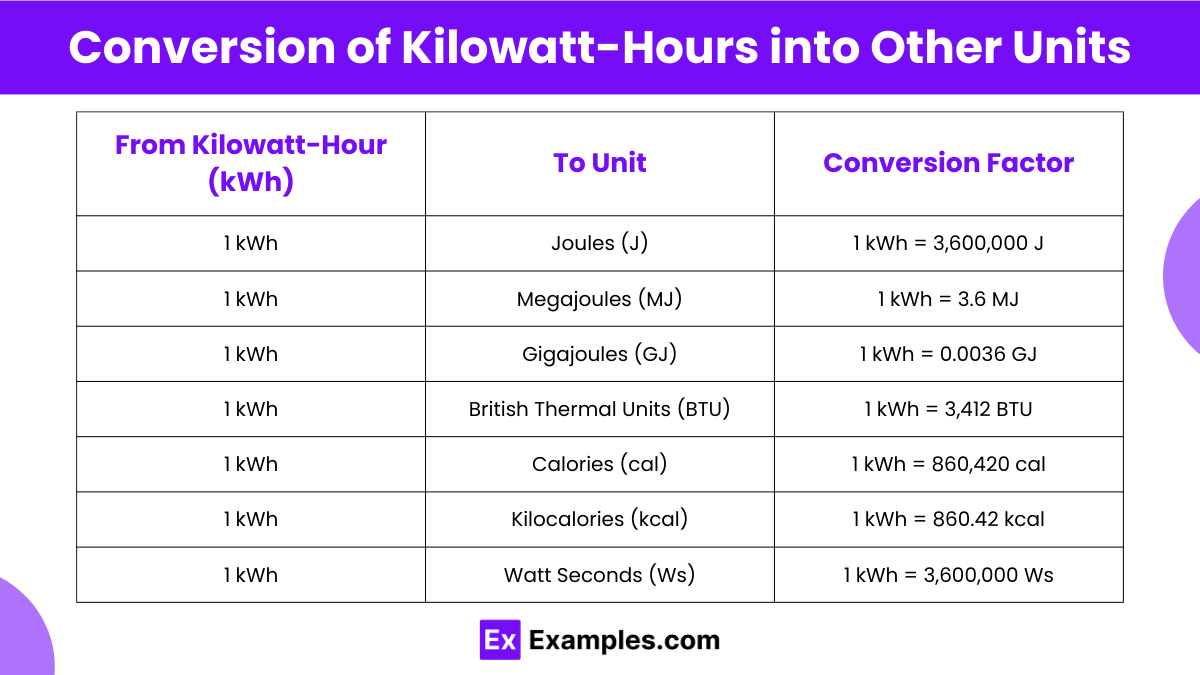
And here’s a truly surprising fact: a human being needs about 2000-2500 kilocalories per day. When converted, that's roughly 2.3 to 2.9 kilowatt-hours of energy. So, in terms of sheer energy, your body uses a similar amount of "juice" as running a small fridge for 10-15 days, *every single day* just to keep you going! You are, in essence, a walking, talking, energy-consuming machine, just like your appliances!
Why Should You Even Care?
So, next time you glare at your electricity bill, you won't just see a random number. You'll see the total sum of all those hours your TV ran, your kettle boiled, your fridge hummed, and your phone charged. You'll understand that you're paying for the *work* these invisible energy units did for you.
Understanding kWh isn't just for showing off at dinner parties (though it totally is, trust me); it’s about making informed choices. It’s about realizing that leaving your high-wattage space heater on for an extra hour is a much bigger deal, kWh-wise, than leaving your phone charger plugged in. It's about being the boss of your energy consumption, rather than letting it be the boss of your wallet.
So, there you have it. The Kilowatt-Hour. Not some mythical beast or a confusing line item, but the hardworking, quantifiable unit of energy that powers your life, one boiled kettle, one charged phone, and one binge-watched series at a time. Go forth, my friends, and converse knowingly about your energy consumption. Your wallet (and possibly your smart meter) will thank you!