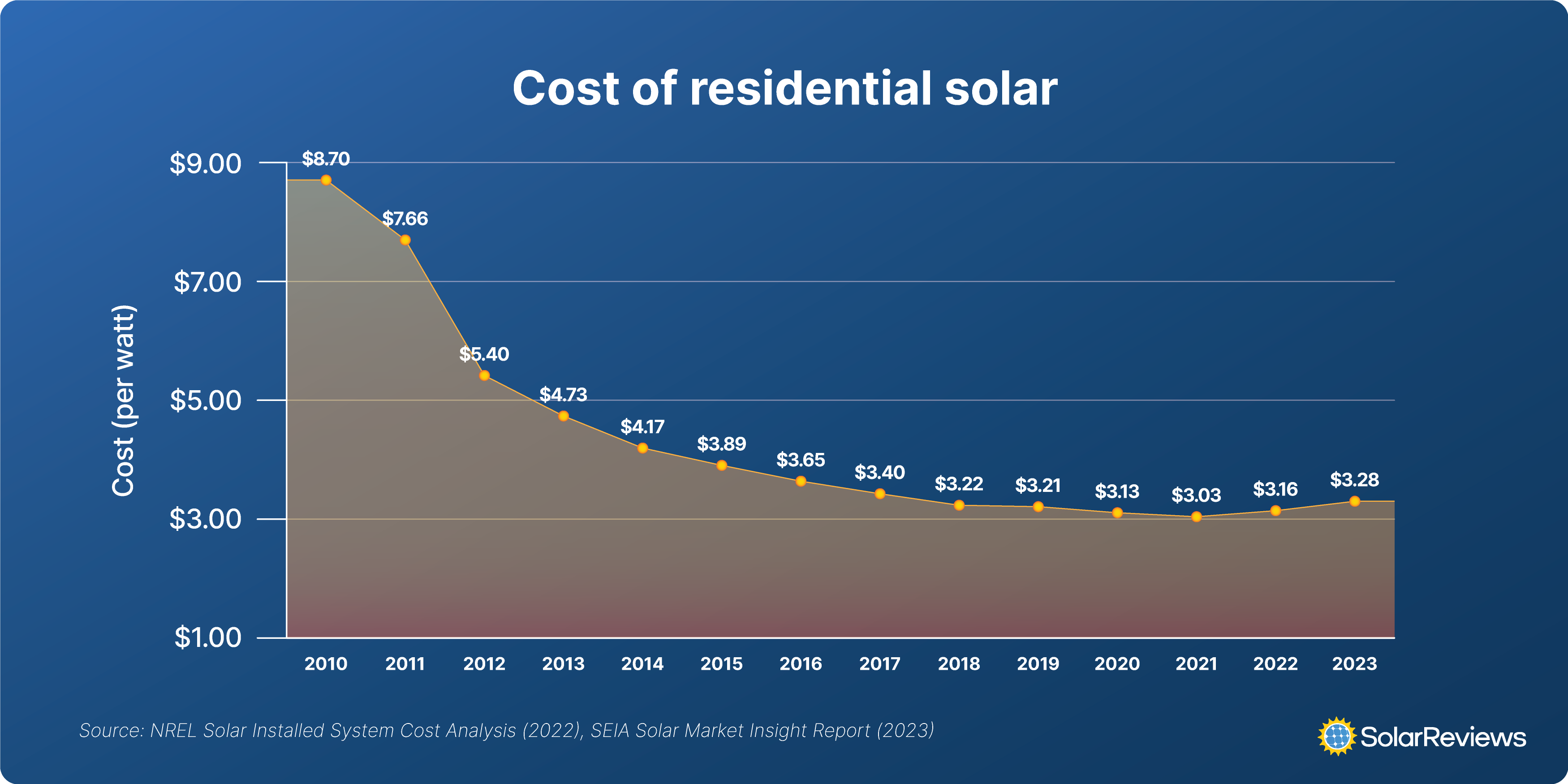
Average Cost Of Solar Per Kwh

Ever looked up at the sun on a bright day and wondered, "How much does that sunshine actually cost me if I turn it into electricity?" It’s a fascinating question, and one that's becoming increasingly relevant as more and more homes and businesses embrace solar power. We often hear about solar panels, but diving into the average cost of solar per kilowatt-hour (kWh) is where the real fun begins – it’s like peeking behind the curtain to understand the true economics of harnessing the sun's energy!
So, what exactly is the purpose of knowing this number? Think of it as your secret decoder ring for understanding energy. The "average cost of solar per kWh" represents the total lifetime cost of a solar system divided by the total electricity it’s expected to produce over its lifespan. It essentially tells you how much you're paying for each unit of electricity generated by your solar panels, over the long haul. The big benefit here is clarity. It allows you to make informed decisions, comparing the cost of solar energy directly against the price you pay your utility company for traditional grid electricity. It's not just about saving money; it's about gaining energy independence and contributing to a more sustainable future, all while understanding the financial implications clearly.
This concept isn't just for energy nerds; it has practical applications everywhere! In education, it’s a brilliant topic for a high school science or economics class. Students could research local solar installation costs, estimate energy production, and calculate the cost per kWh, comparing it to their parents' electricity bills. It's a fantastic project for teaching math, environmental science, and personal finance all at once! In daily life, imagine you're a homeowner contemplating going solar. Knowing the average cost per kWh helps you answer crucial questions: "Will solar save me money in the long run?" and "How does this compare to my current electricity rate?" It empowers you to evaluate quotes from solar installers and understand the real return on your investment. Even if you're not planning to install panels, understanding this metric helps you appreciate the evolving energy landscape and discuss renewable energy with greater insight.
Must Read
Curious to explore this yourself? It’s easier than you might think! A simple first step is to check your current electricity bill to find out what you're currently paying per kWh for grid power. Then, you can use one of the many free online solar calculators provided by solar companies or government energy sites (like the NREL PVWatts Calculator) to get an estimate for your specific location. These tools often ask for your address, average electricity usage, and even show potential solar production and savings. Another great tip is to look up recent reports from energy agencies like the U.S. Energy Information Administration (EIA) or the International Renewable Energy Agency (IRENA); they often publish data on global and national average solar costs. Don't be afraid to ask solar installers for detailed breakdowns of their proposed systems, including estimated annual production. By comparing these numbers, you’ll quickly start to grasp the exciting and ever-changing economics of solar power, making you a more informed and empowered energy consumer!