
At What Temperature Outside Should I Turn My Heat On
/GettyImages-533592578-57e681ce3df78c690fb17ca4.jpg)
Ah, the eternal question. The crisp air nips at your nose, the leaves are turning a fiery orange, and you find yourself staring intently at the thermostat. When exactly do you succumb to the allure of turning on the heat?
It’s a debate that rivals the great toilet paper roll orientation controversy (over or under, people?). There are no right or wrong answers, only deeply held personal beliefs and a touch of shivering pride.
The Great Thermostat Standoff
Let’s be honest, for some, the turning on of the heat is a sign of weakness. A personal failing. A surrender to the elements! These brave souls will be rocking fingerless gloves indoors until the first snowflake falls.
Must Read
They’ll tell you, with a martyr’s gleam in their eye, about the virtues of layering. About the “natural” insulation provided by a good wool sweater. They might even suggest you do some jumping jacks to warm up.
Then there are the pragmatists. The folks who believe in comfort above all else. They view the thermostat as a tool, not a test of willpower. They are not about to suffer for the sake of… well, for the sake of what, exactly?
The Magic Number (or is it?)
So, what is the magic number? Is there a universally accepted temperature at which we all collectively sigh and flick that switch?
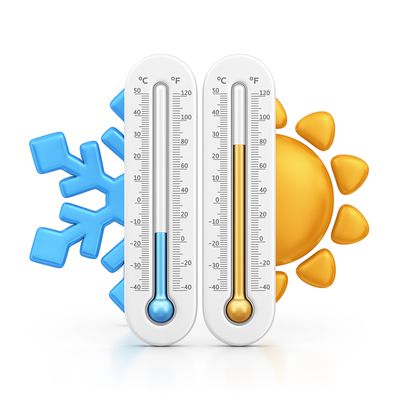
Generally, many experts suggest around 60-65 degrees Fahrenheit (15-18 degrees Celsius) as a good benchmark. But hold on a minute! Before you go setting your thermostat to 62 and feeling smug, consider this:
That "ideal" temperature is just a starting point. Your personal tolerance for cold, the age of your house, and even your activity level all play a role.
Are you sitting still, reading a book? You’ll probably feel colder than if you're bustling around doing chores. An older house with drafty windows? Expect to feel the chill sooner.
And let's not forget the great sock debate. Thick socks, thin socks, no socks... the choice impacts the "feels like" temperature of your entire being.
Beyond the Thermometer: The "Feels Like" Factor
The thermometer might say 63 degrees, but what does your body say? Are your fingers numb? Are your teeth chattering? Are you contemplating wearing your winter coat indoors?
These are important questions! Listen to your body! It's usually a pretty reliable indicator of your thermal comfort.
Maybe 63 feels perfectly pleasant to you. Maybe it feels like the Arctic tundra. There's no shame in adjusting accordingly.
Think about how a sunbeam can transform a room. A ray of sunshine through the window can make the feels like temperature significantly warmer, even if the actual temperature hasn't changed.
The Pet Factor
And what about our furry friends? Are they huddled in blankets, giving you the "I'm freezing!" eyes? Are they actively seeking out warm spots, like the top of the refrigerator or the back of your computer?
While a little cold is usually not harmful for most pets, excessive shivering or lethargy are signs they're uncomfortable. They might need a little extra warmth too!
Some pet owners even use the temperature their pets start exhibiting cold behaviors as their heat-triggering point. A noble consideration!
The Psychology of Turning on the Heat
There's something inherently comforting about turning on the heat. It's a symbolic act, a declaration that you're taking control of your environment. A little bit of "I'm in charge of the weather in here!"
It's also an admission that summer is officially over. The days of open windows and carefree breezes are gone, replaced by the cozy embrace of a heated home.
And for some, it's a guilty pleasure. A secret indulgence. A small act of rebellion against the forces of nature... and the electric bill.
The "Saving Money" Game
Ah, the electric bill. The bane of every homeowner's existence. The fear of a sky-high bill often drives the delay in turning on the heat.
We tell ourselves, "I can handle it. It's not that cold. I'll just wear another layer." And then we secretly crank up the electric blanket at night.
There's a delicate balance between saving money and maintaining a reasonable level of comfort. And sometimes, a little bit of comfort is worth the cost.
Consider investing in a programmable thermostat. This allows you to set different temperatures for different times of the day. Lower the temperature while you're at work or asleep, and raise it when you're home and awake. It's a great way to save money without sacrificing comfort!
The Social Pressure
What will the neighbors think if you turn on your heat in October? Will they judge you? Will they whisper behind your back about your "weakness"?
Okay, probably not. But there's still a subtle social pressure to resist turning on the heat for as long as possible. It's like a silent competition to see who can endure the cold the longest.
Ignore the pressure! Your comfort is what matters. If you're cold, turn on the heat. Don't worry about what anyone else thinks.

Finding Your Personal Comfort Zone
Ultimately, the best temperature to turn on your heat is the temperature that makes you comfortable. There's no magic number, no right or wrong answer.
Experiment! Play around with the thermostat. See what works best for you and your household. Consider a space heater for one room instead of heating the entire home.
Don't be afraid to adjust the temperature based on the weather, your activity level, and your personal preferences. The goal is to create a warm and inviting home that you can enjoy all winter long.
So, embrace the chill, don the extra layers, and brave the thermostat standoff… until your breaking point. Then, with a sigh of relief (and perhaps a small, guilty smile), flick that switch and bask in the warmth. You deserve it!
And remember, comfort is king (or queen)! Don't let anyone tell you otherwise. Now, if you'll excuse me, I'm going to go put on another sweater...