Are Watts And Volt Amps The Same

Ever gazed at the back of an appliance, or perhaps considered that shiny new UPS for your computer setup, and noticed two numbers that look suspiciously similar: Watts (W) and Volt-Amps (VA)? It’s a bit like seeing "calories" and "kilojoules" – you know they’re related to energy, but are they, like, the exact same thing? Let's untangle this little electrical mystery with a splash of everyday magic.
The Scoop on Watts: Your Power Paycheck
Think of Watts (W) as the real, nitty-gritty power that actually gets work done. It’s the energy your hairdryer uses to blast hot air, the juice your TV sips to show your favorite series, or the force your kettle needs to boil water for that essential morning brew. When you look at your electricity bill, you're primarily paying for the Watts consumed over time (kilowatt-hours, to be precise).
Watts are the hardworking heroes of your home. They represent the actual power converted into useful output, whether that's heat, light, sound, or computation. For simple devices like an incandescent light bulb or a toaster, the Watts listed are pretty much the whole story.
Must Read
Unpacking Volt-Amps: The Total Package
Now, let's talk about Volt-Amps (VA). This one’s a bit more elusive, but just as important. Imagine you’re at a party, and you ask for a beer. The bartender pours you a pint, but some of it is foamy head, and some of it is actual liquid beer. The total volume in the pint glass? That’s your VA – the apparent power. The actual beer you can drink? That’s your Watts – the real power.
So, VA is the total electrical power supplied to a circuit, including both the power that does useful work (Watts) and the power that just "sloshes around" without directly doing work. This "sloshing around" power is often called reactive power, and it's essential for things like creating magnetic fields in motors or charging capacitors in electronic circuits.

Are They the Same? Sometimes, But Often Not!
Here’s the punchline: Watts and Volt-Amps are only the same when there's no "foam" in your electrical pint glass. This happens with purely "resistive" loads, like those old-school light bulbs, electric heaters, or a basic coffee maker. For these devices, almost all the electrical power supplied is converted directly into useful energy (heat or light), so W ≈ VA.
But for most modern electronics – think computers, refrigerators, air conditioners, LED lights, or anything with a motor or a power supply – they also use that "reactive" power. This means they need more total power (VA) supplied to them than the actual useful power (Watts) they consume. In these cases, W will be less than VA.
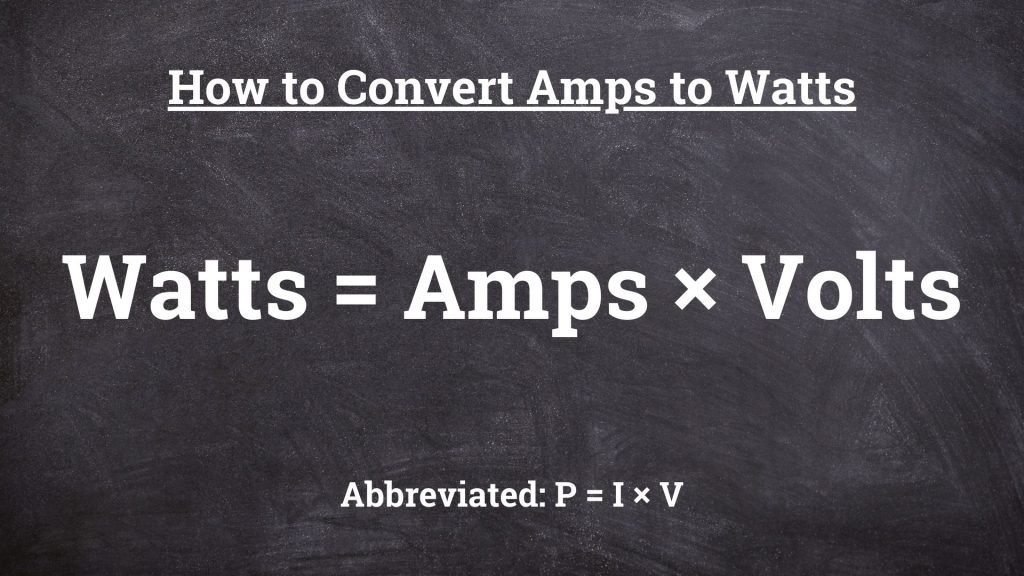
The relationship between them is called the Power Factor (PF). It’s basically a number between 0 and 1, where W = VA × PF. A power factor of 1 means W and VA are identical (purely resistive load, no foam!). A power factor less than 1 means you have some foam in your glass.
Why Should You Care? Practical Perks!
Understanding this isn't just for electrical engineers; it has some real-world applications:
:max_bytes(150000):strip_icc()/the-difference-between-watts-vs-volts-4767057_V3-9bb4bdf5c97d4f758cbc185d40376e89.png)
- Buying a UPS (Uninterruptible Power Supply): When you pick out a UPS, it will have both a VA rating and a Watt rating. The VA rating tells you how much total electrical load the UPS can handle without tripping its internal circuit breakers. The Watt rating tells you how much actual work-doing power it can supply, which directly relates to how long it can keep your devices running during an outage. Always make sure both ratings meet your needs!
- Generator Sizing: Similarly, if you're thinking about a home generator, you'll see VA and Watt numbers. The VA tells you its capacity to handle the "total apparent demand" of your appliances, while the Watts tell you its capacity for "actual energy production."
- Energy Efficiency: Devices with a higher power factor (closer to 1) are generally more efficient because they waste less of that "sloshing around" power. Modern devices are often designed with power factor correction to improve efficiency.
Quick Tips & Fun Facts!
- Most appliance labels will clearly state the Watts. Sometimes, especially for things that generate a lot of reactive power (like a big motor), you might see the VA listed as well.
- Your phone charger likely has a very small power factor difference, meaning its Watts and VA are pretty close.
- The higher the power factor, the happier your utility company (and potentially your wallet) because less power is wasted in transmission.
The Everyday Connection
So, are Watts and Volt-Amps the same? Not exactly. They're like two sides of the same electrical coin, or perhaps two different measurements of that pint of beer – one for the total volume, one for the drinkable liquid. While Watts tell you how much work is being done and what you're paying for on your bill, Volt-Amps tell you how much total electrical "stuff" your system needs to deliver to make that work happen.
Next time you plug in your laptop or eye that new fridge, take a moment to appreciate the invisible dance of Watts and Volt-Amps. It’s a subtle reminder that even in the seemingly straightforward world of electricity, there's always a little more going on beneath the surface, making our modern lives buzz with power. And hey, being in the know is always a little empowering, isn't it?