
Are There Different Types Of Hydropower Energy

Ever wondered how we keep the lights on? No, I'm not talking about that one brave soul you always delegate to check the circuit breaker. I'm talking about the big picture stuff, like where our actual electricity comes from. And guess what? One of the unsung heroes of the energy world is hydropower – that’s right, good ol' water turning into power!
Now, you might be thinking, "Hydropower? Isn't that just... dams?" Well, friend, you're partially right. But it's like saying all pizzas are just pepperoni. There's a whole world of cheesy, saucy, and sometimes surprisingly complex hydropower options out there. Let’s dive in, shall we?
The Classic: Dams with Reservoirs
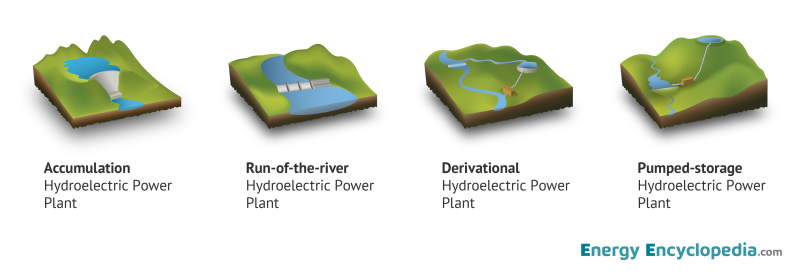
Think of this as the OG hydropower – the one your grandpa probably remembers. This is where we build a huge wall (a dam!) to create a big lake (a reservoir!). It’s kind of like building a giant bathtub for electricity. We then let the water flow through turbines, which spin and generate electricity.
Must Read
It's like when you were a kid and used a water wheel in the bathtub, except scaled up about a million times. Remember that awkward splash when it started spinning too fast? Yeah, engineers figured out how to avoid that kind of mess. These power plants are reliable and can generate a lot of power.
However, these dams can be like that one relative who overstays their welcome at Thanksgiving. They can disrupt ecosystems, flood habitats, and sometimes even displace communities. It's a real trade-off, and that's why people are looking for other options.
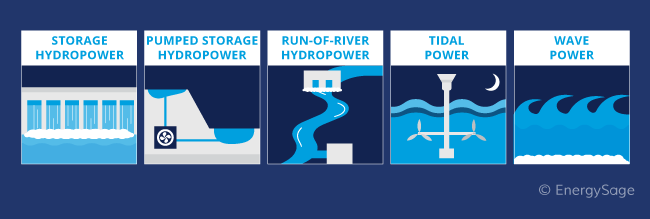
Run-of-River Hydropower: The Eco-Friendly Cousin
Imagine you're trying to catch a fish...with your bare hands. Hard, right? Now imagine building a tiny little net (a weir!) in the river to gently divert some of the water. That's basically run-of-river hydropower. Instead of building a giant dam and creating a massive reservoir, we use the natural flow of the river.
It's like borrowing a cup of sugar from your neighbor instead of building a whole sugar factory. These systems are much less disruptive to the environment because they don't create big reservoirs. They might have small ones, but they are nothing like those giant, conventional dams. These generally generate smaller amounts of power than those big dams, but they are a much kinder alternative to the environment.
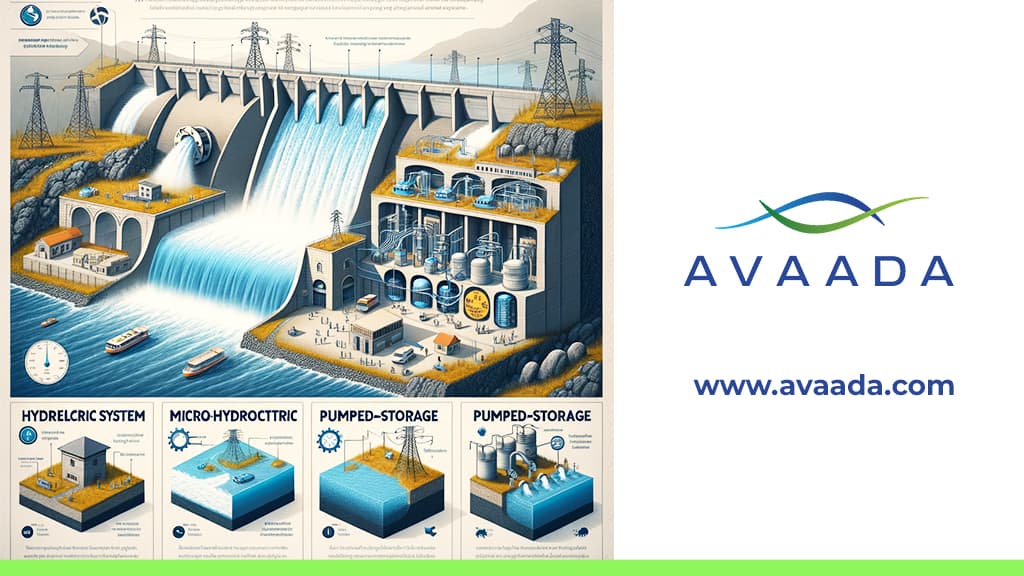
Pumped Storage Hydropower: The Rechargeable Battery
Think of pumped storage as the energy world's rechargeable battery. During times of low energy demand (like late at night), we use extra electricity to pump water uphill to a higher reservoir. Then, when demand is high (like when everyone's blasting the air conditioning on a hot summer day), we release the water back down to a lower reservoir to generate electricity.
It's like charging your phone overnight so it's ready to go in the morning. Pumped storage doesn't actually create new energy, but it helps us store and release energy efficiently, making the whole grid more reliable. It's a clever way to use excess energy from other sources, like solar or wind, to power our homes when we need it most.
Micro Hydropower: The DIY Option
This is the equivalent of setting up a tiny wind turbine in your backyard, but instead, you’re tapping into a small stream. Micro hydropower systems are small-scale, often off-grid setups that generate power for a single home, farm, or small community. Think of it as having your own personal power plant!
It is very efficient, clean, and very eco-friendly! It's like that feeling when you finally fix that leaky faucet – small, but incredibly satisfying (and saves you money!).
So, there you have it – a whirlwind tour of the different types of hydropower. From the behemoth dams to the tiny backyard setups, water power comes in many forms. The next time you flip on a light switch, remember that somewhere, maybe even just a little bit, water is working hard to keep your world bright. And who knows, maybe one day you'll even have your own micro-hydropower system powering your coffee maker. Now that's something to smile about!
