
Are Metalloids Good Conductors Of Electricity
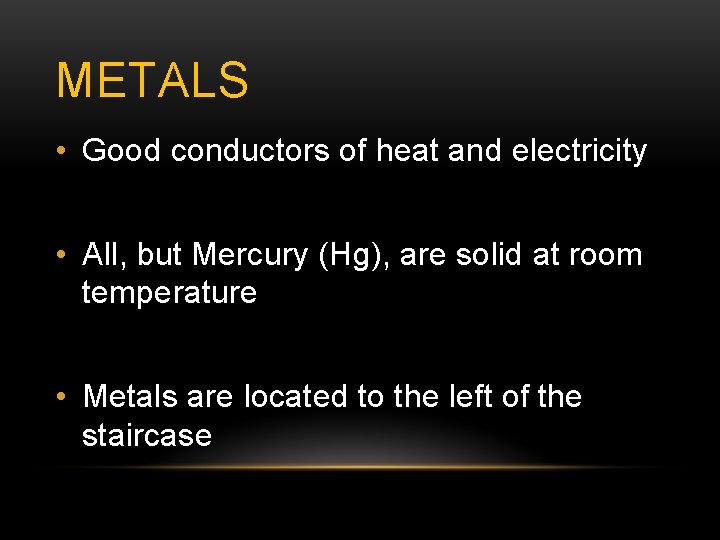
Alright, gather 'round, folks! Let's talk metalloids. You know, those awkward teenagers of the periodic table? They're not quite metal, not quite non-metal... kind of stuck in that "are they cool or are they just trying too hard?" phase. And the million-dollar question today: are they any good at conducting electricity?
Imagine the periodic table as a high school. You've got your metals – the jocks, all shiny and strong, happily passing electrons around like footballs. Then you've got the non-metals – the artsy kids in the corner, clutching their electrons possessively and generally avoiding interaction. And then, there are the metalloids... hanging out near the vending machines, trying to figure out which clique they belong to.
So, are these electron-passing wallflowers any good at letting electricity flow? The short answer is: it's complicated. Like trying to explain quantum physics to your grandma while she's baking cookies. Good luck with that!
Must Read
The "Sort Of, Maybe, Sometimes" Conductors
Metalloids, also known as semi-metals (a much cooler name, if you ask me), are semiconductors. Notice that "semi" part? It's kind of important. They don't conduct electricity as brilliantly as metals like copper or silver. Think of copper as Niagara Falls – electrons cascading down in a glorious, conductive rush. Metalloids are more like a leaky faucet. A very sophisticated, technologically advanced leaky faucet, but still… leaky.
Here's the deal: metalloids have a resistivity – that's a fancy word for how much they resist the flow of electricity – that's somewhere between metals and non-metals. It's like they're saying, "Okay, electricity, you can come through, but you have to pay a toll and wear a silly hat."

Think of it like this: Metals are like wide-open highways. Electricity can zoom right through. Non-metals are like brick walls. "Nope, not happening," they say to electricity. Metalloids? They're like a gravel road. You can drive on it, but it's going to be bumpy, slow, and you'll probably lose a hubcap.
Temperature: The Metalloid Mood Ring
Here's where things get interesting. Unlike metals, which become worse conductors as they get hotter (imagine trying to run a marathon in a sauna), metalloids often become better conductors as they get hotter. It's like they need a little caffeine to get their electron-passing game going.
This strange behavior is all thanks to something called energy gaps. Don't worry, I won't bore you with the physics. Just imagine it like this: at room temperature, some of the electrons in a metalloid are feeling lazy. They're lounging around in their energy "hammocks," not doing any work. But when you heat things up, they get a jolt of energy, jump out of their hammocks, and start conducting electricity. "Woo-hoo! Let's go, electrons!" they shout.

So, a hot metalloid is a happy, conductive metalloid. A cold metalloid? Not so much. They're basically electronic introverts in the winter.
The Stars of Silicon Valley
Okay, so metalloids aren't exactly powerhouses of conductivity. So why are they so important? Well, that's because their "sort of" conductivity is precisely what makes them incredibly useful.
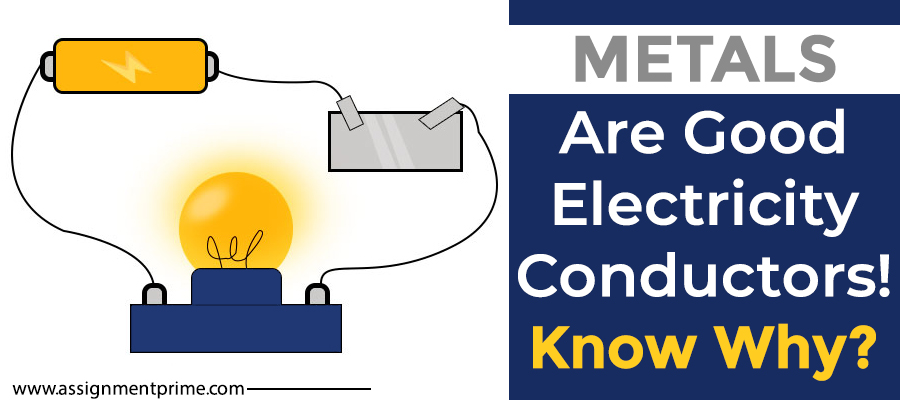
Enter silicon. The rock star of metalloids. The Brad Pitt of the periodic table. Silicon is the foundation of modern electronics. Your computer, your phone, your toaster oven (probably)… they all owe a debt of gratitude to silicon.
Because silicon's conductivity can be controlled and manipulated with incredible precision (by adding tiny impurities like boron or phosphorus – a process called "doping"), it allows us to build transistors. These tiny switches are the building blocks of computers, enabling us to process information at lightning speed.
Without metalloids like silicon, we'd still be using abacuses and carrier pigeons to communicate. Think about that for a second. No Netflix. No cat videos. No online shopping. Shudders. The horror!
More Than Just Silicon: A Metalloid Medley
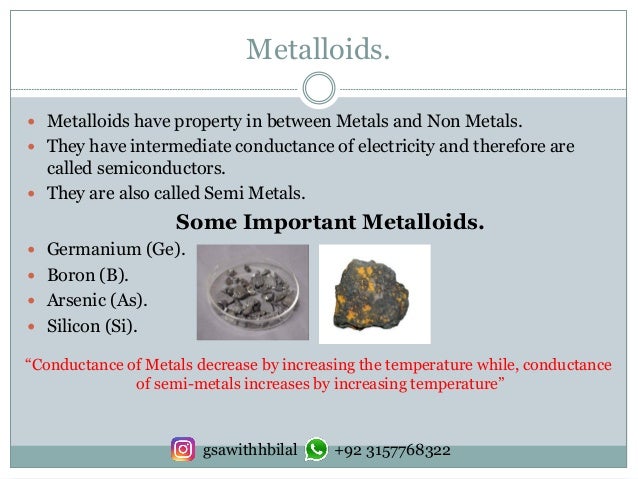
While silicon gets all the glory, other metalloids play important roles too. Germanium, for example, was used in early transistors before silicon took over. Arsenic, despite its poisonous reputation, is used in some semiconductors. Tellurium is used in solar panels and rewritable CDs. Even boron helps improve the conductivity of semiconductors. These are like the unsung heroes, the backup dancers supporting the headliner.
So, are metalloids good conductors? Not in the same way as metals. But their controlled conductivity, their ability to be switched on and off, makes them essential for modern technology. They're not the fastest sprinters, but they're the ones who invented the starting gun and built the stadium.
Next time you're using your smartphone, take a moment to appreciate the humble metalloid. They may be the awkward teenagers of the periodic table, but they're also the geniuses who made our digital world possible. And who knows, maybe someday they'll finally figure out which clique they belong to. Until then, let's just raise a glass to these "sort of, maybe, sometimes" conductors!