
Are All Smoke Detectors The Same Size

Ever found yourself staring up at the ceiling, perhaps after a particularly vigorous cooking session that set off the smoke alarm (oops!), and wondered, "Are all these things… the same size?" It’s a perfectly normal thought, right up there with "Are all dish soap bottles the same width?" or "Why do some socks feel better than others?" Well, let's dive into the fascinating, if slightly dusty, world of smoke detectors!
Surprise! They’re Not All Cut From The Same Cloth (Or Mold!)
Here’s the straight scoop, delivered with a smile: no, all smoke detectors are absolutely not the same size. Just like not all dogs are golden retrievers (even though they’re all good boys and girls!), smoke detectors come in a variety of shapes and sizes. Think of it like comparing apples and… well, slightly different-sized apples, and maybe a pear or two thrown in for good measure.
You might have a sleek, low-profile disc in one room, barely noticeable, while in another, a chunkier, more substantial unit stands guard. This isn't just a random design choice by manufacturers to keep us on our toes; there are actually some pretty good reasons for the variety.
Must Read
Why The Size Differences? It's Not Just for Kicks!
Imagine trying to buy a new coffee maker. Do you want a simple drip machine, an espresso maker with all the bells and whistles, or a pod-based wizard? Each one does the job of making coffee, but they look wildly different and take up varying amounts of counter space because they have different insides and functionalities. Smoke detectors are a bit like that.
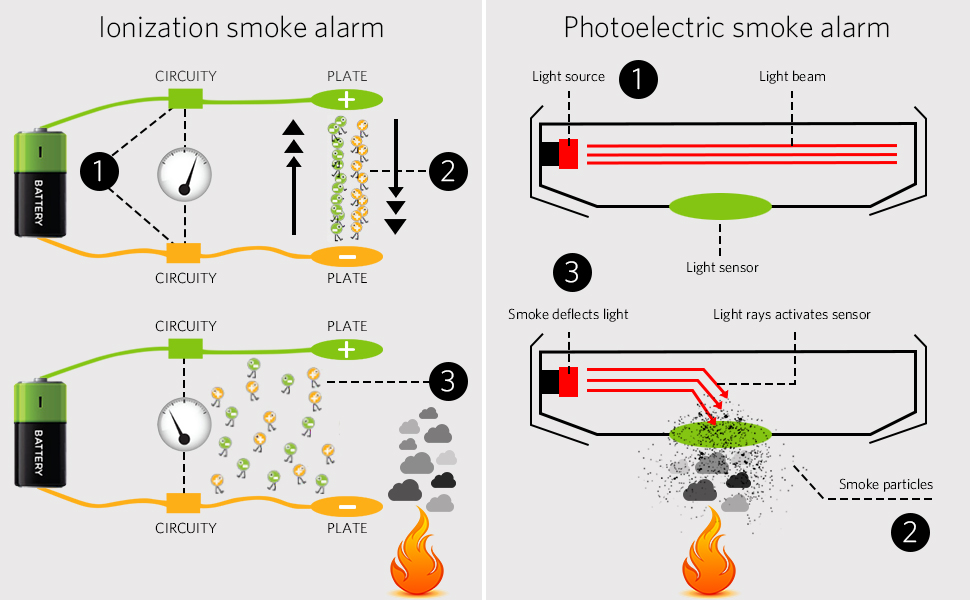
One big reason for size variation is technology under the hood. Some detectors use a method called ionization, which is super quick at sensing fast-flaming fires. Others use photoelectric technology, which is better at detecting slow-smoldering fires (the kind that produce a lot of smoke before bursting into flames). These different internal components might just need different amounts of room to do their important work.

Then there's the power source. Is it a little battery-powered buddy, perhaps with a 9-volt tucked inside, needing space for regular battery changes? Or is it hardwired into your home's electrical system, often allowing for a slimmer profile since it doesn't need to house bulky batteries?
And let's not forget the extras! Some detectors are combination units, also sniffing out carbon monoxide (CO), which means they've got even more going on internally. Others might be "smart" detectors, packed with Wi-Fi chips to connect to your phone. More features often mean more gadgetry, and more gadgetry often means a bigger package. It’s like upgrading from a basic flip phone to the latest smartphone – suddenly, you’ve got a lot more real estate in your pocket!
Why Should You Care? (Beyond Just Curiosity!)
Okay, so they're different sizes. Big deal, right? Well, actually, it can be a pretty big deal, especially if you’re a homeowner or renter who likes things to be just so. Here’s why this seemingly trivial fact should spark a little bit of interest (pun intended!):
The Replacement Rumble
Picture this: your trusty smoke detector finally gives up the ghost after a decade of loyal service. You dash to the store, grab a shiny new one, eager to maintain your home's safety. You get home, unbox it, and then… uh oh. The new one doesn't quite fit the old mounting plate. It's too big, too small, or the holes just don't line up. You're left with a gap, an exposed wire, or a detector hanging precariously. It's the home improvement equivalent of trying to put on a shoe that's clearly two sizes too big. Annoying, a bit clunky, and ultimately, not ideal.
This is where knowing about size differences saves you a trip back to the store, a frustrating afternoon, and perhaps a small existential crisis about DIY projects. Always measure your existing detector, especially the mounting plate, before buying a replacement!
Aesthetic Awkwardness
Let’s be honest, we all like our homes to look nice. A smoke detector isn't exactly a decorative centerpiece, but a badly fitted or mismatched one can stick out like a sore thumb. If your old detector left a neat, painted circle on the ceiling, and your new one is smaller, you might be left with an unpainted ring – a ghostly outline of where its predecessor once stood. It’s a little thing, but those little things can sometimes niggle at you, much like that one crooked picture frame.

Functionality Fumbles (And This is The Big One!)
While an aesthetic mismatch is a minor annoyance, a detector that isn't properly installed due to size issues could potentially be a safety hazard. If it’s wobbly, not securely attached, or if replacing it feels like a forced fit, there’s a chance it might not perform as it should. Smoke detectors are your silent guardians, and you want them to be snug, secure, and ready to shout for help at a moment’s notice. A loose detector is a worried homeowner.
So, What's a Savvy Homeowner To Do?
Don’t fret! While they vary in size, picking the right one isn't rocket science. Here are some quick tips:
- Measure, Measure, Measure! Before you head out to buy a new one, grab a tape measure. Note the diameter of the detector itself, and perhaps more importantly, the diameter of the mounting plate on the ceiling.
- Snap a Pic! Your smartphone is your friend. Take a photo of your old detector, especially the back where it connects to the ceiling. This visual aid can be super helpful when you’re standing in the aisle, looking at dozens of options.
- Consider Your Needs. Do you want a simple smoke alarm, or would you prefer a combination smoke and CO detector? Do you need a smart home integration? Thinking about these features might guide you towards a particular size category.
- Don’t Be Afraid to Ask. If you’re truly stumped, the folks at the hardware store are usually happy to help.
Ultimately, whether they’re big, small, round, or slightly square, all smoke detectors share one crucial job: keeping you and your loved ones safe. While the variety in sizes might seem like a quirky detail, understanding why it exists can save you a headache and ensure your home’s essential safety system is always perfectly in place.