An Example Of A Nonrenewable Resource Would Be

Ever wonder where the energy that powers our homes, cars, and even our phones comes from? A lot of it originates from resources deep within the earth. Understanding the difference between renewable and nonrenewable resources is crucial for building a sustainable future. It's like knowing the difference between a savings account that refills itself and one you can only withdraw from once. Today, let's delve into the world of nonrenewable resources and explore a key example: coal.
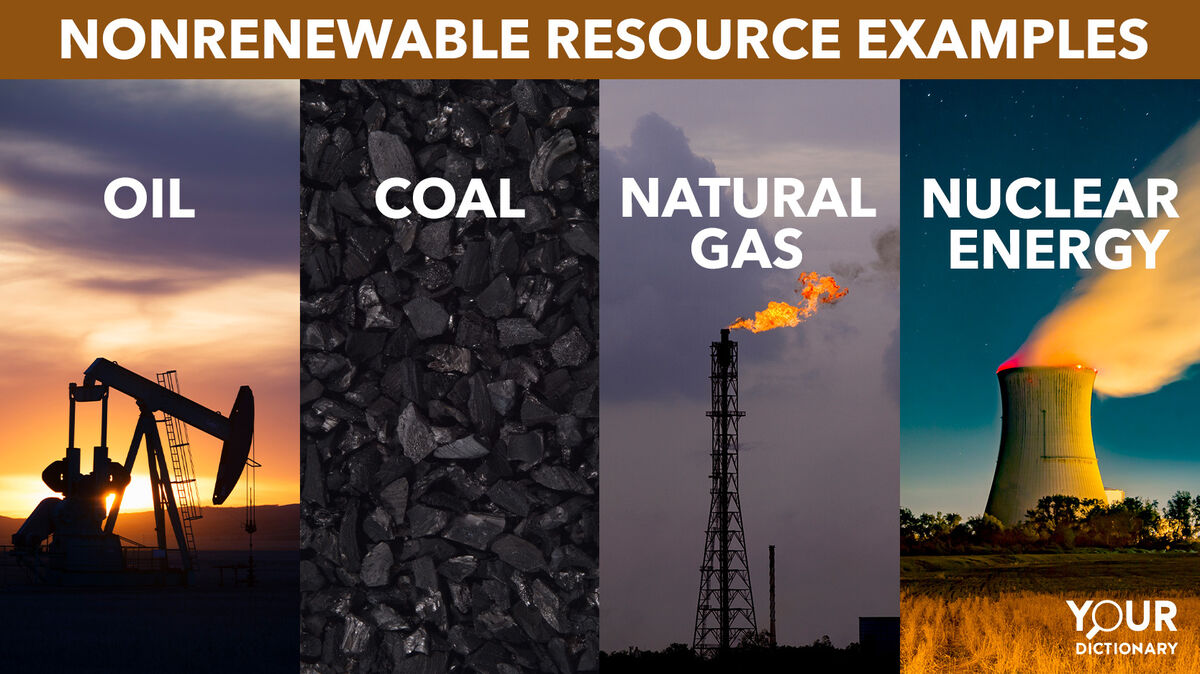
So, what exactly are nonrenewable resources? These are natural resources that exist in a finite amount. Once they are used up, they're gone – at least, not recoverable within a human timescale. Think of it like a limited-edition comic book; once they're all sold, you can't just make more. Coal, formed over millions of years from decaying plant matter under intense pressure, is a prime example. It's a black or brownish-black sedimentary rock packed with energy.
The purpose of coal is primarily to provide energy. When burned, it releases heat, which is then used to generate steam. This steam spins turbines connected to generators, producing electricity. For many years, and even today in some regions, coal has been a relatively inexpensive and readily available source of power. It’s been a cornerstone of industrial development and continues to play a significant role in global energy production.
Must Read
In education, coal is often used as a case study in science and geography classes. Students learn about its geological formation, its environmental impact (more on that later), and its role in the global economy. You might encounter experiments demonstrating how coal burns and releases energy. In daily life, even if you don't directly use coal at home, it’s likely that some portion of the electricity powering your lights, computer, or refrigerator was generated at a coal-fired power plant. Think of the infrastructure around you: the roads you drive on, the buildings you live and work in – all were likely built with materials produced using energy derived from coal at some point in their life cycle.

While coal provides energy benefits, it's important to acknowledge its drawbacks. Burning coal releases significant amounts of greenhouse gases, contributing to climate change. It also produces air pollutants that can harm human health and the environment. That's why there's a growing global effort to transition towards cleaner, more sustainable energy sources.
Want to explore the world of coal further? A simple way is to research the types of coal (anthracite, bituminous, lignite) and their different energy contents. Explore maps showing major coal deposits around the world and investigate the environmental impact of coal mining in specific regions. You could even research the technologies being developed to capture carbon emissions from coal-fired power plants. Understanding the pros and cons of resources like coal empowers us to make informed decisions about our energy future and supports a more sustainable world for generations to come.