
Aluminum Welding With A Torch
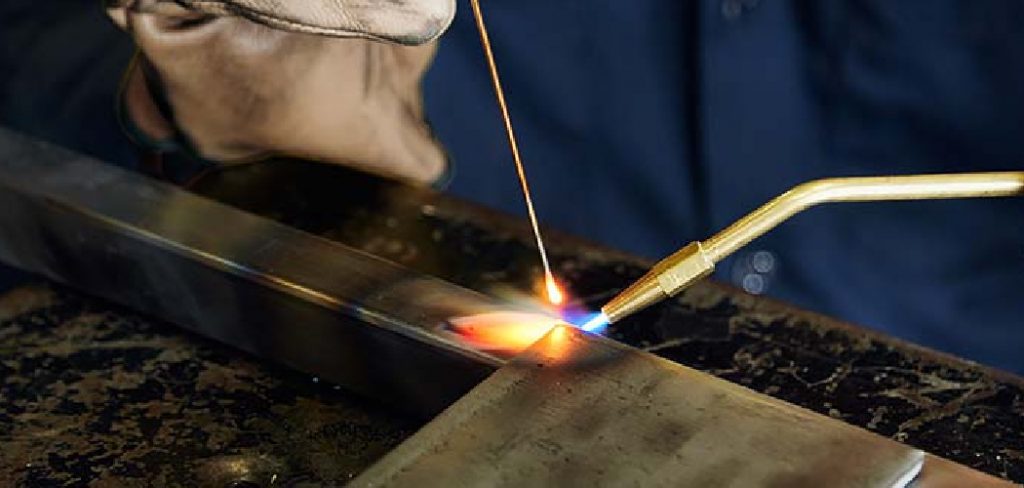
Hey there, ever found yourself staring at something made of aluminum and thinking, "Man, I wish I could just… weld that?" Yeah, me too! And then the thought hits you: aluminum. With a torch. Sounds like a recipe for a disaster, right? Or at least a really messy puddle of disappointment. But guess what? It’s totally doable, and honestly, pretty darn satisfying once you get the hang of it.
Think of it like this: welding steel is like teaching a big, sleepy dog new tricks. It eventually gets there. Welding aluminum? That's trying to teach a squirrel to juggle flaming chainsaws. It's fast, it's finicky, and it can go sideways in a blink. But oh, the glory when you pull it off!
Why Aluminum is Such a Fussy Diva
Okay, so why is aluminum such a prima donna to weld with a torch? Well, it’s got a few quirks that make it unique. First off, it melts at a much lower temperature than steel. Sounds easy, right? Nope! Because it also has this annoying habit of conducting heat like it’s going out of style. You start heating it up, and the heat just zooms away from your weld zone faster than you can say "oops!"
Must Read
And then there's the oxide layer. Oh, the oxide layer. Aluminum, being the social butterfly it is, loves to bond with oxygen. It forms a super tough, high-melting-point skin on its surface. So you're trying to melt the aluminum underneath this skin, while the skin itself is still stubbornly refusing to budge. It’s like trying to eat a M&M without breaking the candy shell first. Frustrating, right?
Enter the Mighty TIG Torch (Your New Best Friend)
When we talk about welding aluminum with a torch, most folks are thinking about TIG welding. That's T-I-G, short for Tungsten Inert Gas. It's the fancy one, the one that makes those beautiful, stacked-dime welds. With TIG, you've got a non-consumable tungsten electrode (that's the "T") that creates the arc, and an inert gas (usually argon) that shields your weld from all that pesky oxygen. No more oxide layer drama! Well, less drama, anyway.
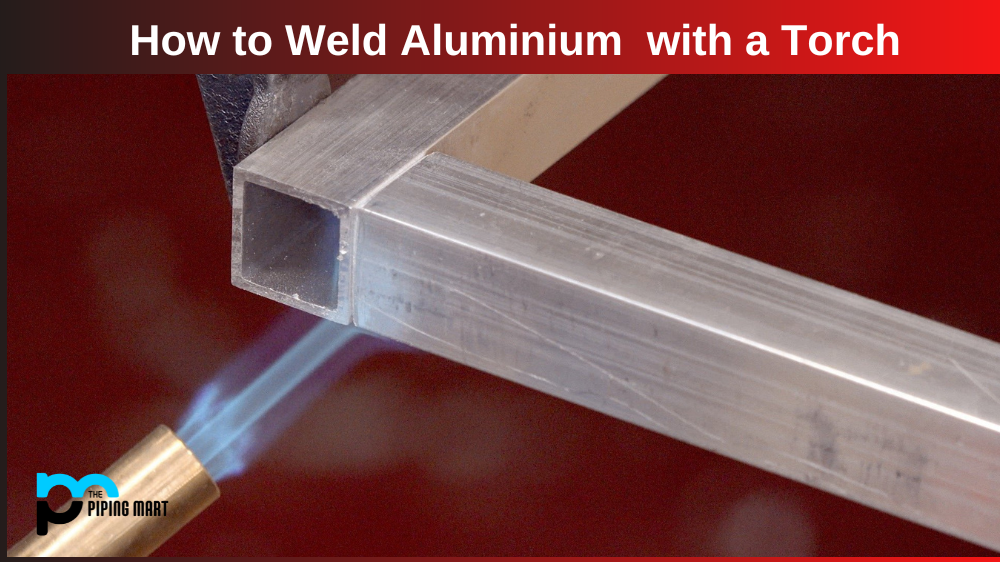
It’s a bit of a dance, honestly. You've got the torch in one hand, the filler rod in the other, and your foot on a pedal controlling the amperage. It's like patting your head, rubbing your belly, and reciting the alphabet backward all at once. But in a cool, sparks-and-molten-metal kind of way.
The Prep Work: No Skimping Here!
Before you even think about firing up that torch, you gotta clean your aluminum. And I mean really clean it. Remember that oxide layer we talked about? You want to get rid of it. Use a stainless steel brush (and make sure that brush has never touched anything but aluminum, or you'll contaminate your weld faster than you can blink!). Degrease it with acetone or a similar solvent. Seriously, if it's not clean enough to eat off of, it's not clean enough to weld.
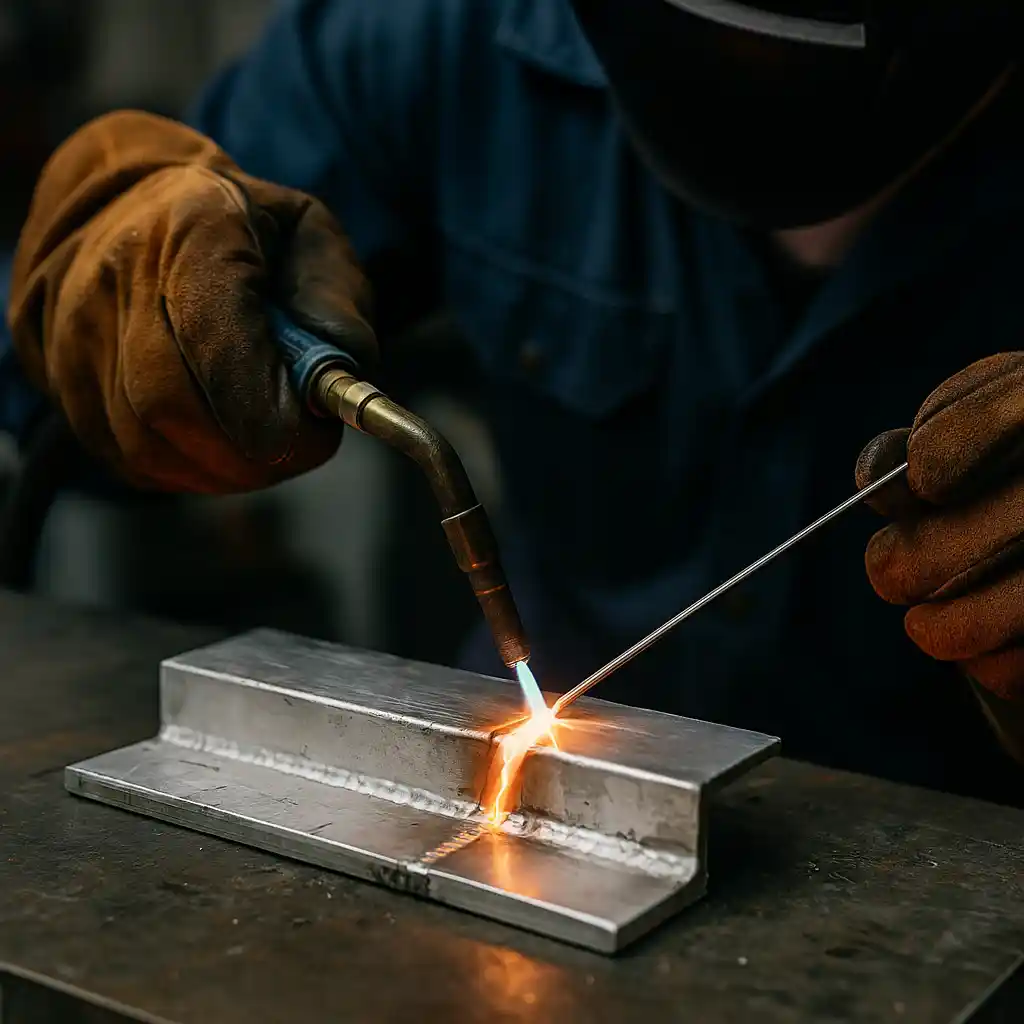
This is where patience becomes a virtue. If you rush the cleaning, you're just setting yourself up for a world of pain and ugly, porous welds. And nobody wants that, do they?
The Moment of Truth: Striking That Arc
Okay, you're clean, you're set up, your argon is flowing. Take a deep breath. Now, gently press that foot pedal. You'll see the arc jump to life, a blindingly bright little sun. This is where the magic (and the frustration) begins.
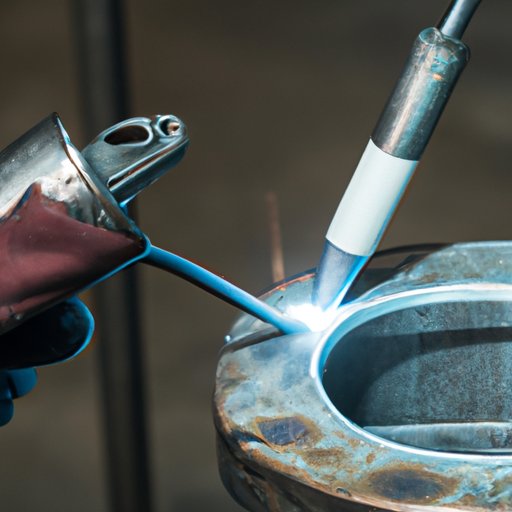
You're using Alternating Current (AC) for aluminum TIG. This is super important because AC helps blast away that annoying oxide layer, while also providing the heat for the base metal. You'll see a cleaning action around your puddle – a little frosty halo. That's good! That's the AC doing its thing.
Watch for that puddle. It'll form, sometimes slowly, sometimes suddenly, like a tiny, shiny silver mirror. Once you have a stable puddle, dip your filler rod in, just a little bit, add some material, pull it out, move the torch, repeat. It’s all about rhythm. Push, dip, lift, move. Repeat.

The "A-HA!" Moment (and the Misfires)
You're going to mess up. A lot. Your first attempts might look like a bird's nest or a series of alien boogers. Your tungsten will inevitably touch the puddle and contaminate, forcing you to stop and grind a new point. You'll stick the filler rod to the workpiece. You'll blow through the metal because you gave it too much heat. It's all part of the learning curve, my friend! Think of it as your initiation fee to the aluminum welding club.
But then, one day, something clicks. You'll be making a pass, and suddenly, the puddle is behaving. The filler rod is melting in beautifully. And you look down, and there it is: a bead that actually looks... good. Maybe not perfect, but undeniably a weld. That's the "A-HA!" moment. That's when you realize you're getting it, and it feels absolutely fantastic.
Your Takeaway: Don't Be Afraid!
So, welding aluminum with a torch might sound intimidating, and yeah, it has its moments where you want to throw your helmet across the shop. But it's also incredibly rewarding. It teaches you precision, patience, and a deep respect for metal. Grab a small piece of scrap aluminum, clean it up, fire up that TIG, and just start practicing. You'll be stacking those dimes in no time. Who knows, maybe you'll even learn to teach a squirrel to juggle. But probably stick to welding for now. Happy sparking!