
Aluminum Stick Welding Ac Or Dc

Alright, let's chat about something that sounds a bit like rocket science but is actually more like trying to teach a squirrel to play poker: welding aluminum with a stick welder. Most folks picture stick welding as this gloriously rugged, sparks-flying, manly-man activity, probably fusing two giant hunks of steel together like they were meant to be. And for steel, yeah, it's often a walk in the park (a park with loud noises and bright lights, but a park nonetheless).
But then someone whispers, "Aluminum." And suddenly, that walk in the park feels like trying to run through quicksand wearing roller skates. The big question that usually pops up is: Do I use AC or DC? And trust me, it’s not as simple as picking your favorite current from a rock band lineup.
The Slippery Slope of Aluminum
Think of aluminum as the diva of metals. It's lightweight, shiny, and looks great, but it has some serious quirks. Firstly, it melts at a much lower temperature than steel. We're talking chocolate vs. steel rebar here. Apply too much heat, and your beautiful aluminum piece turns into a puddle faster than an ice cream cone on a summer sidewalk. It’s like trying to weld butter – you just end up with a mess and a feeling of profound regret.
Must Read
Secondly, aluminum loves to put on a show with its invisible force field: an oxide layer. This pesky layer has a much higher melting point than the aluminum underneath it. So, you're trying to weld through a ceramic-like coating to get to the metal below, and that ceramic wants to stay put. It's like trying to get to the delicious filling of a pastry without breaking the crust – a delicate, often frustrating, dance.
DC: The Familiar Friend, The Aluminum Foe?
For most steel stick welding, DC (Direct Current) is your go-to buddy. It provides a nice, stable arc, good penetration, and generally makes life easier. With DC, you typically have two options: DC-EN (Electrode Negative, sometimes called DCSP – Straight Polarity) or DC-EP (Electrode Positive, DCRP – Reverse Polarity).
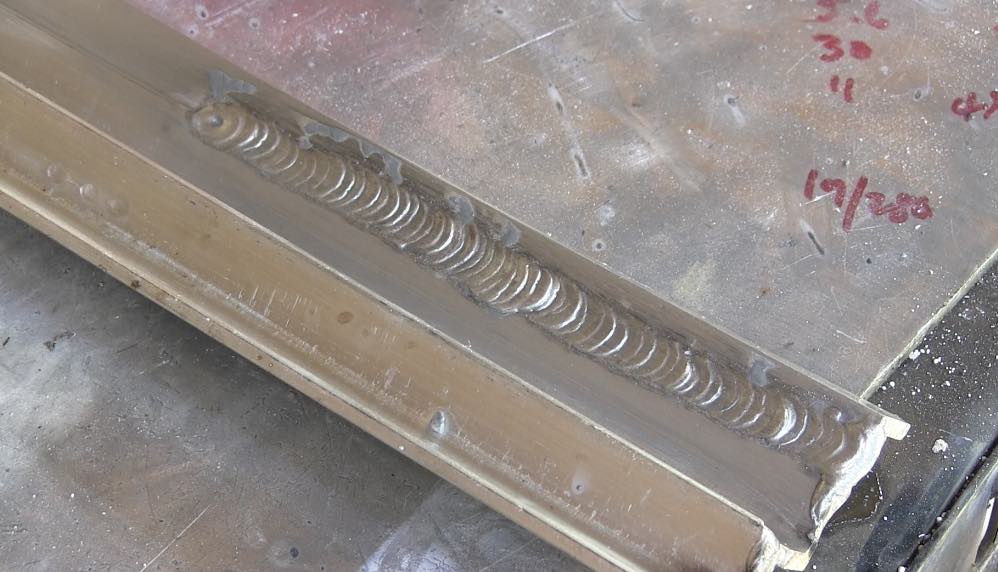
If you try DC-EN on aluminum, you'll get decent penetration, but guess what? That stubborn oxide layer will laugh in your face. The arc just doesn't have the cleaning power to blast it away. You'll end up with a weld that looks like it's full of tiny little alien invaders (porosity) and probably won't hold worth a darn. It’s like trying to clean a greasy pan with just cold water – technically you're trying, but nothing good is happening.
Now, if you switch to DC-EP, you get amazing cleaning action! The arc blasts through that oxide layer like a tiny, aggressive sandblaster. Problem solved, right? Wrong. DC-EP concentrates a lot of heat on your electrode, and aluminum welding electrodes (which are already a bit finicky) will melt faster than a snowman in July. You'll be swapping out rods every five seconds, and your weld bead will look less like a bead and more like a collection of desperate, sputtering blobs. It's the equivalent of trying to light a candle with a flamethrower – overkill, and you'll burn through everything too quickly.

Enter AC: The Unsung Hero
This is where AC (Alternating Current) rides in, wearing a cape made of electrons. AC, as the name suggests, switches polarity rapidly, many times per second. So, it's constantly flipping between Electrode Negative and Electrode Positive.
What does this mean for our stubborn aluminum? Well, during the Electrode Positive half of the cycle, you get that fantastic cleaning action that zaps away the oxide layer. Then, during the Electrode Negative half, you get the necessary penetration into the base metal without obliterating your electrode. It’s a beautifully choreographed dance: clean, penetrate, clean, penetrate. Like having a super-efficient robot butler who first scrubs the kitchen floor, then vacuums, then scrubs again, all in one fluid motion.

This alternating action is crucial. It’s the reason why, if you're going to stick weld aluminum, AC is almost always the answer. You'll need specific aluminum electrodes designed for AC welding (often coded like E1100, E4043, or E5356 for specific alloys). These rods are a bit more expensive than your regular steel ones, and sometimes you have to special-order them, but they’re worth their weight in shiny, non-porous welds.
My (or a Friend's) Experience: The Gritty Reality
I remember trying to stick weld a small aluminum bracket once. Naively, I thought, "A weld is a weld, right?" I used DC. Oh, the horror! It was a sputtering, spitting, ugly mess. The rod stuck, the aluminum just cratered, and the whole thing looked like a bird had coughed up a hairball. There was more frustration than actual fusion.

Then, after some frantic googling and an actual conversation with an old-timer who probably welds in his sleep, I learned about the AC magic. With the right AC aluminum rod and an AC setting, the difference was night and day. It wasn't suddenly TIG-level beautiful, mind you – stick welding aluminum is still notoriously tricky and requires a quick hand, hot machine, and fast travel speed – but it was actually possible. The arc was more stable, the puddle behaved (mostly), and I could see the oxide layer being pushed away. It felt less like wrestling an angry badger and more like coaxing a slightly grumpy cat.
So, What's the Gist, Chief?
If you're planning on tackling aluminum with your stick welder, remember this golden rule: AC is your ally, your champion, your oxide-busting hero. DC, for aluminum stick welding, is mostly going to lead to tears and ugly welds. Always make sure your aluminum is immaculately clean – like "surgical theater" clean – before you even think about striking an arc. Any dirt, oil, or existing oxide will ruin your day faster than a flat tire on a road trip.
While TIG welding is generally the preferred method for aluminum due to its precision and beautiful results, if you're in a pinch with a stick welder, AC is the only real game in town. So, crank up that alternating current, grab some special AC aluminum rods, and give it a whirl. Just be prepared for a challenge – but at least now you know which current setting won't make you want to throw your welder into the nearest lake!