
Ac To Dc Inverter Vs Dc To Ac

Alright, grab another coffee, because we need to talk about something that sounds like it was invented by a particularly enthusiastic science teacher after too much caffeine: inverters. Specifically, this whole "AC to DC" versus "DC to AC" kerfuffle. It’s like trying to figure out if you’re building a bridge or demolishing one – the direction really matters!
Picture this: you're at a BBQ, someone asks for a phone charger, and then another person wonders if they can power their blender from the car battery. Suddenly, you're knee-deep in electricity questions. It feels like everyone's speaking in secret codes, doesn't it? Well, consider me your friendly, slightly caffeinated decoder ring.
The Unsung Hero: AC to DC (The Power Tamer)
Let's start with the one you probably interact with about a dozen times a day without even realizing it. I'm talking about the humble AC to DC converter. Now, here's a little secret: while people might casually call it an "inverter," technically, it's more often a rectifier or an AC adapter. An inverter usually implies the other direction, but hey, language evolves, right?
Must Read
Think of your wall socket. It's spewing out Alternating Current (AC). It's like a party animal – wild, oscillating, changing direction 60 times a second (or 50, depending on where you are – don't even get me started on global power grids!). Your phone, your laptop, your smart speaker? They're total squares. They prefer their electricity neat, tidy, and flowing in one predictable direction: Direct Current (DC).
So, what does this unsung hero do? It takes that crazy, back-and-forth AC from your wall and smoothens it out into polite, one-way DC. It's like a bouncer at a club, turning a mosh pit into a polite queue for the restroom. Your phone charger? That chunky brick? That's an AC to DC conversion happening right there. It’s why your phone doesn’t spontaneously combust when you plug it in. Pretty cool, huh?

These devices are everywhere, quietly doing their job, often getting a little warm, sometimes even letting off that faint, warm electrical smell if you lean in close enough. (Don't judge, we've all done it.) They’re the reason your delicate electronics can sip power safely without having a seizure from the wall's energetic pulsations.
The Freedom Giver: DC to AC (The Power Unleasher)
Now, let's flip the script, literally. This is where the term inverter truly shines. Imagine you're out camping, or maybe you're stuck in a power outage. You've got a car battery, a boat battery, or a giant solar-powered battery bank. These are all pumping out beautiful, steady DC power. But your blender? Your TV? Your power tools? They're AC snobs.
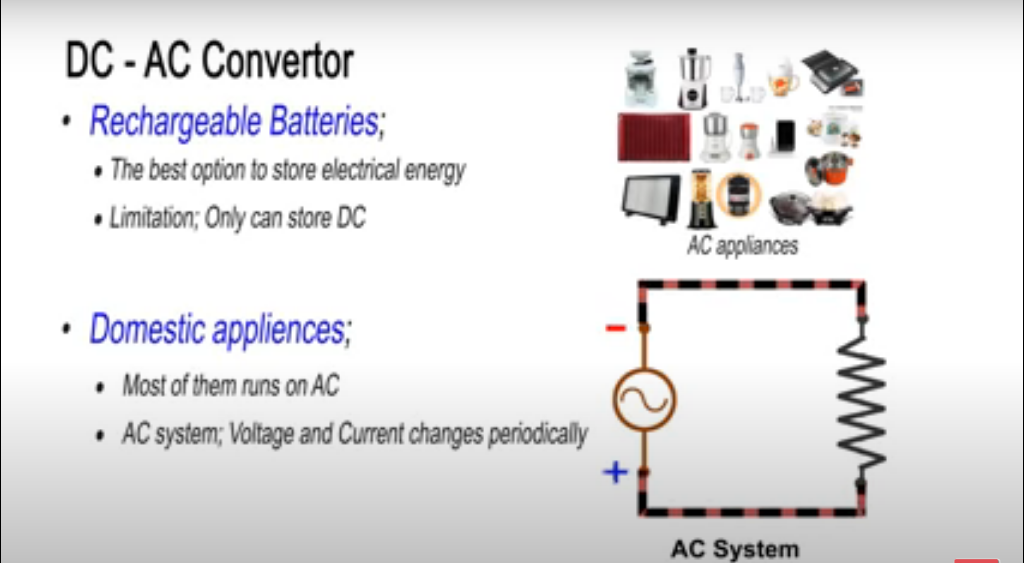
Enter the DC to AC inverter. This gadget is a magician. It takes that calm, collected DC power and performs a dazzling trick: it turns it into the oscillating, back-and-forth AC power that your regular household appliances crave. It's like taking a single-lane highway and suddenly turning it into a bustling multi-lane freeway, complete with on-ramps and off-ramps (okay, maybe that's a bit of an exaggeration, but you get the idea!).
This is how you power a microwave in your RV, or run a laptop off your car's cigarette lighter, or even run your whole house from solar panels and batteries when the grid goes down. It's about taking battery power and making it useful for things that expect a wall socket. Because who doesn't need a margarita on a mountaintop, right?
There are different flavors, too. Some inverters produce a "modified sine wave" – a bit like a square dance trying to be a waltz. It works for most things, but delicate electronics might get a bit fussy. Then there are the "pure sine wave" inverters – these are the smooth operators, perfectly mimicking the power from your wall, ensuring your sensitive gadgets sing with joy, not groan with protest. They're often pricier, but oh so worth it for your fancy espresso machine in the wilderness.
So, What's the Big Takeaway?
It boils down to this: they're opposite sides of the same electrical coin. One (AC to DC) tames the wild wall current for your sensitive gadgets. The other (DC to AC) unleashes battery power, transforming it into something your household appliances can use anywhere. They both bridge a gap, just in different directions.
So next time someone mumbles about an "inverter," you can casually lean back, take a sip of your drink, and ask, "Ah, are we talking about taming the power or unleashing it today?" You'll look incredibly smart, and they'll probably think you have a secret engineering degree. You're welcome!
