
A Combining Form For Tongue Is
Ever tripped over a word that sounds like it belongs in a sci-fi movie? Or maybe you've just wondered, "What do you call the study of...?" Well, prepare to have your linguistic curiosity tickled! Today, we're diving headfirst (or should I say, tongue-first?) into the wonderful world of combining forms, specifically, the one for tongue.
The Tale of the Wandering Tongue
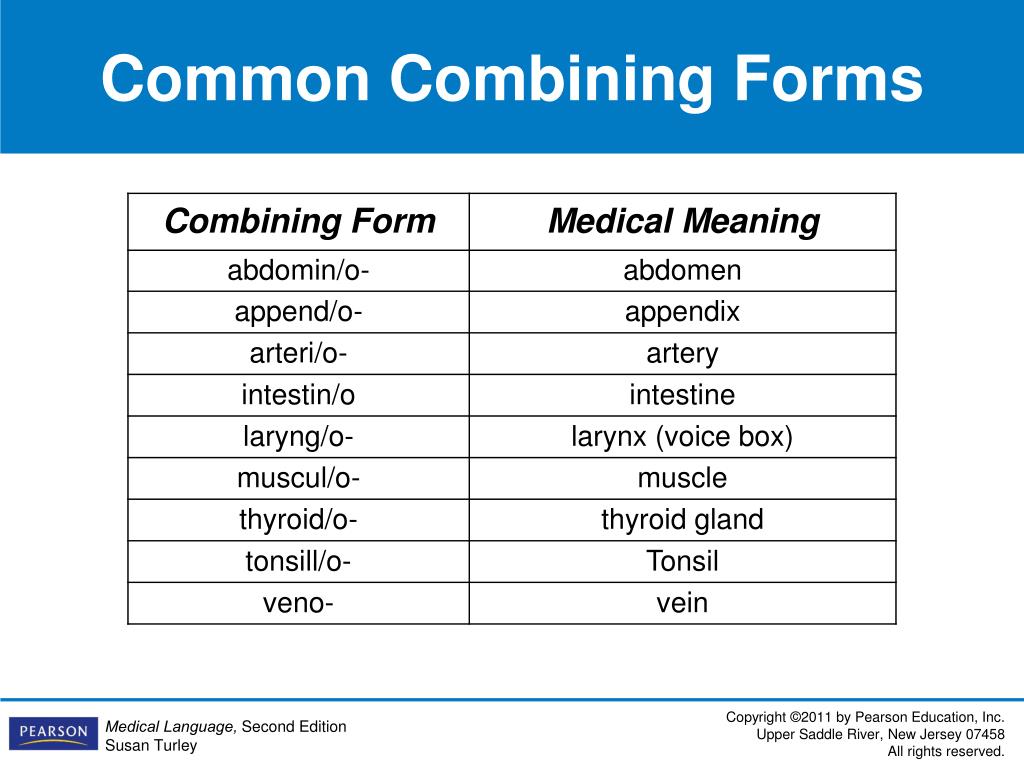
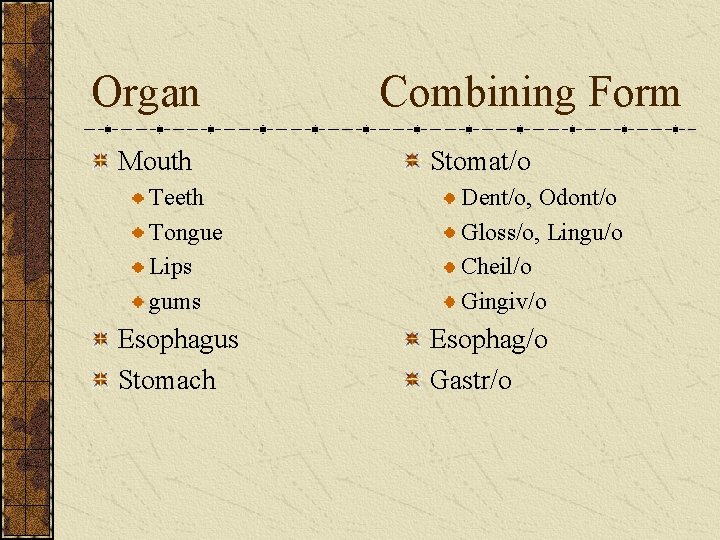
Forget your everyday "talk" and "speak." We’re talking about the scientific, slightly dramatic, and surprisingly useful way to refer to, well, your tongue. The magical word is... (drumroll please)... glosso- or glotto-!
Yes, I know, it sounds like something out of Harry Potter. But trust me, it’s far less complicated (and doesn't involve any Sorting Hats). Think of it as a fancy prefix for all things tongue-related.
Must Read
Glosso-what-now? Breaking it Down
Okay, so glosso- and glotto- are Greek in origin. They both basically translate to "tongue." They just sound a little more impressive, don't they?
Now, let’s see how this little linguistic gem works in practice. We’re about to unlock a whole new vocabulary, one glosso--filled word at a time!
Glossitis: When Your Tongue Throws a Tantrum
Ever had a sore tongue? Maybe it was inflamed or just plain angry? Well, there's a word for that: glossitis. See? Simple!
Itis, in general, means "inflammation." Now you know, if you visit a doctor and they say you have glossitis, they're not casting a spell, they're just describing your poor, irritated tongue.
Glossophobia: The Fear of Public Speaking (Kind Of)
Here's where things get interesting. Many people use "glossophobia" to describe the fear of public speaking. While it is acceptable, it's more accurate to say the fear of one's tongue being unable to function appropriately during speech.
But think about it, isn’t public speaking all about your tongue doing its job properly? Pronouncing words, projecting your voice, and not getting tied in knots are all about proper tongue function. So, in a roundabout way, it kind of makes sense!
Glossectomy: A More Serious Matter
Now, for something a little heavier. A glossectomy is the surgical removal of all or part of the tongue. This is a procedure typically done to treat tongue cancer.
It's a serious thing, of course. But even in these difficult situations, the combining form glosso- provides a clear and concise way to describe the procedure.
Glotto- A Close Cousin with a Specific Focus
Remember how I mentioned glotto- as well? While it also refers to the tongue, it often has a stronger association with speech and language.
Think of glosso- as the general "tongue" prefix, and glotto- as the more specialized "tongue-and-speech" prefix. They’re related, but have slightly different nuances.
Glottis: The Gateway to Sound
The glottis is the opening between your vocal cords. When air passes through the glottis, it causes the vocal cords to vibrate, producing sound.
.jpg)
Your tongue helps manipulate these sounds into understandable speech. So, even though the glottis isn’t directly part of your tongue, it’s intrinsically linked to how your tongue helps you communicate.
Why Should You Care About Glosso- and Glotto-?
Okay, so maybe you're not planning on becoming a doctor or a linguist anytime soon. Why bother learning about these weird word parts?
Well, for one thing, it makes you sound incredibly smart at parties. Just casually drop "glossopharyngeal" into conversation and watch people's jaws drop! (Just kidding... mostly.)
More seriously, understanding combining forms can unlock the meanings of countless new words. When you know that glosso- means "tongue," you can often figure out what a word means even if you've never seen it before. It's like having a secret decoder ring for language!
The Tongue: More Than Just a Taste Bud Taxi
We often take our tongues for granted. They're just there, tasting our food and helping us talk.
But the next time you savor a delicious meal, or effortlessly string together a sentence, take a moment to appreciate this incredible organ. And remember the amazing power of glosso- and glotto-, the combining forms that give the tongue its due linguistic respect.
So, go forth and spread the word! Tell your friends about glosso- and glotto-. You never know, you might just spark a lifelong love of language. And who knows, maybe one day you’ll even invent a new glosso--word yourself!
“The tongue like a sharp knife… kills without drawing blood.” - Buddha
Who knew the simple tongue could inspire so much vocabulary and philosophical thought?