
A Carbon Atom Is Most Likely To Form
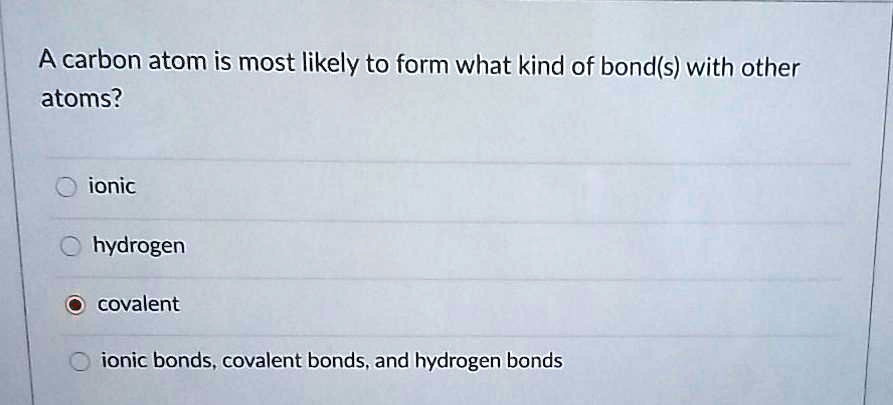
Okay, folks, let's talk about a party animal – the carbon atom! If atoms were people, carbon would be the life of the party, always ready to mingle and make new friends. But what kind of friendships are we talking about? What's a carbon atom most likely to form?
Well, the answer is… it depends! (I know, I know, scientists love saying that). But in this case, it's gloriously true! Carbon is like that super-adaptable friend who gets along with everyone from the star quarterback to the chess club president. It's incredibly versatile, but we can certainly narrow down its top pick when it comes to atomic relationships.
Carbon's Soulmate: Covalent Bonds!
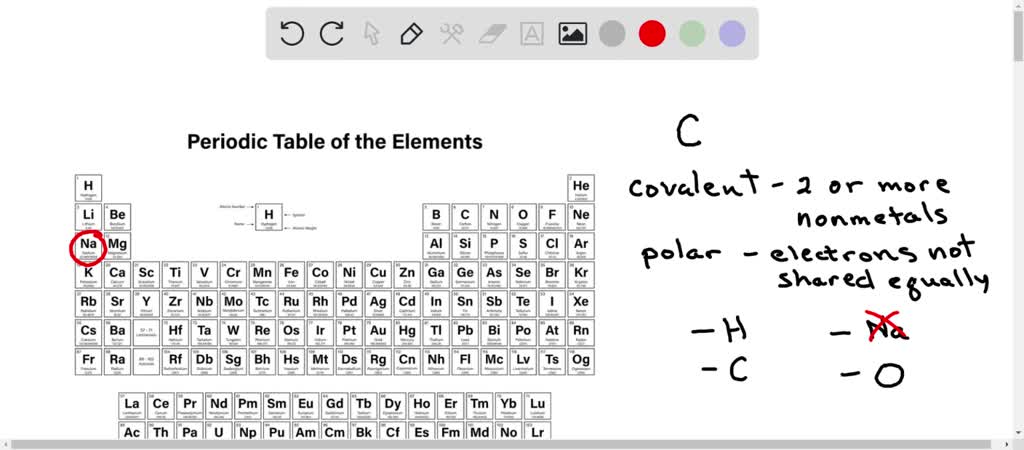
Imagine you have a bunch of Legos. You can stick them together, right? That's kind of like a chemical bond. But instead of plastic bricks, we're talking about atoms sharing electrons. This sharing is called a covalent bond, and it's carbon's absolute favorite way to connect with other atoms. It's like the perfect handshake - firm, fair, and friendly.
Must Read
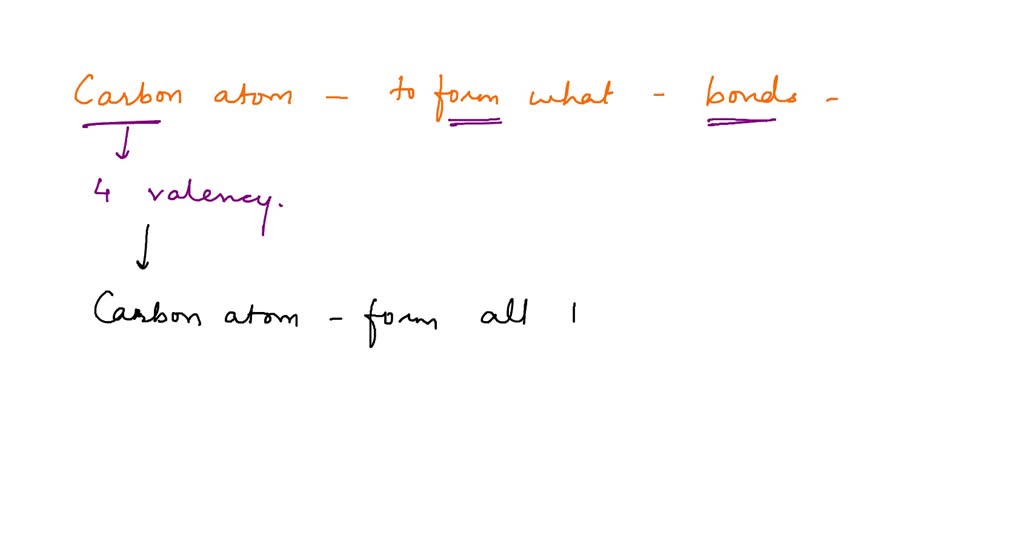
Why covalent? Because carbon needs four electrons to complete its outer shell. Think of it like needing four more slices of pizza to feel totally satisfied. Instead of stealing pizza from other atoms (which would be like forming an ionic bond, and a bit rude!), carbon prefers to share. It says, "Hey, I'll share my pizza if you share yours!" And that's how covalent bonds are born.
This sharing thing lets carbon form some incredibly stable and strong connections. It's the reason diamonds are so hard! Each carbon atom is linked to four other carbon atoms in a super-strong network of covalent bonds. Try breaking that! It's like trying to separate a perfectly interlocking team of turtles.
The Usual Suspects: Carbon's Best Friends
So, who are carbon's favorite sharing partners? Think of the elements that are vital to life. That’s your clue!
- Hydrogen: Hydrogen is like carbon's super-chill best friend. They form the backbone of hydrocarbons, the molecules that make up gasoline, plastics, and pretty much everything else that burns. It's a classic buddy-cop pairing!
- Oxygen: Oxygen is a bit more demanding, but it adds a lot of spice to the relationship! Carbon and oxygen get together to form carbon dioxide (which we breathe out) and countless other important compounds.
- Nitrogen: Nitrogen brings a certain… complexity to the mix. It's essential for building amino acids, the building blocks of proteins, and DNA, the instruction manual for life!
- Other Carbons: Yes, carbon loves hanging out with itself! Chains and rings of carbon atoms are the foundation of organic chemistry, creating an endless variety of molecules with different shapes and properties. Think of it as a carbon atom orgy of bonding.
These covalent bonds are the reason you exist, why plants grow, and why your car runs (or doesn't run, depending on how well you take care of it!).
More Than Just Friends: The Art of Making Multiple Bonds
Now, here's where things get really interesting. Carbon isn't just content with forming single covalent bonds. Oh no, it likes to spice things up with double and even triple bonds! It's like upgrading from holding hands to doing a complicated tango.
A double bond is when two atoms share two pairs of electrons, and a triple bond is when they share three pairs! This creates even stronger and more rigid connections, giving molecules even more diverse properties. You might think that a single bond would be more common, but double and triple bonds are often preferred to achieve the four bonds that a carbon requires.
So, the next time you're admiring a diamond, burning a log in the fireplace, or just breathing, remember the amazing carbon atom, the ultimate social butterfly of the periodic table, happily forming covalent bonds and making the world a more interesting place!
So, to reiterate, a carbon atom is most likely to form covalent bonds because of its unique ability to share electrons with a wide variety of other elements, leading to the incredible diversity of molecules that make up our world. And that, my friends, is a pretty cool reason to celebrate!
