9000 Btu Air Conditioner Power Consumption Kw
Hey there! Ever wonder how much juice your 9000 BTU air conditioner is really sucking up? I mean, we all love that sweet, sweet cool air, especially when it feels like you could fry an egg on the sidewalk. But at what cost, right?
Let's break down the power consumption of a 9000 BTU air conditioner in kilowatts (kW). Don’t worry, it's not as scary as it sounds! I promise.
So, What's the Deal with BTUs?
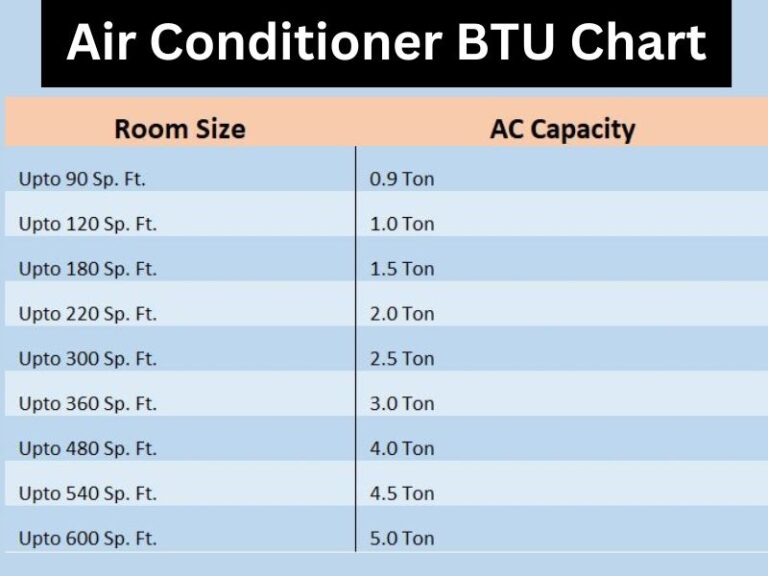
First things first: BTU stands for British Thermal Unit. It’s basically a measurement of how much heat your AC can remove from a room in an hour. 9000 BTU is a pretty common size, perfect for smaller rooms – think bedrooms, offices, maybe a super-efficient tiny home. Anything bigger and you might be sweating it out (literally!).
Must Read
From BTU to Watts (and Then kW!)
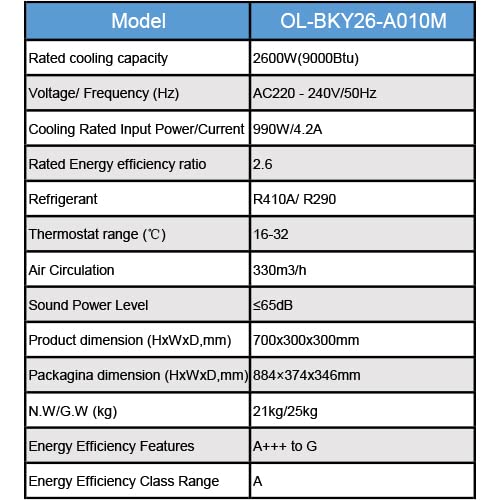
Okay, so how do we go from BTUs to kilowatts? Well, there's a little math involved (deep breaths, you can do it!). The magic number you need to know is that 1 BTU per hour is roughly equal to 0.293 watts. So, a 9000 BTU AC... drumroll please... is approximately 9000 * 0.293 = 2637 watts. Almost there!
Now, kilowatts are just watts divided by 1000. So, 2637 watts is 2637 / 1000 = 2.637 kW. Boom! We did it! (High fives all around.)
But wait! There's a tiny catch. That 2.637 kW figure is kind of the maximum power draw. Your AC probably won't be running at full blast all the time. Unless you're living in a sauna, that is.
Understanding the EER and SEER Ratings
Enter the EER and SEER ratings. These are like the MPG for your air conditioner. The EER (Energy Efficiency Ratio) tells you how efficiently your AC cools when running at a specific temperature. The SEER (Seasonal Energy Efficiency Ratio) is a more comprehensive measure, taking into account a whole cooling season. Think of it as the “real-world” efficiency.
A higher EER or SEER rating means your AC is more efficient and will use less power. Makes sense, right? When shopping, look for ACs with these ratings clearly displayed.
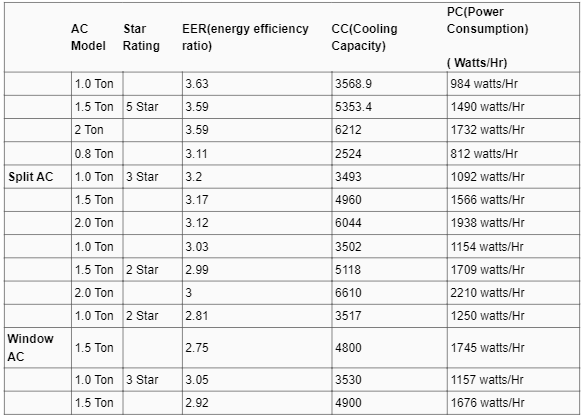
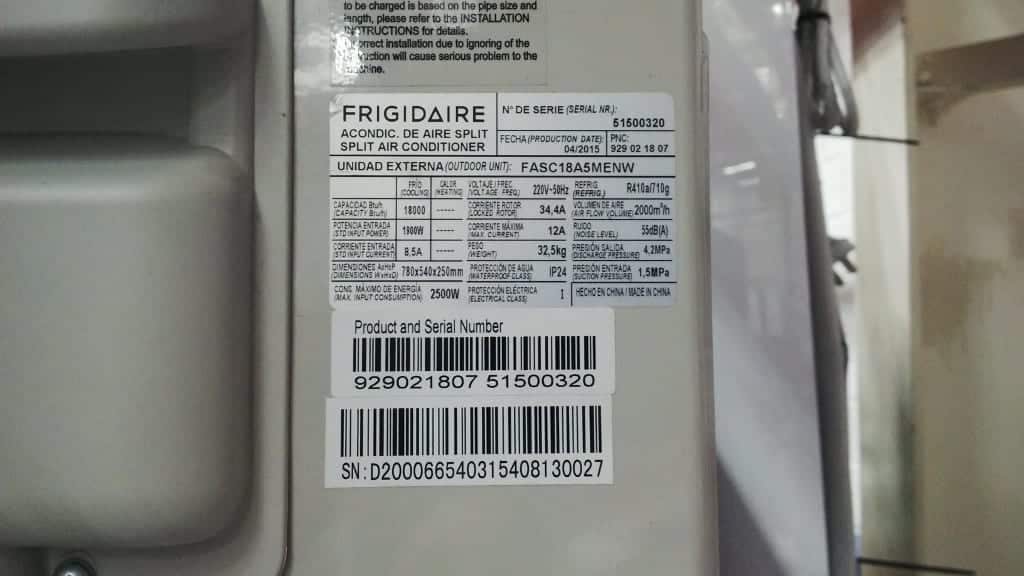
Let's say your 9000 BTU AC has an EER of 10. This means that for every watt of electricity it uses, it removes 10 BTUs of heat. So, technically, that 2.637 kW we calculated earlier could be lower in practice. Always check the specs, folks!
Real-World Power Consumption: What to Expect
Okay, so what does all this mean for your electricity bill? Well, it depends on how often you use it, how high (or low!) you set the thermostat, and your local electricity rates. But let's say you run your 9000 BTU AC for 8 hours a day, and it's consuming around 2 kW on average (a reasonable estimate). That's 2 kW * 8 hours = 16 kWh (kilowatt-hours) per day.

Multiply that by the number of days in a month, and then multiply by your electricity rate (check your bill!), and you'll get a rough idea of how much your AC is costing you. Prepare yourself... it might be more than you think!
Tips to Save Energy (and Money!)
Want to keep those electricity bills down? Here are a few quick tips:
- Set your thermostat a few degrees higher. Every degree makes a difference!
- Use fans to circulate the air. It helps the AC cool more effectively.
- Close curtains and blinds during the day. Keep that solar heat out!
- Make sure your AC is properly maintained. A clean filter is a happy filter (and a more efficient AC!).
- Consider a smart thermostat. They can learn your habits and automatically adjust the temperature to save energy.
So, there you have it! A slightly-less-than-scary guide to the power consumption of a 9000 BTU air conditioner. Now go forth and enjoy that cool air... responsibly!