Have you ever stumbled upon a question that just sticks with you? A simple one, yet surprisingly thought-provoking? One such intriguing query that pops up in casual conversations, lively online forums, and even quiet moments of personal reflection is the ever-popular: "4800 a month is how much an hour?"
It might sound like nothing more than a straightforward math problem on the surface, a quick division. But oh, it’s so much more profound and engaging than just crunching numbers! This particular question possesses a wonderful knack for sparking immediate curiosity and getting those mental gears truly whirring.
The Unexpected Joy of a Simple Calculation
What exactly makes $4800 a month such an entertaining mental puzzle? For starters, it brings a very common, easily relatable income figure right into the spotlight. Most people can instantly visualize what a monthly income like that might feel like, picturing the lifestyle it could potentially support or the bills it could comfortably cover.
Then comes the truly captivating challenge: the mental exercise of translating that familiar, larger monthly sum into a much more granular, day-to-day hourly rate. It feels a bit like a mini-mystery waiting to be solved. And who doesn't enjoy unraveling a good detective story, especially when it offers such a clear and illuminating perspective on earnings?
It’s not merely about arriving at the correct numerical answer; it’s profoundly about the enjoyable journey of figuring it out, and what that suddenly revealed hourly figure tells us about the true value of our time and effort.
Why This Question Captivates Us
This seemingly simple question holds a unique and powerful charm because it expertly bridges the gap between abstract monthly financial figures and the real, tangible concept of our time. We all spend a significant portion of our lives working, hour by hour, and grasping the specific hourly worth of our labor offers an immense and empowering sense of clarity. It's like shining a spotlight directly onto the effort and commitment we pour into our days.
Beyond personal insight, it also acts as a fantastic social catalyst, effortlessly sparking friendly, lighthearted debates among friends, colleagues, and family. People immediately start contemplating the nuances: "How many actual working hours are truly in an average month?" Is it the standard 160 hours for a typical 40-hour work week? Or do you factor in more, or perhaps even less, depending on specific job roles, overtime, or part-time schedules?
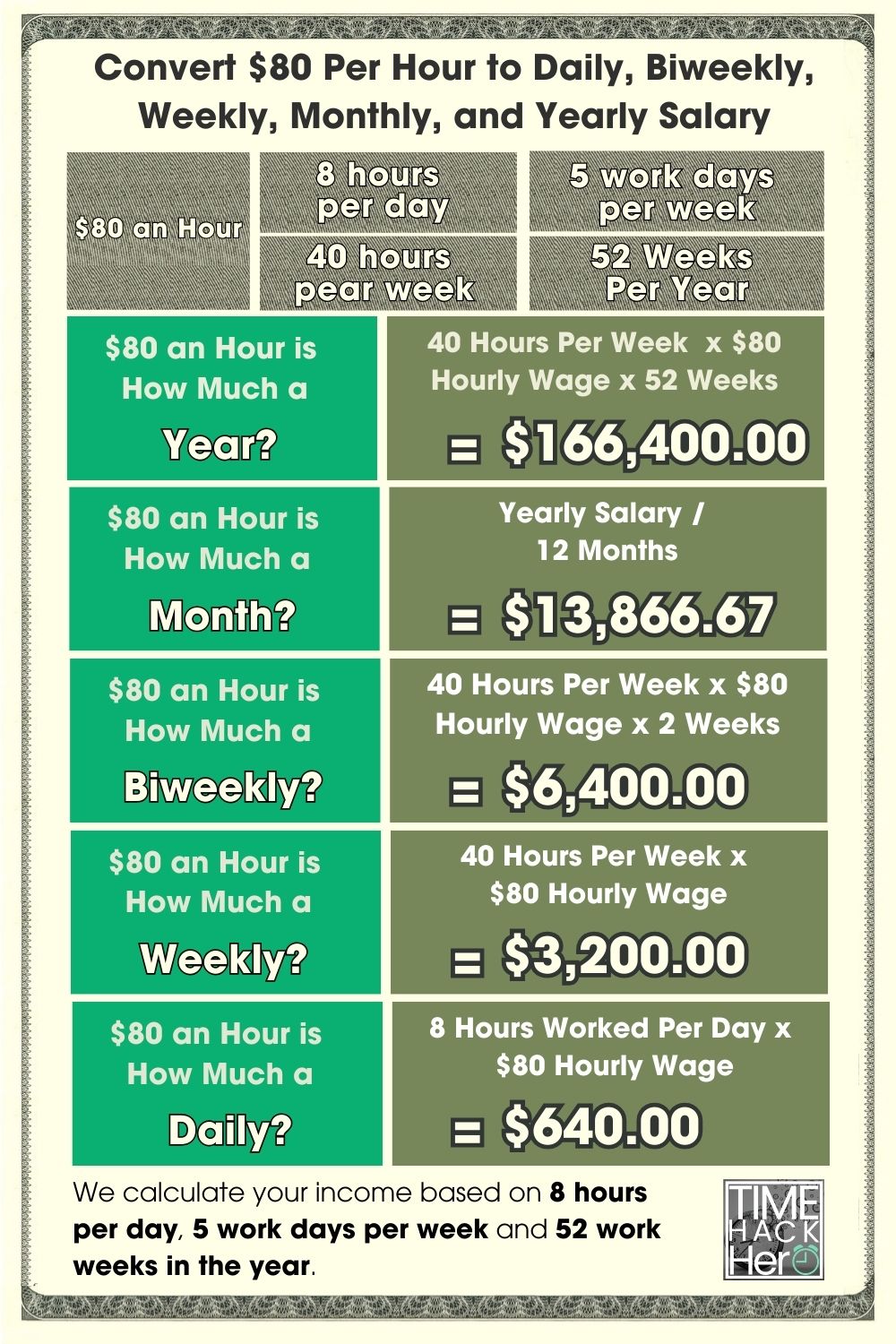
$80 an Hour is How Much a Year? Before and After Taxes
This delightful range of potential interpretations and approaches makes the discussion even richer and more engaging. Everyone often has a slightly different, yet equally valid, method for approximation, leading to wonderful comparisons, shared insights, and those satisfying "aha!" moments. It’s a surprisingly wonderful and accessible way to truly understand personal finance in a practical, down-to-earth, and entirely relatable manner, transforming a dry topic into an enjoyable shared exploration.
The Big Reveal: An Eye-Opening Number
So, without further suspense, let’s dive into the core math for a moment, using a commonly accepted baseline. If we consider a typical, full-time working month as approximately 160 hours (which generously accounts for 4 standard weeks, each with 40 working hours), then the calculation becomes wonderfully straightforward: $4800 divided by 160 hours yields a wonderfully compelling and easy-to-digest hourly rate.
Are you ready for the insightful revelation? That comes out to a crisp, clean, and quite significant $30 an hour. Suddenly, what began as a seemingly large and sometimes abstract monthly figure of $4800 transforms into a surprisingly concrete, incredibly understandable, and immediately relatable number that fits perfectly into the framework of daily life and decision-making.
This precise hourly rate instantly revolutionizes how we perceive and value that income. Imagine, for every single hour you dedicate to your work, you are earning the equivalent of thirty valuable dollars. It truly is a profound and remarkably powerful way to instantly visualize and internalize the financial value and tangible return on your precious time and focused effort.
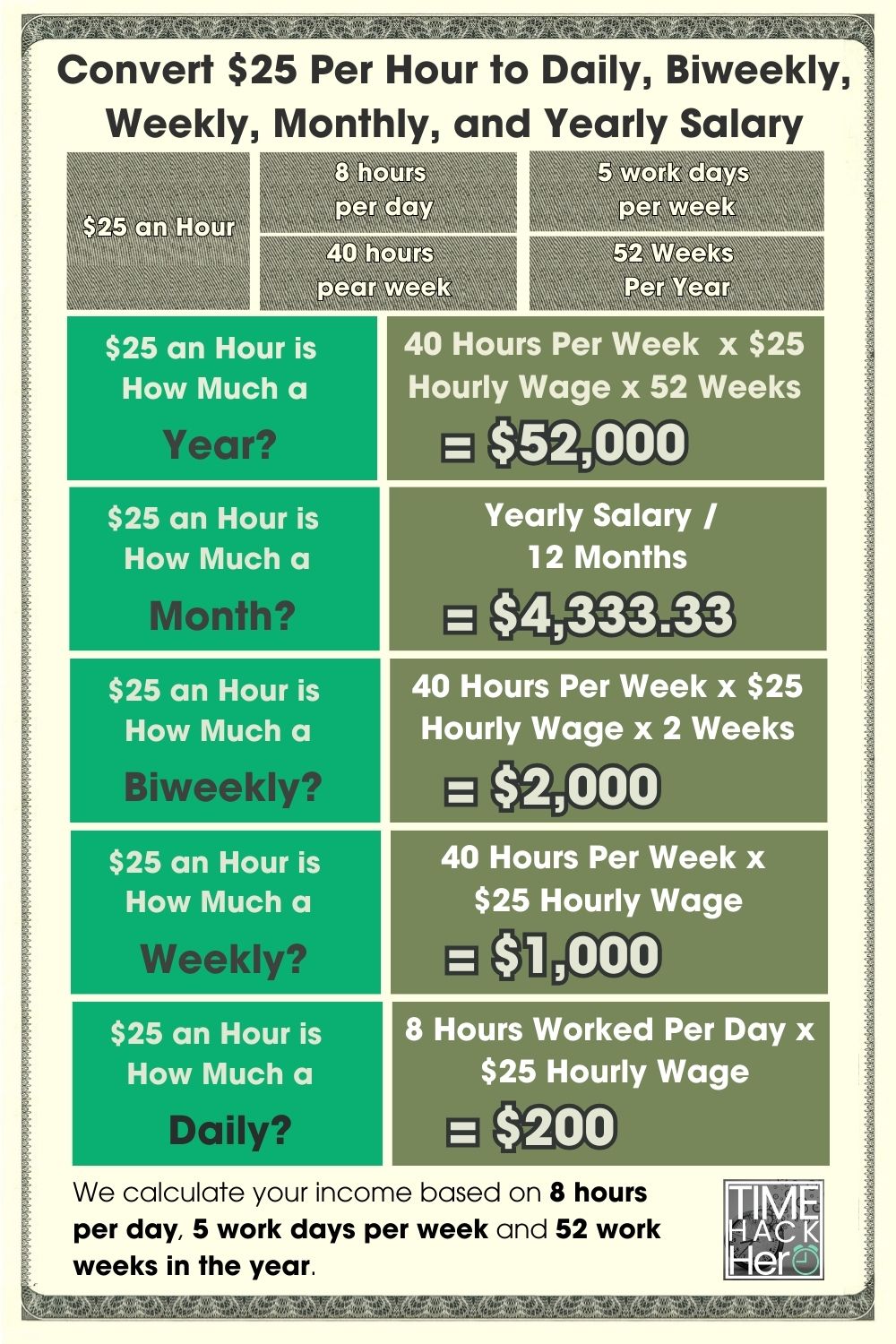
$25 an Hour is How Much a Year? Can You Live on It
The figure of $30 an hour isn't just a number; it serves as a powerful, personal benchmark that helps us thoughtfully weigh everyday choices, from deciding on a quick, spontaneous coffee break to pondering a more significant household purchase or investment.
Beyond the Simple Calculation: Real-World Fun and Clarity
The joy and practical utility of this discussion certainly don't cease once you've successfully pinpointed that hourly rate. In fact, this newly discovered number becomes an absolutely fascinating lens through which to view and evaluate all sorts of everyday expenses and financial decisions. You might start asking yourself: is that tempting new gadget truly "worth" two hours of my hard-earned time, or perhaps even five?
It’s a deceptively simple mental trick that subtly yet powerfully empowers you to make far more informed and conscious financial decisions, all while maintaining a remarkably lighthearted and engaging perspective. Thinking in terms of hourly equivalents instantly makes the sometimes-daunting task of budgeting feel less like a chore and more like a personal, empowering game. It’s about truly understanding the tangible flow and value of your money in a way that resonates deeply.
Moreover, this insightful question often naturally opens up broader, more aspirational conversations about career trajectory, personal financial goals, and long-term aspirations. Possessing a clear understanding of your hourly worth can genuinely inspire and motivate you to seek out new opportunities, negotiate better terms, or simply pursue work that feels more aligned with your perceived value. It serves as a gentle yet effective nudge towards greater financial self-awareness and personal empowerment, making your earnings feel more real and impactful.
Convert hour to month – Time Converter
The Social Spark: More Than Just Solo Pondering
What truly elevates and makes "4800 a month is how much an hour" so genuinely special is its remarkable ability to effortlessly bring people together in shared contemplation. It serves as a perfectly neutral, incredibly accessible common ground for discussing often-complex topics like work, personal value, and everyday personal finance, all without ever getting bogged down in intimidating jargon or overly technical details. It invites everyone to the table.
It's not uncommon for friends, family members, and even new acquaintances to eagerly share their own similar calculations, comparing notes and insights. "But what if someone works only 20 hours a week?" someone might playfully interject, instantly shifting the entire dynamic and sparking a fresh, lively round of mental gymnastics and collaborative problem-solving. This kind of interaction transforms what could be a solitary math problem into a truly collective and engaging exercise.
This shared experience of deciphering and discussing financial figures creates a lovely sense of community and mutual understanding around money matters. It acts as a wonderfully safe, remarkably easy, and entirely approachable way to talk openly about something that can sometimes feel complicated, private, or even slightly intimidating to approach. When framed this way, everyone feels comfortable and confident enough to join in the stimulating and enlightening fun.
At its heart, it’s a universal and simple language for truly understanding your personal financial footprint, a language spoken with a genuine smile, a shared nod of recognition, and a healthy dash of playful curiosity that invites everyone into the conversation.
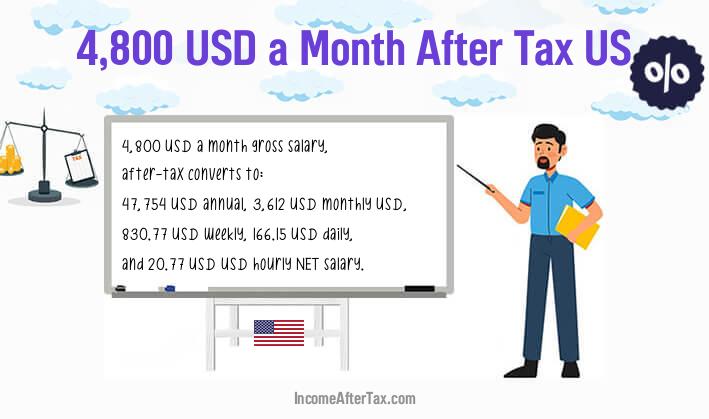
$4,800 a Month After-Tax is How Much a Year, Week, Day, an Hour?
Inspiring Your Own Financial Adventures
The enduring beauty and widespread appeal of this particular question, "4800 a month is how much an hour?", lies squarely in its accessibility and relevance. You don’t need an advanced degree in economics, a calculator app, or extensive financial literacy to grasp its immediate significance and profound implications. You simply need a naturally curious mind and a willingness to playfully engage with a few fundamental numbers.
So, why not seize this charming opportunity to try it for yourself? Take a moment to apply this simple calculation to your own current monthly income, or perhaps even to a dream salary you aspire to achieve in the future. See for yourself how your dedicated efforts and valuable time translate into a tangible, easy-to-understand hourly rate. It’s a quick, remarkably enlightening, and empowering exercise that provides a fresh, clear perspective on your entire financial world and personal worth.
Therefore, the very next time you happen to overhear someone thoughtfully pondering, or perhaps even playfully asking, "4800 a month is how much an hour?", resist the urge to simply dismiss it as basic arithmetic. Instead, take a moment to truly recognize it for the engaging, thought-provoking, and surprisingly fun conversation starter it truly is. It’s a testament to how simple questions can yield profound understanding.
Ultimately, it’s a delightful reminder that understanding your personal finances can, and indeed should, be an enjoyable, enlightening, and even adventurous journey. And who knows, by embracing this simple query, you might just find yourself inspiring someone else to eagerly join in the fascinating and rewarding calculation fun, spreading financial literacy with a smile!