
3d Printing How Does It Work

Hey there, ever wondered how those futuristic 3D printers actually work their magic? It feels a bit like science fiction, right? Poof! A physical object appears out of thin air. Well, not quite thin air, but it's pretty darn cool and surprisingly easy to understand once you peel back a few layers (pun absolutely intended!).
Think of it like this: remember playing with LEGOs or building sandcastles? You start with a base, and then you add pieces or sand on top, building upwards until your creation is complete. 3D printing works on a very similar principle, but instead of chunky bricks or handfuls of sand, it's all about adding incredibly thin, precise layers of material, one on top of the other, until a solid object takes shape. It's literally additive manufacturing – adding material, rather than subtracting it (like carving from a block of wood).
The Brains of the Operation: Digital Design
Before anything can get printed, you need a blueprint. This is where digital design comes into play. Someone, somewhere, designs the object using special CAD software (Computer-Aided Design). Think of it as digital sculpting. Whether it's a new toy, a spare part for your washing machine, or even a tiny house, it first exists as a 3D model on a computer screen.
Must Read
Once your masterpiece is digitally designed, it goes through a crucial step called "slicing." A special piece of software, aptly named a slicer, takes that 3D model and virtually cuts it into thousands of super-thin horizontal layers. Imagine slicing a loaf of bread, but instead of bread, it's your digital creation. Each of these slices generates a specific set of instructions (called G-code) that tells the 3D printer exactly where to move and where to put down material for each individual layer. It's like a highly detailed recipe for building your object.
The Hands of the Operation: The Printer and its Materials
Now for the star of the show: the 3D printer itself! There are a few different types, but let's chat about the most common one you'll probably encounter, especially for home use: Fused Deposition Modeling (FDM). This is the kind that looks a bit like a robot hot-glue gun, but way more precise.

FDM printers use spools of material called filament. These usually look like thick plastic string, and the most common types are PLA (Polylactic Acid – often derived from cornstarch, so it smells a bit sweet when printing!) and ABS (the same stuff LEGOs are made from). The printer heats up a tiny nozzle to a specific temperature, melts a bit of the filament, and then meticulously squeezes it out onto a build plate, following those G-code instructions layer by layer.
As the nozzle moves, it "draws" each horizontal slice of your object with molten plastic. After completing one layer, the build plate moves down (or the print head moves up), and the printer starts drawing the next layer directly on top of the previous one. This continues, slowly but surely, until your 3D object emerges!

Other types of 3D printers use different methods and materials:
- SLA (Stereolithography) printers use a laser to harden liquid resin, curing it layer by layer.
- SLS (Selective Laser Sintering) printers use a laser to fuse fine powder particles together.
Putting It All Together: The Printing Process
So, to recap the journey from an idea in your head to a physical thing in your hand:
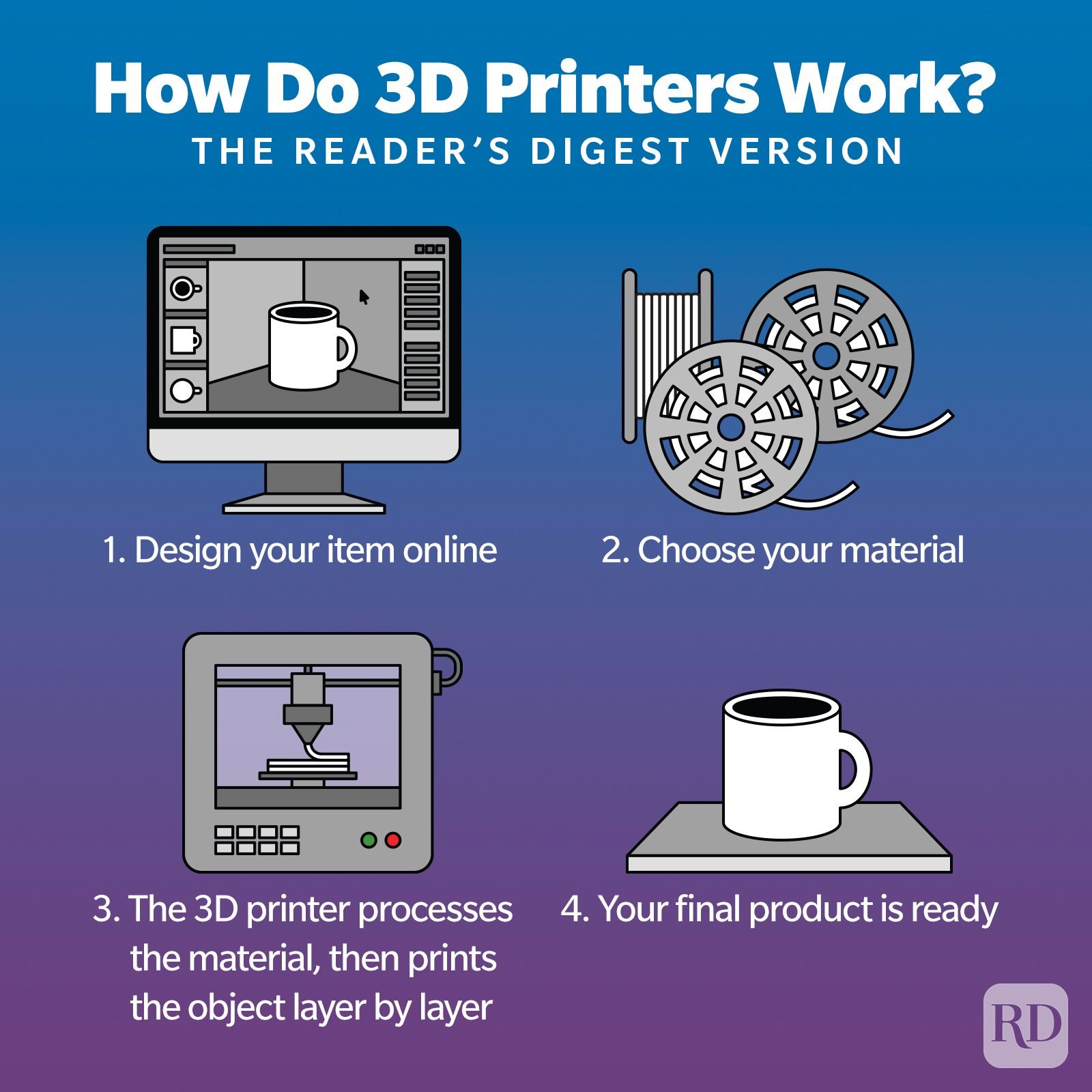
- You design your object digitally (or download someone else's awesome design).
- You slice that digital model, turning it into thousands of tiny instructions for the printer.
- You load your chosen material (filament, resin, powder) into the printer.
- You hit "print" and let the machine work its magic, carefully adding layer upon layer. It’s like watching paint dry, but way more exciting because something is actually appearing!
- Once finished, you might do a little bit of post-processing, like removing support structures (temporary bits of plastic that hold up overhangs during printing) or cleaning it up.
And voilà! You've got a brand-new, custom-made item right there in front of you. It's empowering, isn't it?
The Future is Now!
3D printing isn't just for hobbyists making fun trinkets (though it's great for that!). It's revolutionizing industries, from creating custom medical implants and prosthetics to prototyping car parts, building entire houses, and even printing food (though don't try to print your dinner... yet!). It's a technology that puts the power of manufacturing into more hands than ever before, fostering creativity and problem-solving on a global scale.
So, the next time you see a uniquely shaped gadget or hear about a custom-made part, remember the incredible journey it took – from a spark of an idea to a digital model, sliced into countless layers, and then meticulously brought to life, one microscopic drop of material at a time. It’s a testament to human ingenuity, turning the digital into the physical, and it’s only just getting started. Keep dreaming, keep creating, and remember that with 3D printing, the possibilities are literally taking shape!
