
304 Vs 18 10 Stainless Steel

Alright, gather 'round, folks, and pull up a virtual chair! We’re about to dive into one of those culinary mysteries that keeps us all awake at 3 AM… or, you know, just mildly confused when we’re browsing for a new spatula. We’re talking about the great stainless steel conundrum: 304 vs. 18/10. Sounds like a showdown between secret agents or perhaps a particularly aggressive bingo game, right? But fear not, by the end of this, you’ll be dazzling your friends at dinner parties with your newfound metallurgical wisdom!
For years, I've seen these numbers pop up on everything from my fancy new sauté pan to that industrial-looking sink at my friend's questionable basement bar. And like many of you, I've probably just nodded sagely and thought, "Bigger number good, smaller number… less good?" Well, buckle up, because the truth is a little more surprising, a little funnier, and a lot less like a math test.
The Great Unveiling: They’re Practically Cousins!
Here’s the bombshell, the mic drop, the plot twist that makes M. Night Shyamalan look like a predictable children’s author: 18/10 stainless steel is, in most cases, a type of 304 stainless steel! Gasp! I know, right? It’s like finding out Batman and Bruce Wayne are the same person. All that drama, all that marketing fuss, for what? A family reunion!
Must Read
So, what exactly are these mysterious numbers rattling around our kitchens?
304 stainless steel is a broad classification, an industry standard, part of a family known as the "300 series" austenitic stainless steels. Think of it as the family name, like "The Smiths." It’s known for being incredibly versatile, resistant to corrosion, and generally a workhorse. It’s what most of your kitchen sinks are probably made of, and it’s robust enough for industrial kitchens and even architectural trim. Basically, the reliable older sibling who always pays their taxes.
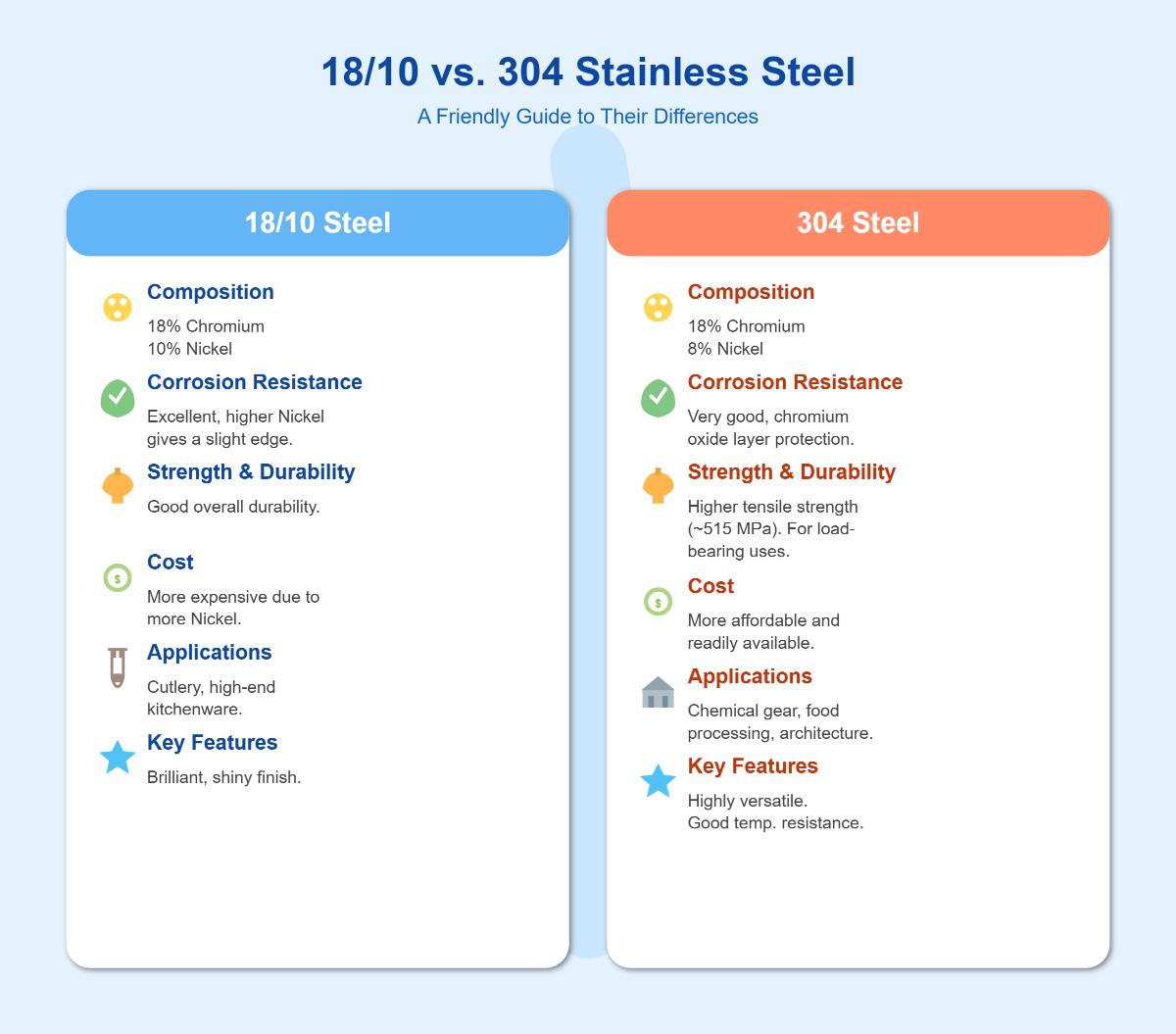
18/10 stainless steel, on the other hand, is like a very specific, slightly snobbier member of the 304 family. Those numbers aren't a secret code for its annual income; they tell you its exact composition by percentage: 18% chromium and 10% nickel. This is where the magic happens, and frankly, where the steel starts to feel a bit fancy.
Meet the Stars: Chromium and Nickel
Imagine stainless steel as a superhero team. Every member has a crucial role:
First up, Chromium (Cr), specifically that 18%. This is the ultimate bodyguard, the anti-rust ninja. Chromium forms a thin, invisible, self-healing layer on the surface of the steel – what we call a passive layer. This layer is an impenetrable force field against rust and corrosion. More chromium means better rust resistance, which is why 18% is a pretty solid showing. Without it, your "stainless" steel would just be… regular steel, probably sporting a lovely orange patina after its first encounter with a damp sponge. Nobody wants that!
Then we have the superstar, the one who gives 18/10 its extra swagger: Nickel (Ni). That glorious 10% nickel is the secret sauce. Nickel makes the steel incredibly durable, resistant to dents and dings (because who hasn’t accidentally dropped a pan and wept silently?). It also gives stainless steel that gorgeous, lustrous, high-polish finish that just screams "fancy." Think of it as the steel’s personal trainer and stylist, making it stronger and lookin’ good. Plus, and this is where it gets interesting, higher nickel content makes the steel less magnetic – in fact, often virtually non-magnetic!
The Plot Thickens: Other 304s Exist!
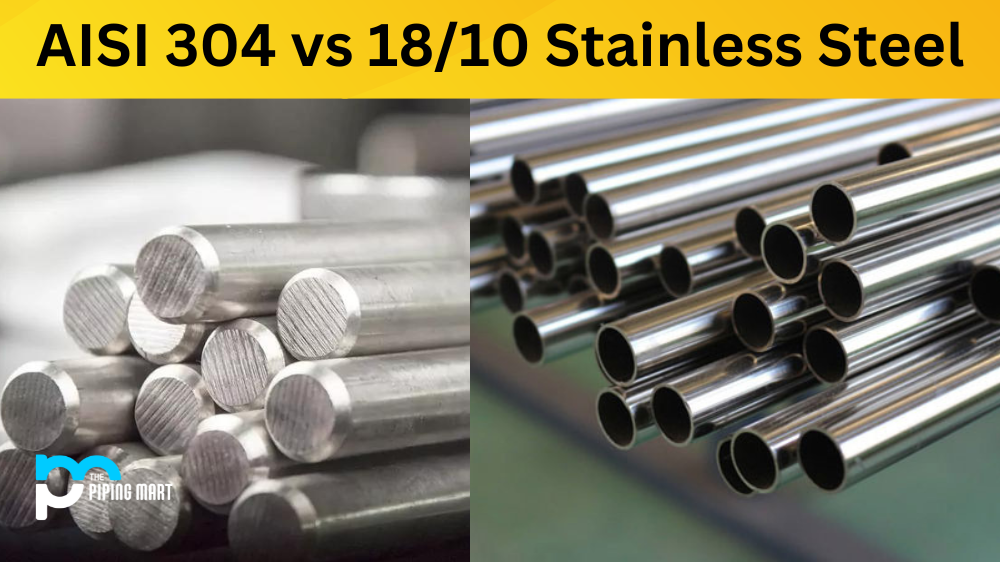
So, if 18/10 is a type of 304, are there other types? You betcha! Many other 304 variants exist, often designated by their chromium and nickel percentages. For example, you might see 18/8 stainless steel. This is still 304, but with 18% chromium and 8% nickel. See the difference? That lower nickel content means it’s still fantastic (it’s in plenty of high-quality items), but it just doesn't have quite the same level of corrosion resistance, strength, or that super-luxe shine as its 18/10 cousin. It’s still part of the family, just perhaps the cousin who owns a slightly less flashy car.
The Real-World Lowdown: What Does This Mean for Your Shopping Cart?
Let's get down to brass tacks – or rather, stainless steel pots. When you’re standing in the cookware aisle, wrestling with your inner economist, here’s how to translate those numbers:
Durability & Strength: That extra 2% nickel in 18/10 (compared to 18/8) makes a noticeable difference. 18/10 is generally more robust, less prone to warping or denting, and can stand up to more abuse from aggressive dishwashers or clumsy chefs (ahem, me). It’s the difference between a resilient friend and one who just shrugs and sighs.
Corrosion Resistance: Both 304 variants (18/8 and 18/10) offer excellent corrosion resistance, especially against rust. However, 18/10 provides superior protection against pitting corrosion, which can be caused by salts or acidic foods. So if you're making a lot of tomato sauce or boiling briny pickles, 18/10 will thank you later.

Appearance: Thanks to the higher nickel content, 18/10 often boasts a brighter, more lustrous finish that holds its shine better over time. It just looks more "premium." If you want your cutlery to gleam like tiny silver trophies, 18/10 is your champion.
Magnetism: This is a fun party trick! Because of its higher nickel content, 18/10 is typically non-magnetic. Take a fridge magnet to your expensive saucepan – if it doesn’t stick, you’ve likely got 18/10! (Unless it has a magnetic base for induction, which is often made of different steel). Lower nickel 304 (like 18/8) can be weakly magnetic. This is important for induction cooktops, which need a magnetic material to work effectively. Many premium 18/10 pots will have a special magnetic layer in the base for induction compatibility, so don’t let a sticking magnet completely derail your 18/10 dreams if it’s just at the bottom!
Cost: Unsurprisingly, that extra nickel isn't free. 18/10 stainless steel is generally more expensive than 18/8 or other general 304 applications. You’re paying for that added durability, resistance, and shine. Think of it as buying the premium concert ticket instead of the nosebleed section.

The Verdict: Which One Should You Choose?
So, what’s the takeaway from our little metal exposé? It all boils down to your needs, your budget, and how much you plan to baby your kitchenware.
For everyday, no-fuss items like a basic colander, a mixing bowl, or even most kitchen sinks, general 304 (which often means 18/8) is perfectly fantastic. It’s durable, resistant, and won’t break the bank. It's the sturdy, reliable friend you can always count on.
But if you’re investing in heirloom-quality cookware, high-end cutlery, serving dishes that need to impress, or medical instruments where absolute cleanliness and durability are paramount, then 18/10 stainless steel is worth the splurge. It offers that extra layer of protection, that superior shine, and that comforting sense of "I bought the good stuff." It's the friend who always shows up with a gourmet cheese board.
So there you have it! The great mystery of 304 vs. 18/10 solved, with a few laughs along the way. Now you can confidently navigate the bewildering world of stainless steel, armed with knowledge and perhaps a small fridge magnet for your next shopping trip. You’re practically a metallurgist now – go forth and conquer your kitchen!