
2x4 Auto Darkening Welding Lens

Alright, pull up a chair, grab a metaphorical (or actual) coffee, because we need to talk about something truly epic. Something that, frankly, has saved more necks, prevented more headaches, and protected more precious eyeballs than… well, anything else in a welder’s kit, probably. I’m talking about the unsung hero, the silent guardian, the incredibly humble yet utterly brilliant: the 2x4 Auto Darkening Welding Lens.
Now, if you’ve ever dabbled in welding, even just watched someone do it, you know the drill. The old way, the "traditional" way, involved a fixed-shade lens. You’d get all set up, helmet down, torch in hand, then do this ridiculous, balletic head-nodding maneuver. You'd try to strike the arc, simultaneously flipping your head down to get the dark lens in place, all while hoping you didn't miss the workpiece or, worse, flash your retina into oblivion. It was less a precision craft and more a desperate act of faith, a game of high-stakes peek-a-boo where the prize was a perfectly welded joint and the penalty was temporary blindness. Or worse, permanent disco-ball vision.
Enter our protagonist. The 2x4 Auto Darkening Welding Lens. It doesn't sound like much, does it? Like a piece of lumber got confused and thought it was an eyewear accessory. But oh, my friends, it is so much more. This little rectangle of pure genius is the equivalent of giving a caveman a smartphone. It takes the "ugh" out of the arc and replaces it with an "aha!"
Must Read
The Magic Trick: How it Works (Without Actual Magic)
So, what’s the big deal? Simple. This isn’t just a piece of tinted glass. Oh no, this is a miniature marvel of modern engineering. Think of it as a tiny, highly specialized secret agent for your face. It's got sensors – usually two, sometimes four – that are constantly on the lookout. The moment they detect the blinding flash of a welding arc, they snap into action.
How fast, you ask? Faster than you can blink. Faster than your buddy can shout "Flash!" and probably faster than your brain registers "OH DEAR GOD MY EYES!" We're talking microseconds. Imagine that: a tiny LCD panel sandwiched between layers of glass, goes from clear to dark in the blink of an electron. It’s like it knew what you were going to do before you even thought about it. Talk about futuristic! It makes you wonder if these lenses have tiny little time-travel circuits inside them.

And here’s the kicker: it’s not just "on" or "off." These lenses come with adjustable shade settings. So whether you’re doing some delicate TIG work that barely glows, or you’re laying down some beefy stick welds that could blind a small nation, you can dial in the perfect shade. It's like having a dimmer switch for the sun, right in your helmet.
Why 2x4? The Ubiquitous Rectangle
Now, you might be thinking, "Why 2x4?" Is it some kind of cosmic joke relating to lumber? Not quite. This humble dimension, usually 2 inches by 4.25 inches (or roughly 50mm by 108mm for our metric friends), is the universal standard. It's the size that fits into almost every passive welding helmet on the market. It’s like the AA battery of welding lenses. So, you can upgrade your grandpa’s dusty old helmet with this modern marvel, and suddenly, he’s welding like a cyborg from the future, minus the menacing glow.
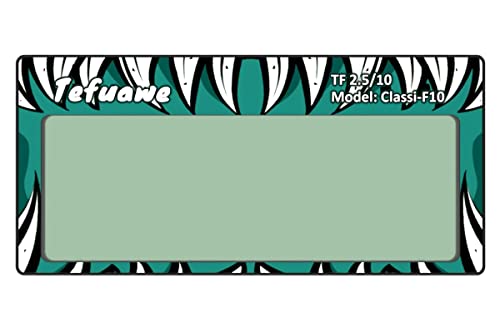
This common size is incredibly practical. You can swap them out, upgrade, or replace them easily. It means innovation can happen in this small form factor, and everyone benefits without needing to buy a whole new helmet. It’s a testament to good, solid, sensible design. Imagine if every phone charger was unique. We'd still be living in the dark ages!
The Benefits: More Than Just Not Blinding Yourself (Though That’s a Big One)
Let's get serious for a moment (but only a moment, promise). The benefits are enormous:

- No More Head Nodding: Your neck will thank you. Your chiropractor will miss you. You’ll be able to start your arc with the helmet already down, clear vision, ready to roll. It means precision from the get-go.
- Better Vision Before the Arc: Because it’s clear until the arc strikes, you can actually see your workpiece. Imagine that! Lining up your bead, finding that tiny gap, placing your filler rod – all done with perfect clarity. It’s like having x-ray vision, but only for the good parts.
- Reduced Eye Strain: Less flashing means less squinting, less headaches, and generally happier eyeballs. Your optometrist might not be thrilled, but your eyes certainly will be.
- Increased Productivity: You’re not fumbling, you’re not re-positioning, you’re not cursing under your breath. You’re just welding. This means more done, better quality, and less wasted time.
- Safety, First and Foremost: Beyond the temporary flashes, repeated exposure can have serious long-term effects. These lenses offer continuous UV and IR protection, whether they're clear or dark. So, even when you're just looking through the clear lens, your eyes are still shielded from the nasty invisible stuff. It’s like having a tiny bodyguard always on duty.
I once saw a guy trying to weld with a fixed-shade helmet and a stubborn arc. He looked like he was trying to summon a demon with a series of frantic head bobs. His welds were... imaginative. The next day, he showed up with an auto-darkening lens. His welds immediately went from "abstract art" to "actually quite good." Coincidence? I think not. The lens wasn't just darkening; it was also bestowing ancient welding wisdom upon him.
The Verdict: A Small Investment, a Huge Leap
So there you have it. The 2x4 Auto Darkening Welding Lens. It’s a small, unassuming rectangle that holds within it the power to transform your welding experience. It’s not just a convenience; it’s a game-changer for safety, precision, and sanity. It’s the kind of innovation that makes you wonder how we ever managed without it.
If you're still doing the head-nodding dance, do yourself a favor. Upgrade. Your neck, your eyes, and your future beautiful welds will thank you. And who knows? You might even start enjoying welding so much, you’ll start welding your toast in the morning. (Disclaimer: Please don't weld your toast.)
