
12v Fridge How Many Watts
Alright, settle in, grab a virtual coffee. We need to talk about your 12V fridge. Yes, that glorious box of frosty joy that keeps your trail mix from melting into a sugary puddle and your... ahem ... "hydration solutions" perfectly chilled on the road. It’s a marvel, truly. But sometimes, when you’re out there in the wild, miles from the nearest power outlet, you might find yourself staring at it with a mix of love and sheer terror, whispering, "How many watts, you beautiful, power-hungry beast? How many?"
It’s the question that keeps many an overlander, camper, or beach bum awake at night, wondering if their precious vehicle battery will still have enough juice to start come morning. Will you be enjoying a crisp beverage, or will you be stranded, nursing a warm soda and a dead battery, cursing the very invention of refrigeration? Let's unravel this mystery, shall we, without needing a degree in electrical engineering or a lifetime supply of warm beer.
The Million-Dollar Question (Spoiler: It’s Not a Million Dollars)
So, how many watts does a 12V fridge use? The short, utterly unhelpful answer is: it depends. Yeah, I know, I know. That’s like asking "How long is a piece of string?" and getting "Well, it depends on the string!" But trust me, we'll get more specific than that. Think of your 12V fridge like a teenager. Sometimes it’s super chill, barely sipping energy. Other times, it’s raiding the entire snack cabinet and running up your power bill like there's no tomorrow.
Must Read
The main culprits in this wattage drama are a few key players. Let’s meet the cast:
Player 1: The Fridge Type - Compressor vs. Thermoelectric (The Battle Royale)
This is arguably the biggest factor. You generally have two types of 12V coolers:
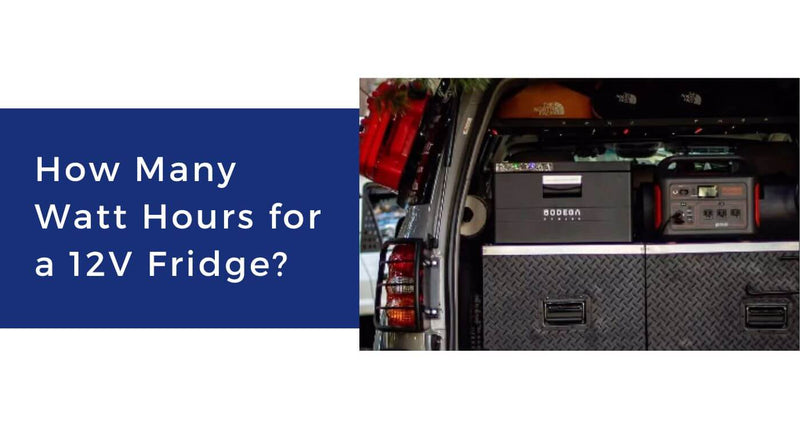
- The Compressor Fridge: This is the hero. The Cadillac of coolers. It works just like your fancy home refrigerator, compressing a refrigerant to create serious chill. These bad boys cycle on and off. When they're running, they might pull, say, 40-60 watts (W). But here’s the kicker: they don't run all the time. They turn on, get things cold, and then switch off until the temperature rises again. This makes them incredibly energy efficient overall. They're the smart ones, working hard in short bursts then taking a nap.
- The Thermoelectric Cooler (Peltier Cooler): Ah, the budget option. The slightly less sophisticated cousin. These things use something called the Peltier effect. Sounds fancy, right? What it means in practice is they can usually cool things down by about 20-30°C below ambient temperature. And here's the catch: they are always ON. Constantly pulling power. Often in the range of 30-50W, non-stop. While that wattage might seem lower than a compressor, remember, it's a constant drain. It's like having a tiny, dedicated, power-sucking fan running 24/7. Not ideal for battery longevity.
Takeaway: If you care about your battery, your wallet, and truly cold beer, go compressor fridge every single time. They might cost more upfront, but they'll save your battery (and your sanity) in the long run.
Player 2: Size Matters (But You Knew That)
This one's pretty intuitive, even for us non-scientists. A small 20-liter personal cooler is going to use less power than a massive 80-liter party cavern designed to hold enough food for a small army. More volume to cool means more energy needed. Simple math, really. Don't try to cool a whole Thanksgiving turkey in a fridge designed for a six-pack, unless you enjoy rapid battery drainage.
Player 3: The Environment (It's Not Easy Being Green... or Cold)
Imagine trying to keep ice cream frozen on the surface of the sun. Hard, right? The same principle applies to your fridge. If it's sweltering hot outside (think Death Valley in July), your fridge has to work much harder and run more often to maintain its internal temperature. This means more watts, more often. If it's a crisp, cool evening, your fridge will barely break a sweat (or your battery).
Also, insulation is your best friend. A fridge with fantastic insulation is like a well-dressed secret agent, keeping its cool no matter what. A poorly insulated fridge is like that guy who wears a speedo in a blizzard – it's just working too hard for no good reason.
Player 4: You, The Fridge Door Bandit
Yes, you! Every time you open that fridge door to stare blankly inside, hoping new snacks have magically appeared, you’re letting all that lovely cold air out. And what happens when cold air escapes? Your fridge has to kick back on to replace it. The more you open it, the more it runs, the more watts it consumes. Be decisive! Know what you want! Grab it! Close it! Your battery will thank you.

Real-World Numbers (Because We Promised Clarity)
Okay, let's get down to some brass tacks. For most common 12V compressor fridges (say, 30-50 liters), you can expect them to pull around 40-60 watts when the compressor is actively running. Some smaller ones might be closer to 30-40W, larger ones might hit 70-80W. Starting up, they might have a brief spike to 100-150W, but it's very short-lived.
But remember, they don't run 24/7! So, a better metric for overall consumption is Amp-hours per day (Ah/day). This tells you how much total energy it sips from your battery over 24 hours. A good quality 30-50L compressor fridge, in moderate temperatures, might use something like 15-30 Ah/day. If you want to convert watts to amps (because batteries are rated in Amp-hours): Watts / Volts = Amps. So, 60W / 12V = 5 Amps. If it runs for 8 hours total in a day, that's 5 Amps * 8 hours = 40 Ah/day. But that's a very rough estimate and depends heavily on all the factors we just talked about.
Tips for Taming Your Power Beast:
- Pre-chill at Home: The absolute best thing you can do! Get your fridge and its contents nice and cold using wall power before you hit the road. It takes way less energy to maintain cold than to create it.
- Pack Smart: Fill it up! A full fridge with cold items helps retain temperature better. But don't block the vents!
- Location, Location, Location: Keep your fridge out of direct sunlight. In the shade, under a cover – anything to reduce external heat.
- Insulated Cover: Many fridges offer insulated bags or covers. These are surprisingly effective at boosting efficiency.
- Check the Seals: Just like your home fridge, a leaky seal is a power vampire.
The Final Word
So, how many watts does your 12V fridge use? Probably less than you think on average, especially if it's a good compressor model, and you treat it right. It’s not some mythical, bottomless pit of power consumption. It’s a tool, and like any tool, understanding how it works and treating it with a little respect (and a bit of pre-cooling) will ensure your beverages stay frosty and your battery stays happy. Now go forth, enjoy those chilled snacks, and never fear the wattage monster again!
