
Wire Size For 50 Amps 240 Volts

Hey there, fellow DIY enthusiast, or maybe just curious human! Ever stared at a wiring diagram, or pondered hooking up something beefy like an electric car charger, a new oven, or a super-powered welder, and thought, "Hmm, what kind of wire do I need so my house doesn't turn into a toasted marshmallow?" Well, you've come to the right place! Today, we're diving into the wonderfully specific world of wire size for a 50-amp, 240-volt circuit. It sounds super technical, but trust me, we're going to make it as easy and fun as explaining why socks disappear in the laundry. (Still haven't figured that one out, by the way.)
Why Does Wire Size Even Matter? (Spoiler: It's Not Just for Looks!)
Think of electricity like water flowing through a pipe. If you have a tiny straw trying to handle the output of a firehose, what happens? Pressure builds, things burst, and it's a general mess. Same goes for electricity! If you try to push 50 amps (that's a lot of juice!) through a wire that's too skinny, that wire gets super hot. We're talking "could melt the insulation off, start a fire, and generally ruin your day" hot. Not exactly the vibe we're going for, right?
So, getting the wire size just right isn't just about following rules; it's about keeping your home safe and your dreams of perfectly baked cookies or fully charged EVs alive. No tiny spaghetti wires here, folks! We want a nice, comfy superhighway for our electrons, not a bumper-to-bumper traffic jam.
Must Read
The Big Reveal: What Wire Do You Need?
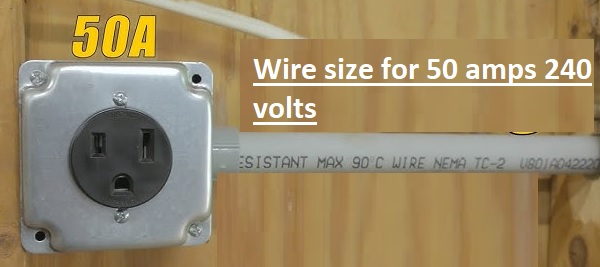
Alright, drumroll please! For a 50-amp, 240-volt circuit, the electrical gods (and the National Electrical Code, bless their hearts) generally recommend:
- For Copper Wire: You'll want 6 AWG copper wire.
- For Aluminum Wire: You'll need 4 AWG aluminum wire.
Now, what's with the 'AWG' and the numbers? AWG stands for American Wire Gauge. And here's the quirky part: the smaller the AWG number, the thicker the wire. So, 6 AWG is thicker than 10 AWG, and 4 AWG is thicker than 6 AWG. It's like a reverse popularity contest – the lower the number, the more robust and capable the wire is. Think of it as going from a regular garden hose (smaller number) to a massive industrial pipe (even smaller number). We want that super-duper highway for our 50 amps!
Copper vs. Aluminum: The Great Debate (Sort Of)
So, you've got options, eh? Copper and aluminum both do the job, but they're like two different types of friends, each with their quirks.
Copper: This is the gold standard (pun intended, kind of). It's an excellent conductor, super reliable, and generally considered safer because it doesn't expand and contract as much with temperature changes. The downside? It's usually more expensive than aluminum. But hey, sometimes you pay for peace of mind, right? It's the reliable, slightly pricier friend you can always count on.

Aluminum: This buddy is lighter and more affordable. Great for longer runs where cost and weight are factors. However, it's a bit more prone to issues if not installed perfectly. It expands and contracts more, which can sometimes lead to loose connections if terminals aren't specifically rated for aluminum (look for 'AL/CU' or 'CO/ALR'). For residential stuff, copper is often preferred for 50-amp circuits unless you have a very specific reason for aluminum. Think of it as the budget-friendly friend who needs a little extra attention to stay happy.
Hold Up! A Few More Super Important Tidbits:
1. Temperature Rating and Insulation Type
This might sound nerdy, but it's important! Wires come with different insulation types (like THHN, THWN-2, XHHW). These determine how much heat the wire can safely handle. While some wire types are rated for 90°C, for residential applications and general-purpose circuits like ours, we usually stick to the 75°C column in the NEC tables.
Why? Because the terminals on your circuit breaker and appliance usually have a 75°C rating, and you have to size your wire to the lowest rated component in the circuit. It's like finding the weakest link in a chain – we size for that! So, assume 75°C unless you're absolutely sure everything is rated higher. Better safe than sorry, or crispy!

2. Length of the Run (No Marathon Wires Here)
Are you running this wire across your entire property, or just from the breaker panel to the next room? For typical residential distances, the 6 AWG copper or 4 AWG aluminum will be perfectly fine. But if you're talking seriously long runs (like, across a football field!), you might need to go even thicker to prevent what's called 'voltage drop.'
This is where the electricity loses a bit of its oomph over distance, making your appliance slightly less efficient. For most home projects, don't lose sleep over it, but for truly epic journeys, a quick chat with an electrician is a good idea.

3. Local Codes Are Your Best Friend (Seriously)
The National Electrical Code (NEC) is the holy grail, but guess what? Your local municipality might have its own quirky little rules and amendments. Always, and I mean always, check with your local building department. It’s like checking the dress code before a fancy party – you don't want to show up in a tuxedo when everyone else is in flip-flops... or vice versa!
4. When in Doubt, Call a Pro!
Seriously, if all this talk of AWG, amps, and volts makes your head spin faster than a washing machine on spin cycle, please, please call a licensed electrician. Electricity is not something to mess around with if you're not confident. A professional will ensure everything is up to code, safe, and working perfectly. Think of them as your electrical superhero, swooping in to save the day (and your house) from any potential electrical mischief!
So there you have it! The secret sauce for wiring a 50-amp, 240-volt circuit. It's mostly about choosing that robust 6 AWG copper or 4 AWG aluminum, keeping an eye on those temperature ratings, and remembering that safety is always priority number one. Now you can confidently tackle that project (or at least confidently talk to your electrician about it!). Go forth, power your dreams, and may your circuits always be perfectly sized and your coffee always hot. Stay safe, stay smart, and keep that spark alive!