
Window Ac Btu Per Square Foot
Picture this: It's the absolute peak of summer. The kind of heat where the air feels like a wet blanket, and even your thoughts are sweating. My old apartment, a charming but tragically un-air-conditioned relic, was basically a convection oven. I finally broke down and bought the cheapest, smallest window AC unit I could find, triumphantly lugging it home, convinced I had conquered the inferno.
I jammed it into the window, plugged it in, and waited for the glorious chill. What I got instead was... well, a slightly less hot breeze right in front of the unit, while the rest of my living room remained a swampy purgatory. I’d sit directly in its weak little airflow, sipping lukewarm water, and still feel the beads of sweat trickling down my back. It was like trying to cool a swimming pool with an ice cube. Pure, unadulterated misery.
That, my friends, was my painful introduction to the crucial concept of BTU per square foot. And trust me, you don't want to learn this lesson the hard way like I did.
Must Read
So, What Even Is a BTU?
Let's demystify this beast. BTU stands for British Thermal Unit. Sounds incredibly formal and a bit dusty, doesn't it? But really, it’s just a measurement of energy. When we talk about air conditioners, a BTU tells you how much heat an AC unit can remove from a space in one hour. Think of it as your AC's superpower rating.
A higher BTU rating means a more powerful AC, capable of cooling a larger space or tackling a more intense heat load. Simple enough, right?

Why Does "Per Square Foot" Matter So Much?
Here's where my past self went horribly wrong. I ignored the "per square foot" part entirely. You see, every room is different. A tiny bedroom doesn't need the same cooling power as a sprawling open-plan living area. If you get an AC that’s too weak (like my old nemesis), it’ll run constantly, struggle to reach your desired temperature, and still leave you feeling sticky.
On the flip side, and this might surprise you, getting an AC that’s too powerful is also a problem! Yes, really! It’s like bringing a bazooka to a water balloon fight. An oversized unit will cool the room down super fast, shut off quickly, and then turn back on again. This is called "short-cycling."
Why is short-cycling bad? Because ACs don't just cool; they also dehumidify. If your unit is constantly flicking on and off, it doesn't run long enough to effectively pull moisture out of the air. The result? A room that feels cool but still clammy and damp. Not exactly the crisp, dry coolness you're after, is it?
The Magic Numbers: A Rule of Thumb
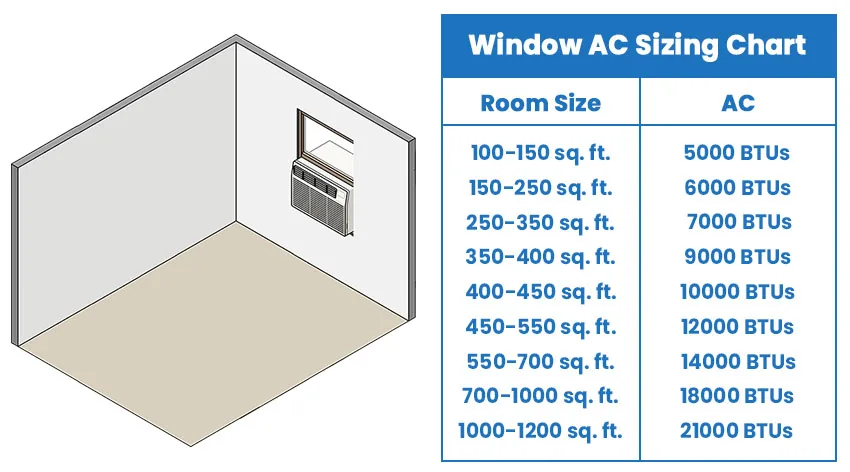
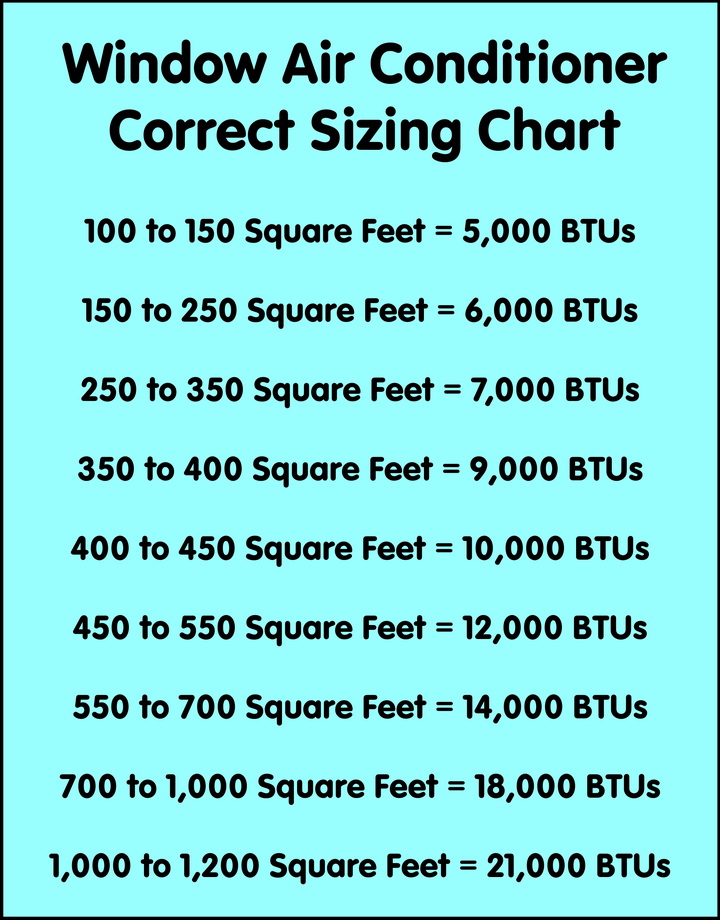
Alright, let’s get down to the brass tacks. While there are calculators out there that go into extreme detail, here’s a solid, easy-to-remember guideline for most residential spaces:
- For every square foot of your room, you generally need about 20 BTUs.
So, to figure out what you need, just measure your room's length and width to get the square footage, then multiply by 20. Let's look at some common examples:
- A 150 sq ft room (e.g., 10x15 ft) needs about 3,000 BTUs. (Though most small units start at 5,000-6,000 BTU, which is fine for this size and gives a little buffer).
- A 250 sq ft room (e.g., 10x25 ft) needs about 5,000 BTUs.
- A 350 sq ft room (e.g., 14x25 ft) needs about 7,000 BTUs.
- A 450 sq ft room (e.g., 18x25 ft) needs about 9,000 BTUs.
- A 550 sq ft room (e.g., 22x25 ft) needs about 11,000 BTUs.
- A 700 sq ft room (e.g., 28x25 ft) needs about 14,000 BTUs.
But Wait, There's More! (Factors to Consider)
That 20 BTU/sq ft is a great starting point, but life isn’t always that simple, is it? A few things can nudge that number up or down:

Sun Exposure: Is your room a sun trap? Does it face south or west and get blasted with afternoon sun? You might want to add 10% to your BTU estimate. That extra heat needs extra power to fight!
Room Occupancy: How many people typically hang out in that room? Each person generates body heat. For every extra person beyond two regular occupants, you might want to add about 600 BTUs. Yes, your buddies are literally heating up your space!
Heat-Generating Appliances: Cooling a kitchen? Or a home office packed with computers? These things pump out heat. Factor that in. For a kitchen, you might want to bump up your estimate by another 4,000 BTUs. Seriously!

Insulation & Windows: Is your insulation old and leaky? Do you have single-pane windows that feel like they're actively inviting the heat in? You might need to be a little more generous with your BTU count.
Don't Be Me: Measure Twice, Buy Once
So, what’s the takeaway here? Don’t guess! Take a couple of minutes, grab a tape measure, and figure out your room’s square footage. Consider the factors we just talked about. This isn't just about avoiding a sweaty summer (though that's a huge win!). Getting the right BTU for your space means:
- Optimal Comfort: Your room will actually feel cool and dry.
- Energy Efficiency: Your AC won't be constantly overworking or short-cycling, saving you money on your electricity bill.
- Longer Unit Lifespan: A unit that’s properly sized won’t wear itself out prematurely.
Investing a little thought into BTU per square foot now will save you a lot of discomfort, frustration, and cash down the line. So, go forth, measure, and enjoy your perfectly chilled summer!